
International Coalition Building Important Ahead of WRC: Experts
In the U.S., licensed and unlicensed interests disagree on the 7 GHz band.

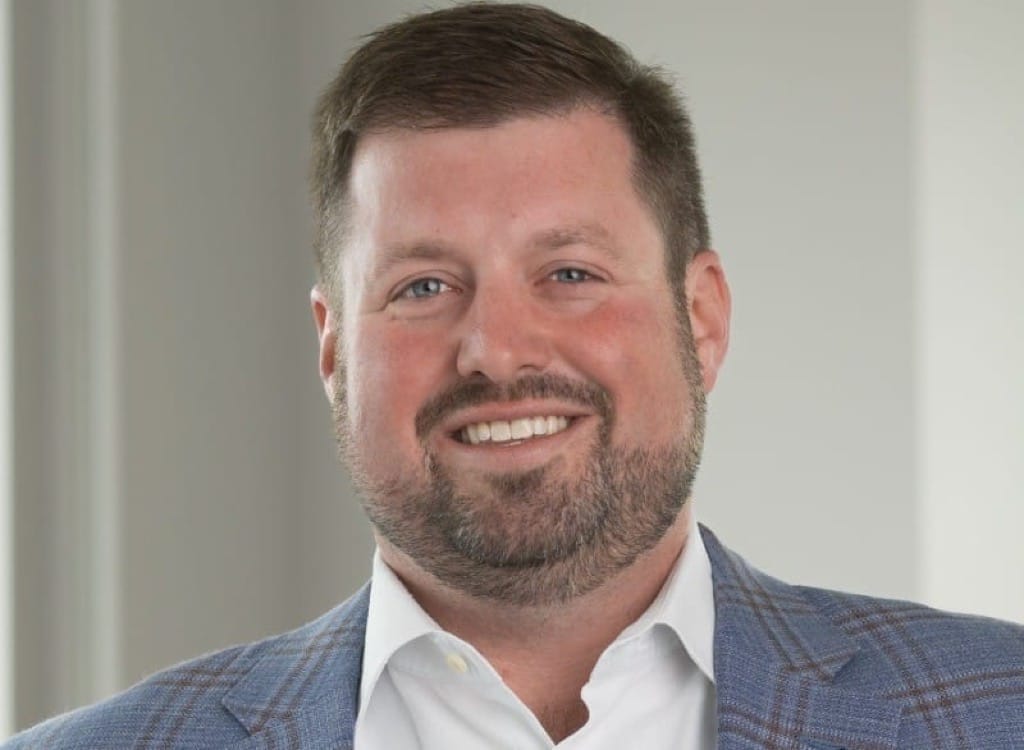
WASHINGTON, Feb. 24, 2026 – Building coalitions with allied countries will be important for the United States going into the World Radiocommunication Conference next year, experts said Tuesday.
Regulators and companies attend the conference every four years to set global goals for spectrum use. It’s being hosted next in Shanghai, China, from Oct. 18 to Nov. 12, 2027.
“It really does feel like the most important proposals are often shaped at the regional level long before they’re submitted to the conference,” said Umair Javed, CTIA’s SVP and general counsel. “Oftentimes what that means is you go into the conference with these proposals already enjoying a whole lot of support. They’ve got a lot of momentum from day one.”
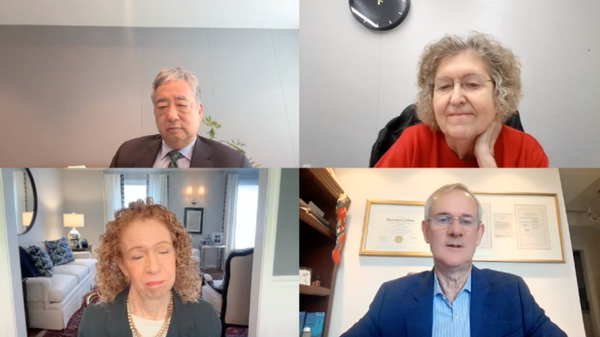
He spoke at a Technology Policy Institute webinar.
The U.S. will have a chance at April and December meetings of the Inter-American Telecommunication Commission (CITEL) to make a case, provided it’s able to nail down its own positions by then.
It will also be a chance to gauge how issues will be argued globally given some countries in the Americas have less antagonistic relationships with China, said David Redl, founder of Salt Point Strategies and head of the National Telecommunications and Information Administration during President Donald Trump's first term.
“The countries of CITEL do not necessarily see eye-to-eye, but when we do and we get to an inter-American proposal [IAP] together, it’s a hard fought victory,” Redl said. “There’s usually a lot of arm linking that goes on once you’ve gotten to an IAP.”
There’s also the November 2026 International Telecommunication Union’s Plenipotentiary Conference, also held every four years ahead of WRC. Countries meet there to set ITU’s direction and elect officials to ITU organizations.
“It’s not where everyone’s going to show their hand completely, but you might get one or two cards that get played and make you think, ‘Wait a minute, they’re definitely not where I thought they were,'” Redl said. “That’ll be a very telling moment for all of us.”
Two Americans are running for positions at ITU, including the current Secretary-General Doreen Bogdan-Martin, who’s seeking reelection, and Jennifer Warren, who’s running for a spot on the Radio Regulation Board.
U.S positions, disagreements
The Federal Communications Commission’s WRC advisory committee sent proposals to the agency last week, including issues on which competing industries could not come to a consensus.
One of those was WRC-27 agenda item 1.7, which involves considering the 4.4 GigaHertz (GHz), 7/8 GHz, and 15 GHz band for potential sharing or licensed mobile use.
The major mobile carriers, along with Nokia, Ericsson, and industry group GSMA, supported identifying 7.125-7.4 GHz for licensed mobile use. Comcast, Charter, and NCTA, along with Apple and Boeing, supported an alternate view that would decline to take any position on 7.125-7.4 GHz.
NTIA Administrator Arielle Roth is currently studying the band, which is used by the federal government, and the non-mobile carriers said it would be premature for the US to take a position before that study is completed. They said in their proposal, submitted along with the rest of the advisory committee’s work to the FCC, that the NTIA study was expected to be finished in the next year.
Javed pointed to a December White House memo that called for pursuing 6G leadership through item 1.7 as evidence the Trump administration wanted the U.S. to go to WRC pushing for mobile use in those bands. Redl disputed that characterization.
The FCC is taking comments on its WRC advisory committee’s recommendations until March 6.
Redl said satellite issues would be the most important thing at the conference, particularly power level limits on low-Earth orbit constellations to protect incumbent geostationary systems. He said the issue got “kicked down the road” at WRC-23.
The FCC is already considering loosening those limits in certain bands within the U.S., which SpaceX has argued would improve the performance of its satellite broadband service.
“I think it should be a priority for us, right? We have a fight globally for who’s going to lead in LEO, and the United States right now enjoys a pretty great position,” Redl said.
Javed said other countries in the Americas were still more heavily using geostationary systems protected by the power level limits, and thus might be hesitant to partner with the U.S. on the issue.
Member discussion