
‘Jawboning’ Debate Resumes over Big Tech and Government Power
Both parties pointed at the other for coercing online platforms.

Akul Saxena
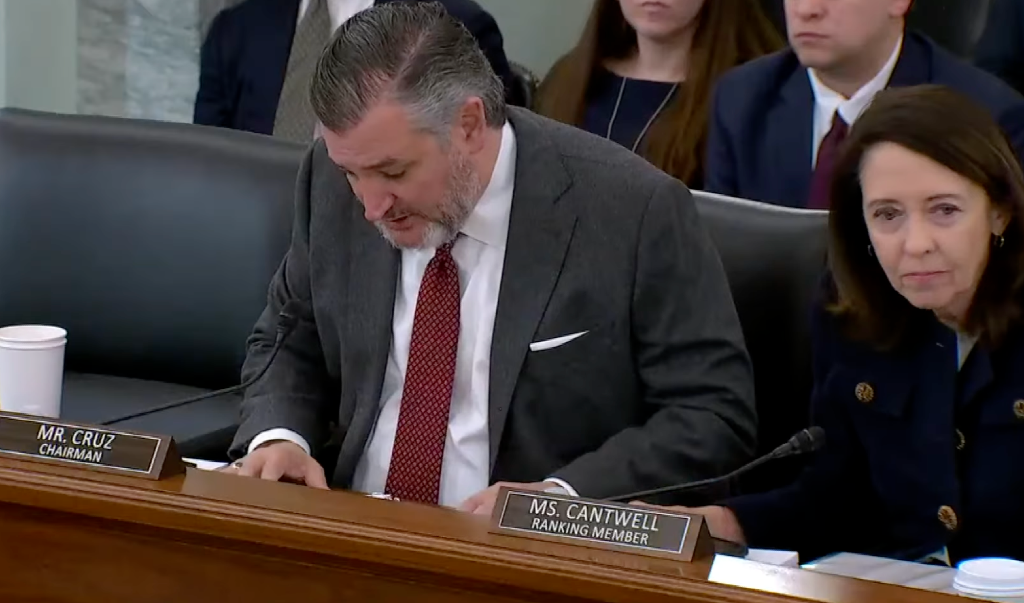
WASHINGTON, Oct. 29, 2025 – Senators grilled Google and Meta over the Biden administration’s pressure to curb online speech.
The session marked Part II of the Commerce Committee’s “Shut Your App” hearings on government influence over content moderation.
Committee Chairman Ted Cruz, R-Texas, opened the Senate Commerce hearing Wednesday by accusing the Biden administration of “jawboning Big Tech into deleting tweets, down-ranking posts, and de-platforming conservatives under the guise of safety and national security.” He said the companies “censored regular citizens” and failed to defend the First Amendment when the government pushed them to remove content.
Both executives acknowledged outreach from federal officials during the pandemic. Markham Erickson, Google’s vice president for government affairs, confirmed that “officials in the Biden administration pressed Google to remove certain COVID-19 content on YouTube,” but said the company continued to make decisions independently.
Neil Potts, Meta’s vice president for public policy, said the company faced months of pressure from the White House to take down COVID-19 posts and later admitted Meta “should have been more vocal” in defending its independence.
Cruz pressed Erickson on YouTube’s 2020 policy against election-fraud claims, and cited a video that showed Hillary Clinton and Donald Trump who each alleged election fraud in different contests. “You’re taking the position that if anyone argues there’s fraud, the omnipotent Google in the sky will say, ‘No, you stupid citizens, you don’t get to hear this,’” he said. Erickson said YouTube pulled the clips after certification, cited “real-world harm,” and later restored them when “the risk had passed.”
The exchange underscored Cruz’s larger argument that “no tech monopoly should decide what Americans get to hear.”
Tension rose when Sen. Marsha Blackburn, R-Tenn., accused the companies of putting profit before responsibility. She cited Big Tech’s ‘$20 million lobbying effort’ against child-safety reforms as evidence of misplaced priorities, and then turned to Google’s handling of artificial intelligence.
Blackburn confronted Google over false results from its Gemma AI model, which she said falsely claimed that conservative activist Robby Starbuck had been accused of child rape and that she had defended him. She called the output “fake news.” Erickson replied that large-language models can “hallucinate” and told senators Google was “working to mitigate those errors.”
Democrats redirected scrutiny toward FCC Chairman Brendan Carr, whom they accused of threatening ABC affiliates over a Jimmy Kimmel Live! monologue critical of the president. Kimmel insinuated that Charlie Kirk’s assassin was a MAGA Trump supporter when it was known when he spoke that the shooter was a leftist, as disclosed by Republican Utah Gov. Spencer J. Cox. Sen. Jacky Rosen, D-Nev., said Carr “tried to shut down the speech of Americans with whom he disagrees,” adding that “jawboning is bad in all its instances.”
Sen. Maria Cantwell, D-Wash., shifted the discussion to media power itself, and warned that “the consolidation of audiences and advertising dollars on just a few social-media platforms poses a real risk to democracy.” Sen. Ed Markey, D-Mass., said Republicans were chasing “fake censorship conspiracies” and ignored the “real threat to free speech, President Trump’s explicit threats to prosecute Mark Zuckerberg and Google.”
Cruz closed by promising new legislation, the JAWBONE Act, to let Americans sue the government for coercive censorship. “We must act decisively to uphold the First Amendment,” he said.



Member discussion