Lawmakers Weigh Satellite Licensing Overhaul Amid Growing Demand
Witnesses said delays in the current system can hinder innovation and increase costs.

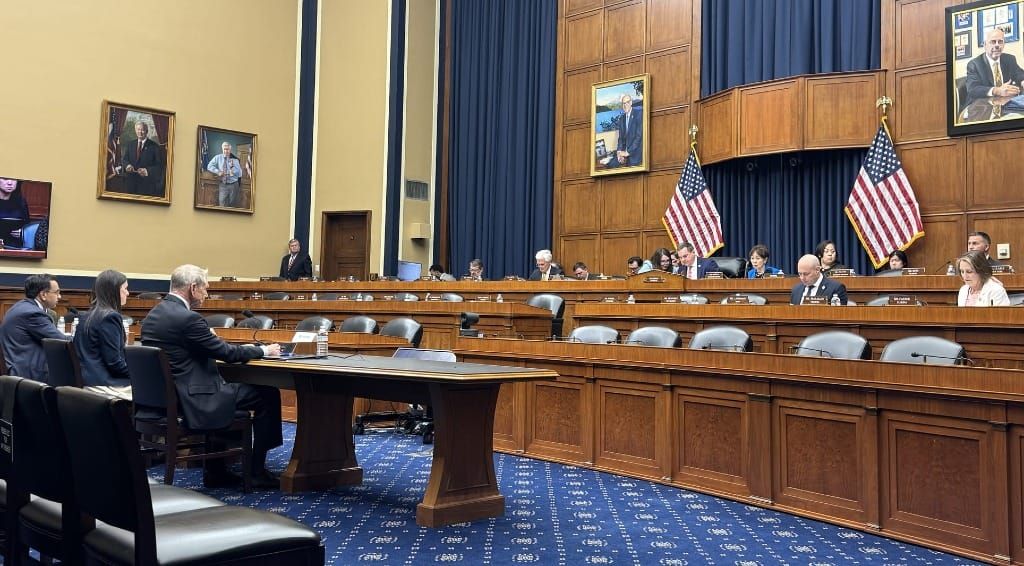
WASHINGTON, April 22, 2026 – The House Communications and Technology Subcommittee examined legislation Tuesday aimed at modernizing how the U.S. licenses satellite systems, as demand for space-based communications continues to surge.
The proposed SAT Streamlining Act would update the Communications Act of 1934 to give the Federal Communications Commission clearer authority over licensing geosynchronous orbit and non-geostationary orbit satellite systems, as well as related ground infrastructure.
“If we want the United States to remain a global leader in communications technology, we need a process that is modern, predictable, and efficient,” said Ranking Member Doris Matsui, D-Calif. “We can’t let outdated processes delay technologies that can help people in their daily lives.

The satellite licensing bill, introduced in the House on April 14 by Reps. Brett Guthrie, R-Ky., and Frank Pallone Jr., D-N.J., does not include provisions included in a Senate version.
Both the House and Senate versions would set a one-year deadline for the FCC to fully evaluate a satellite license application. However, revised language of the Senate version creates a framework that will require the FCC to consider the size of satellite constellations and what spectrum frequency it operates in.
The hearing also explored broader regulatory reforms under consideration at the FCC, including a proposed “assembly line” licensing framework designed to speed approvals and improve predictability.
Witnesses said delays in the current system can hinder innovation and increase costs.
“It makes everything cost more, people waste their money on lawyers when they should be able to just tell what the rules are and what the requirements are and file an application,” said Shiva Goel, partner at Wiley Rein LLP.
At the same time, industry representatives cautioned against sacrificing certainty for speed. Kara Leibin Azocar, vice president of regulatory and public policy at Iridium Communications Inc., said licensing must remain “deliberative” to ensure operators can rely on consistent regulatory outcomes.
Satellite services that would be provided through the Act are increasingly viewed as critical to closing connectivity gaps. “There are areas of the country that will not receive broadband services unless it is provided by satellite companies,” said Tom Stroup, president of the Satellite Industry Association.
Beyond domestic policy, the hearing highlighted intensifying global competition. Witnesses warned that both China and the European Union are advancing coordinated regulatory frameworks to accelerate satellite deployment, while the U.S. system remains fragmented.
“They are not waiting for a license,” Goel said of international competitors.