
Luján Presses NTIA’s New Chief to Act on Broadband Funds ‘Day One’
Restoring digital equity and broadband funds should be Roth's first act as Administrator, Luján says.

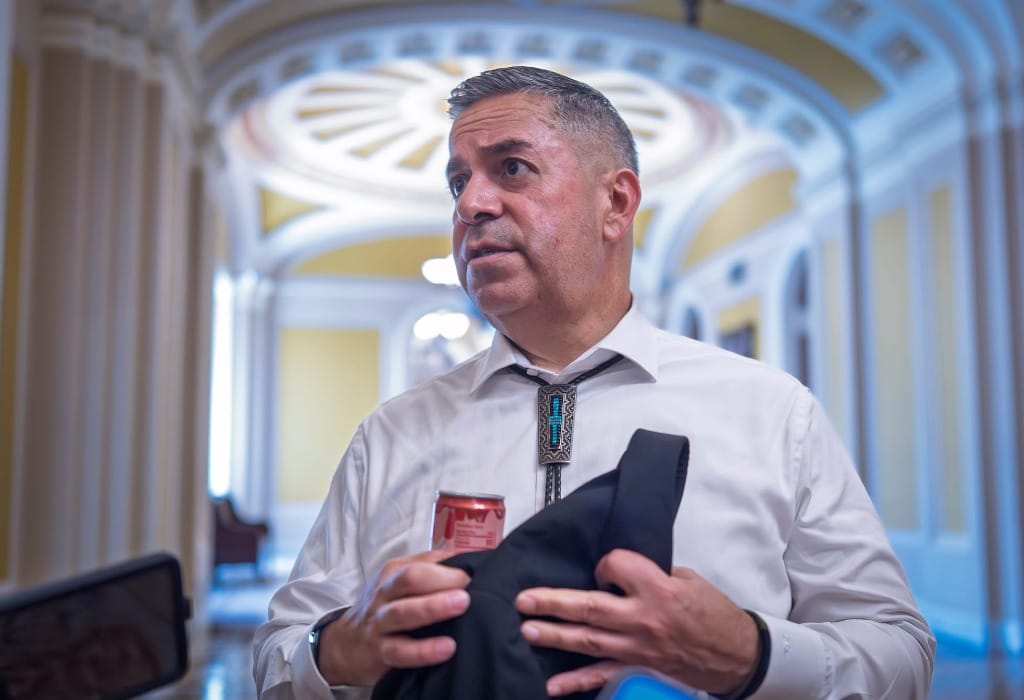
WASHINGTON, August 1, 2025 – Arielle Roth’s welcome gift as NTIA Administrator? A letter from Senator Ben Ray Luján, D-N.M., demanding she get New Mexico its broadband money.
Luján, ranking member of the Senate Commerce Subcommittee on Telecommunications and Media, sent Roth a letter Thursday, urging her to make it her first priority as NTIA Administrator to fully implement the Digital Equity Act and the Broadband Equity, Access, and Deployment program, both authorized and funded by Congress under the Infrastructure Investment and Jobs Act.
“I urge you to fulfill your commitments to Congress that you will ‘follow the law,’ ‘act impartially,’ and ‘deliver the best broadband service possible for all Americans,’” Luján wrote to Roth. “Your first act as Administrator should be to immediately restore the suspended digital equity grants and swiftly approve and release BEAD funding to states like New Mexico.”

Originally nominated by President Donald Trump on February 3, 2025, Roth was confirmed by the Senate on July 23 and expected to begin her tenure any day now.
Under the Digital Equity Act, Congress allocated $2.75 billion to advance digital inclusion for historically underserved populations across the county. But, in May, the Trump administration suddenly rescinded the grant awards, cancelling what Trump called a $2.5 billion “giveaway.”
A coalition of 22 states has mounted a legal challenge to the Trump administration’s justification for canceling the Digital Equity Act in the U.S. District Court for Massachusetts.
Emphasizing the “deep rural divides, Tribal lands, and persistent poverty” in his state, Luján called on Roth to immediately reinstate and resume the disbursement of $8 million in digital equity funds for New Mexico.
“Distribution of these digital equity funds is not a discretionary choice, it is a statutory obligation,” Luján said.
According to Luján, this funding was needed to launch programs such as digital navigators, workforce development, and cybersecurity training for the approximate two million New Mexico residents who still face significant barriers that prevent them from fully participating in the digital world.
Further, Luján pressed Roth to uphold the BEAD program’s goal of connecting nearly 25 million Americans that continue to wait for affordable, high-speed, reliable internet service.
To maintain the statutory flexibility given to the states to carry out the BEAD program, Lujan asked Roth to avoid further delays, require a genuine low-cost option, and respect state-level expertise.
“Failing to adhere to these statutory requirements and current approval timeline risks setting broadband deployment back by years,” Luján claimed.
Highlighting that Congress also explicitly authorized states to use BEAD funding for a variety of uses other deployment – such as data collection, broadband mapping, installation of Internet connections within multifamily residential buildings where low-income residents live, and broadband adoption efforts – Luján requested that Roth release non-deployment guidance as soon as possible.
The letter concludes with three questions that Luján asks Roth to answer by August 15:
- At what date, in accordance with the law, will you reinstate the grant programs under the Digital Equity Act that were wrongfully terminated earlier this year?
- Will you commit to no further delays and approve states’ BEAD plans within 90 days of submission?
- At what date will you release updated NTIA guidance for non-deployment uses of BEAD funding?
In a final remark, Luján noted, “Congressionally appropriated funds for the Digital Equity Act and the BEAD program are not optional – they are essential. They represent not only a historic investment in our infrastructure, but a statutory obligation to the people of New Mexico and every unserved and underserved community across this country.”







Member discussion