Lutnick Aiming for Non-Deployment Guidance ‘Over the Next Two Months’
NTIA also approved Oklahoma’s final BEAD proposal, leaving only California and Illinois awaiting clearance.

WASHINGTON, April 22, 2026 – The head of the Commerce Department is hoping to complete guidance on $22 billion in broadband spending “over the next two months.”
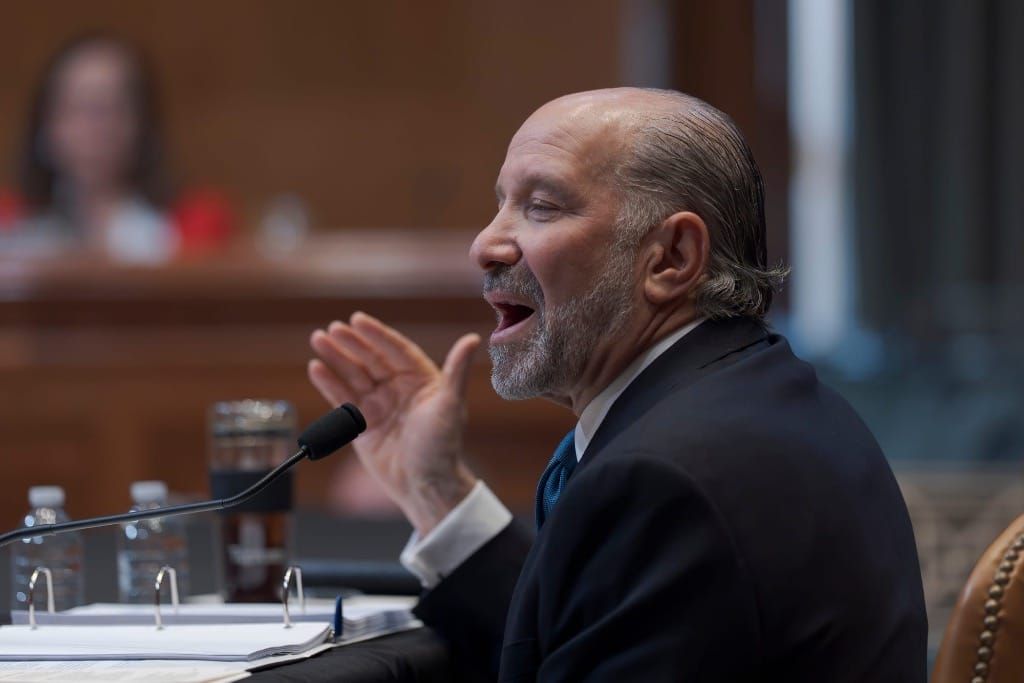
That’s what Commerce Secretary Howard Lutnick told lawmakers Wednesday during a hearing on the agency’s 2027 budget. The agency had been planning to release the guidance March 11, but it’s been delayed.
Commerce’s National Telecommunications and Information Administration is handling the $42.45 billion Broadband Equity, Access and Deployment program. About $22 billion of that will be left over after deployment projects are funded, due in part to Trump administration efforts to bring down spending as much as possible.

When NTIA altered BEAD’s rules in June, it rescinded approval for any non-deployment activities, and it’s remaining unclear how states will be able to use their remaining slices of BEAD money. They were initially planning on broadband adoption efforts, among other things.
The guidance on allowable uses of the money will also detail which states are allowed to spend their money at all. Under a December executive order – which set out the missed March 11 deadline – states with “onerous” laws on AI companies are set to be ineligible to spend their non-deployment money.
“I would expect over the next two months we will have our plan in place, and we will be happy to discuss it with you,” Lutnick told Sen. Jeanne Shaheen, D-N.H.
He said that after taking input from listening sessions, written comments, and meetings with states, the agency was currently “sorting through those comments and trying to determine the plan, which we’re going to go over with the administration.”
Sen. Brian Schatz, D-Hawaii, said he was unclear on how states were supposed to comply with the “onerous” standard. Multiple state legislators have reportedly scrapped or slowed AI legislation out of fear of jeopardizing their BEAD allocations.
“Is the standard basically: Don’t legislate or do any policymaking in the AI space, lest it be considered onerous and burdensome?” he said.
Lutnick responded: “I think we should come up with best practices, and work together to come up with best practices, so we don’t have a patchwork that makes AI executive impossible across America. And we should work together to do that.”
NTIA’s chief of staff said earlier this year the agency was looking to target only a handful of state laws, rather than any legislation that dealt with AI.
Sen. Deb Fischer, R-Neb., pushed again for NTIA to allow precision agriculture as a use for non-deployment funds.
“That’s an important topic, and we are researching it and looking at it,” Lutnick responded. “I think it’s really interesting and it is very much a part of our topic of conversation.”
State broadband heads have floated extra deployment to connect areas missed by BEAD or where BEAD winners default, upgrades to 911 networks, and other things as potential uses for the remaining money. NTIA Administrator Arielle Roth said last year she liked the idea of using some of the money to speed up local permitting.
Oklahoma BEAD approval
NTIA also approved Ohlahoma’s final spending plan under BEAD Wednesday. That makes California and Illinois the only two states or territories without NTIA’s final blessing.
Oklahoma will still have to get its tentative awards cleared by Commerce’s National Institute of Standards and Technology, but the agency doesn’t review awards on a policy level like NTIA and hasn’t made major changes to other states.
“The final framework set by NTIA helps us surpass our goal of coverage across the state while saving taxpayers money,“ Mike Sanders, executive director of Oklahoma’s broadband office, said in a statement. “We remain laser-focused on reaching unserved locations and delivering practical, dependable broadband service throughout the state.”
Oklahoma’s approved plan would spend more than $427 million on broadband deployment, down more than $227 million from the state’s public draft released last year.
The reduction in spending can partly be attributed to switching some locations from fiber awards to low-Earth orbit satellite. Oklahoma’s approved plan will get 53 percent of its locations fiber, compared to more than 67 percent in the draft, and 25 percent LEO, compared to a draft total of less than 10 percent.
The total location count, including community anchor institutions, also fell to 40,500 from more than 44,000.
Oklahoma was allocated more than $797 million under BEAD, leaving it with nearly $370 million in non-deployment funding.