MIT Professors Argue for ‘Pro Worker-AI’ Plan In New Paper

Experts agree that there’s still a chance for AI to support human expertise instead of displacing its need.

MIT Professors Argue for ‘Pro Worker-AI’ Plan In New Paper
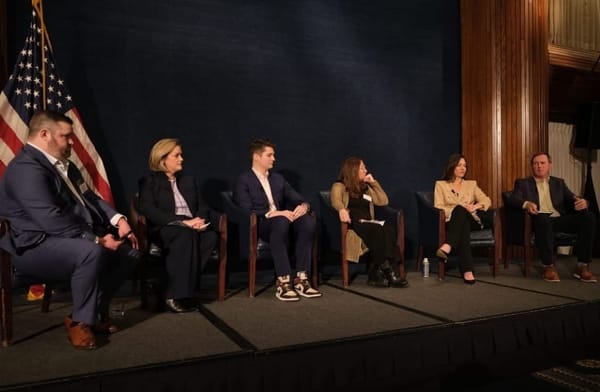
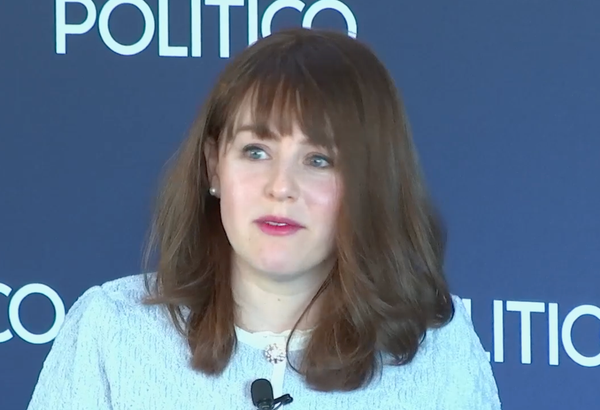
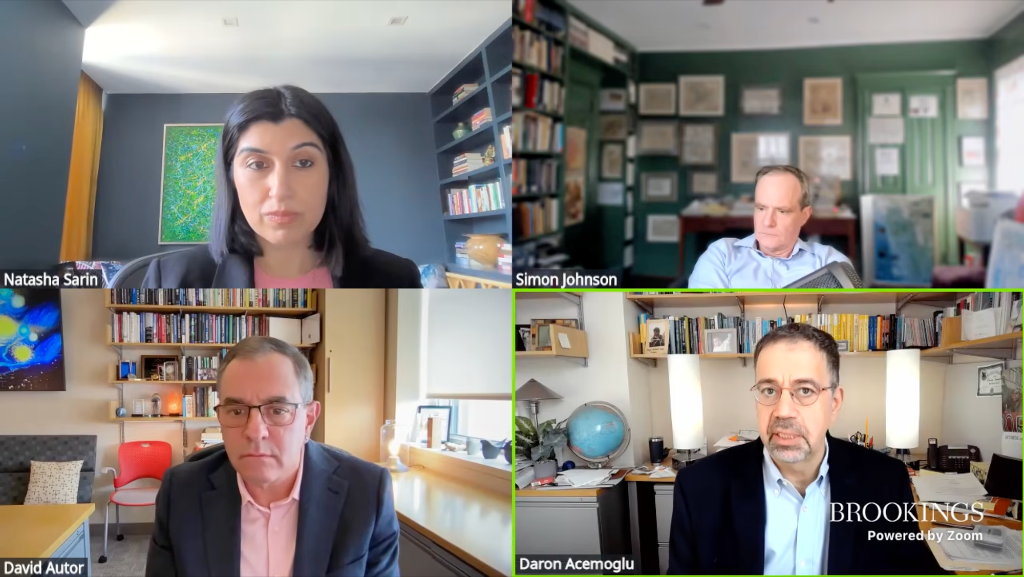
Screenshot of Daron Acemoglu, David Autor, and Simon Johnson with Natasha Sarin (moderator) speaking during the "AI + work: Building pro-worker AI" online event.

WASHINGTON, Feb 27, 2026 – Disruptions to work from AI are coming, and the United States is not on a path to prevent the worst impacts, according to a panel of MIT professors and researchers.

At an event hosted by the Brookings Institution and The Hamilton Project on Tuesday, Daron Acemoglu, David Autor, and Simon Johnson spoke about research paper “Building Pro-Worker AI,” which outlines a conceptual framework for an AI that supports and increases the need for human expertise, instead of creating tools that displace workers. In 2024, Acemoglu and Johnson won a Nobel Prize in Economic Science.

“52 percent of American workers are worried about AI…42% of those who are currently using AI think it will lead to job loss, ” Acemoglu said. “Americans are right to be worried because AI is presented as the greatest automation technology of all time, Artificial General Intelligence being the apogee of this vision.”

Acemolglu noted that while automation can increase productivity, it can also have adverse effects on workers who may suffer losses of wages, displacement and widening wealth inequality

The concept of a “Pro-Worker AI”, according to the researchers, is to have developers make AI a tool that supports expertise similar to how a calculator helps a mathematician execute complex math or a logger uses a chainsaw to quickly cut trees down. 

Autor noted that this type of shift, toward labor augmentation instead of automation would improve efficiency, support human expertise and prevent the negative societal and political effects that technological changes have led to throughout history.  

“We are not advocating for slowing things down, it's a question of which direction we’re pushing it,” Autor said. “We have lots of problems right now that need enhancement that are not subject to automation…we’re going to have doctors and nurses 20 years from now…the question is will we use it to make them more effective and enable more people to do that work well.”

Efforts to push AI in a pro-worker direction may need to come from the government. One example given by Johnson was the DARPA Grand Challenge, which set a $1 million cash prize to develop a self-driving car in 2004. 

This, according to Johnson, spurred the self-driving car industry, eventually leading to companies like Waymo. The same type of incentive structure could be put forward for pro-worker AI services. 

Ultimately, these researchers believe that the path we are on today could be potentially cataclysmic for our society, but there’s still an opportunity to move things in the direction that supports workers and prevents massive disruptions. 

“We are not currently on the pro-worker AI path and that’s unfortunate, it's regrettable, it's avoidable, and we are working pretty hard to try to get us on another path,” Johnson said.

Member discussion

Popular Tags