More Ideas for Use of BEAD Non-deployment Funding

NTIA has been taking input on how to allow states to spend the roughly $21 billion in remaining program funds.

More Ideas for Use of BEAD Non-deployment Funding
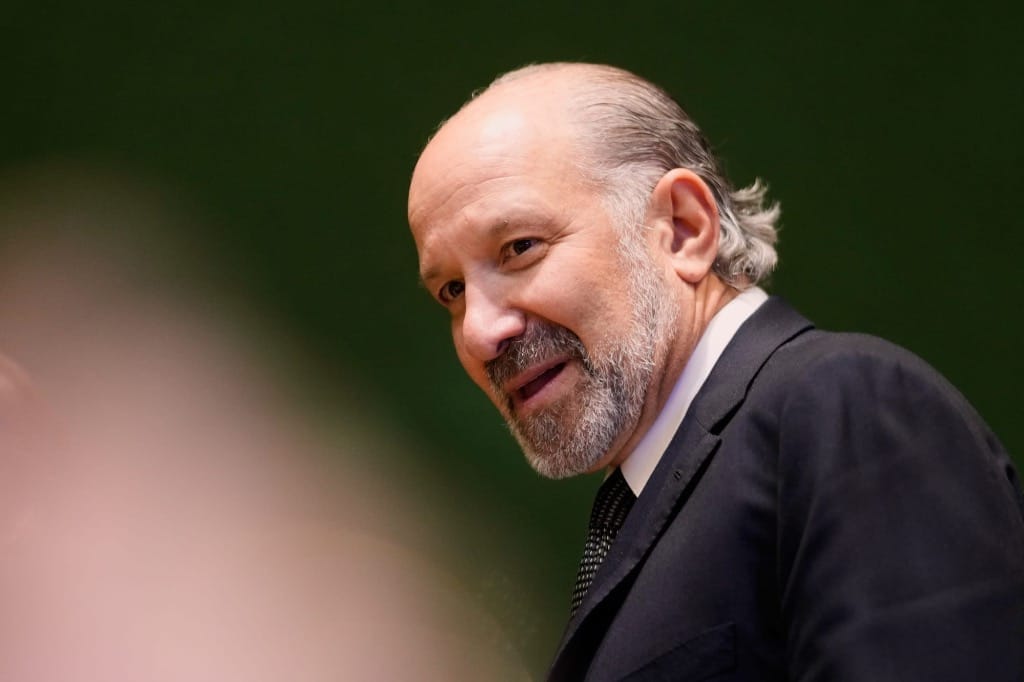
Photo of Commerce Secretary Howard Lutnick at the World Economic Forum in Davos, Switzerland on Wednesday, Jan. 21, 2026 by Markus Schreiber/AP

WASHINGTON, March 4, 2026 – Stakeholders still have a lot of ideas on how the Commerce Department should spend roughly $21 billion in broadband funding that won’t be used on network deployment.

T-Mobile and CCA pushed for more wireless infrastructure, INCOMPAS and the Western Governors’ Association agreed on supporting AI infrastructure and workforce development, while groups including the National Digital Inclusion Alliance and Information Technology and Innovation Foundation pushed for measures addressing broadband affordability and adoption.

Commerce’s National Telecommunications and Information Administration held listening sessions last month on how it should allow states to use their leftover allocations under the $42.45 billion Broadband Equity, Access, and Deployment program. Parties have continued submitting written comments on the issue.

Under a December executive order, NTIA is set to release a notice on March 11 detailing which states, if any, are ineligible for that funding altogether. The White House directed that states with “onerous” laws on AI companies would be barred from receiving the cash. 

NTIA Chief of Staff Brooke Donilon said last month the agency was only interpreting that to target a small number of states. As for the ones who can use the non-deployment money, NTIA rescinded approval for previously cleared activities when it revamped BEAD’s rules last June, and is still mulling how to proceed. Commerce Secretary Howard Lutnick has told lawmakers the agency won’t claw the back from states.

In a Monday blog post, T-Mobile suggested an $8 billion fund that would support about 6,000 new macro cell sites. That would ensure 5G coverage for about 99 percent of the U.S. population for the next decade, the company said. Trade group 5G Americas put current 5G penetration in the U.S. at about 99 percent in December.

“Upwards of $13 billion in funding will remain once these defined coverage benchmarks are achieved,” the company wrote. “Build what is needed, deliver the coverage and then step back. That is what responsible stewardship looks like.”

The Competitive Carriers Association, a trade group that counts T-Mobile as a member, agreed that states should be able to fund wireless infrastructure.

“Nearly all CCA mobile providers offer fixed wireless services, a technology “two-fer” providing seamless, continued connectivity in homes and businesses as well as when consumers are in transit and moving about their lives,” the group wrote. “Federal support for this technology guarantees a successful return on investment – a further Benefit of the Bargain.”

Spending on mobile infrastructure was opposed by Evan Swarztrauber, a former aide to FCC Chairman Ajit Pai, and by ITIF. Swarztrauber now runs CorePoint strategies, a telecom policy public affairs firm.

“BEAD was expressly written to fund fixed, last-mile, home broadband connections,” he wrote in a recent op-ed. “It was never intended as a backdoor 5G Fund.”

A bill introduced in December would allow non-deployment funds to go toward additional deployment projects, including mobile infrastructure. The broadband industry was supportive of the legislation.

Affordability

ITIF said non-deployment funds should go toward a new affordability program to replace the Affordable Connectivity Program, which provided low-income households a $30 internet discount before it ran out of cash in 2024. 

“This approach would make life more affordable for struggling American families

while also adhering to the statutory goal of closing the digital divide,” ITIF policy analyst Ellis Scherer wrote.

The National Digital Inclusion Alliance urged NTIA to allow states to support adoption programs like digital skills trainings and device subsidies. The group said without those investments, people who have newfound access to broadband infrastructure after BEAD could still avoid signing up for service.

New America’s Open Technology Institute agreed.

“For an administration opposed to wasteful spending, there should be no greater fear than building $20 billion networks that connect nothing and nobody,” OTI policy analyst Jessica Dine wrote. “And yet those are exactly what the BEAD program threatens to buy if NTIA chooses to ignore the adoption side of the program altogether. There is still time to turn the ship around and set BEAD back on course.”

Workforce

INCOMPAS and the Western Governors’ Association agreed that workforce development would be a worthy use of non-deployment funds.

A Fiber Broadband Association report in 2024 estimated nearly 120,000 additional workers would be needed over the next 10 years just to replace people who retire or change industries, plus another nearly 60,000 to meet BEAD-induced demand.

The FBA study was conducted before the Trump administration changed BEAD’s rules in June and made it easier for satellite providers to win funding, but the program is still tentatively slated to fund fiber to more than 2 million locations nationwide.

INCOMPAS also supported spending money with AI infrastructure and on upgrading local permitting processes with new tools. NTIA Administrator Arielle Roth has suggested she would support using some of the money to streamline permitting processes.

Member discussion

Popular Tags