
Natural Resources Chairman Says SPEED Act Unlocks Faster Infrastructure Deployment
Years-long federal permitting delays are slowing major infrastructure deployment, raising costs for consumers and undermining competitiveness.

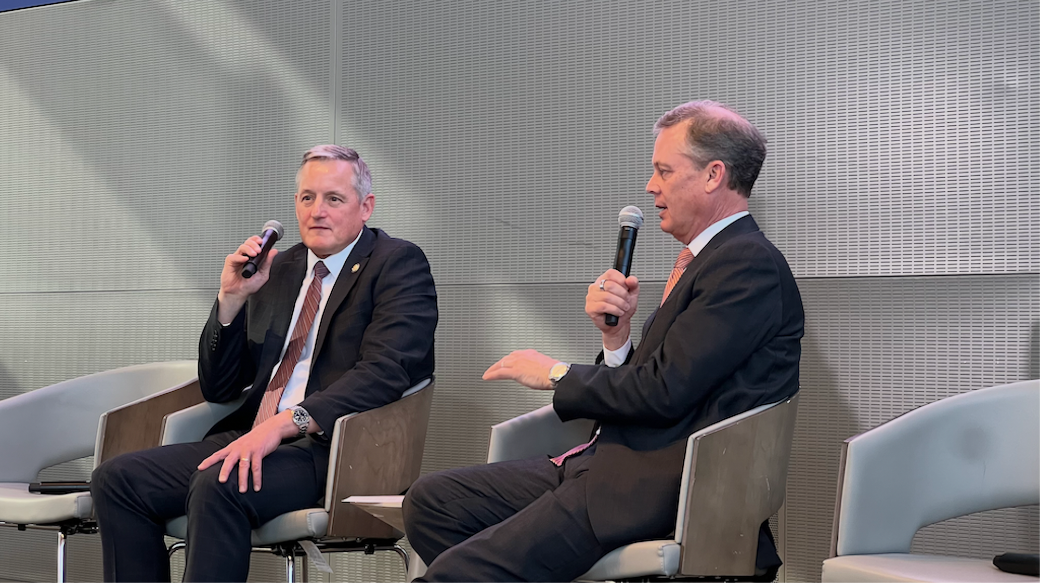
WASHINGTON, Feb. 4, 2026 – House Natural Resources Committee Chairman Bruce Westerman, R-Ark., said federal permitting delays are inflating costs for broadband and infrastructure projects, warning that drawn-out approval timelines ultimately hit consumers’ pocketbooks and slow the deployment of new technologies.
Speaking at the INCOMPAS Policy Summit here, Westerman framed the SPEED Act, H.R. 4776, legislation passed by the House in December, as a bipartisan effort to shorten the federal permitting process while maintaining environmental protections.
The bill aims to accelerate reviews under the National Environmental Policy Act by setting clearer timelines and limiting prolonged judicial challenges.

“Permitting affects every American’s pocketbook,” Westerman said, arguing that projects delayed for years face rising labor and material costs that are ultimately passed on to consumers.
While the discussion focused broadly on infrastructure, Westerman pointed to broadband deployment as a clear example of how permitting delays can stall progress. He cited a case involving air traffic control modernization, where billions of dollars were appropriated to upgrade systems, but fiber optic installation to control towers was held up by permitting hurdles.
“That’s how ridiculous a lot of this has been,” Westerman said, describing how the inability to run fiber because of permitting delays slowed critical infrastructure upgrades.
Westerman said it takes an average of four to six years to secure permits for major projects, a timeline he described as incompatible with the pace of technological change in sectors such as communications, data, and artificial intelligence.
“We can have economic growth and environmental stewardship at the same time,” he said, emphasizing that the SPEED Act does not eliminate environmental laws but seeks to make NEPA reviews more predictable and efficient. “NEPA is a procedural statute. We just need the process to go faster.”
Moderator Chip Pickering, CEO of INCOMPAS, suggested his goal for linking a measure addressing broadband-specific permitting barriers, including delays related to rail crossings, to the SPEED Act. Westerman stressed that his priority was advancing a tech-neutral permitting framework capable of passing the Senate and becoming law.
“The perfect bill is the one the president signs,” he said, noting that the Senate will ultimately determine what additions are needed to secure passage. “If we can’t build and implement new technology here in the United States, we’re going to lose out economically and environmentally,” he said.
With the SPEED Act before the Senate, Westerman urged industry groups to continue pressing lawmakers to act, calling permitting reform one of the most consequential policy changes Congress can make.
Broadband Breakfast will be covering additional remarks by individual members of Congress in the Broadband Community Discussion Forum, from the INCOMPAS Policy Summit. (Free signup required.)





Member discussion