
New Expert Agency May Be Necessary to Regulate Digital Economy, Say Panelists
A new agency of experts should take on the task of regulating this emerging driver of the economy, some panelists said.

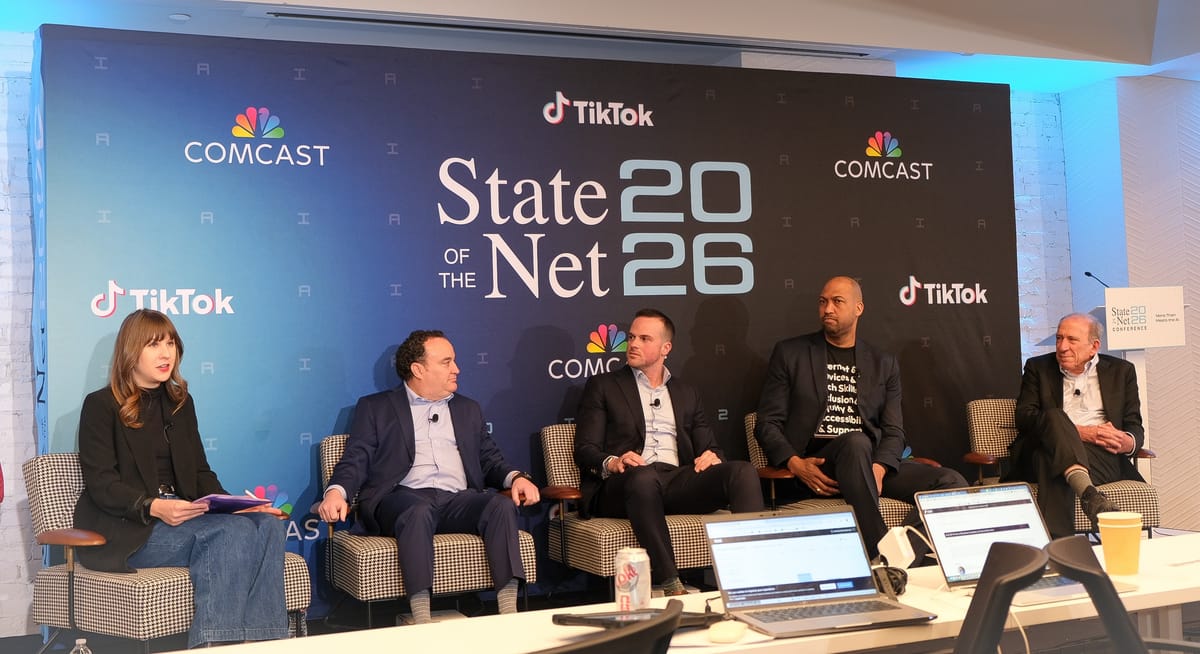
WASHINGTON, Feb. 9, 2026 – The creation of a new federal agency may be necessary to oversee artificial intelligence and the rest of the digital economy, industry experts said at the State of the Net conference here Monday.
“Right now the government is dumb and stupid when it comes to AI, and it’s kind of deliberately so,” said Blair Levin, policy advisor at New Street Research and former chief of staff at the Federal Communications Commission. “You actually need another agency.”
While it might be possible for existing agencies like the FCC or the Federal Trade Commission to perform such a mission, Levin and the other panelists said that a narrower agency that focused on the specific questions of the digital economy would better protect consumers.

Chris Lewis, CEO of the non-profit advocacy group Public Knowledge, said that because AI intersects with so many facets of regulation–including energy, water, data privacy, copyright issues and free speech–states have necessarily stepped into the void left by the federal government.
The Trump Administration has taken action to contravent burgeoning state laws. A Dec. 11, 2025, executive order seeks to prevent laws deemed "onerous" to the development and deployment of AI, by proposing to withhold federal broadband funds. Several states have pushed back against the preemption approach.
Data centers could be good for consumers
Evan Swartzburger, senior fellow at the Foundation for American Innovation, a tech think tank, said that the wave of interest in data center development could in fact be a huge win for communities in the form of increased fiber access, electric grid upgrades and lower energy costs.
Swartzburger said that data centers need infrastructure including fiber, and if companies strike deals with residential providers for fiber power generation and transmission services, upgrades to the grid and increased fiber access will follow, which can drive costs.
Universal access needs reform
Panelists shared concern that the administration might be tempted to pronounce “mission accomplished” after BEAD is fully implemented, in spite of digital divide and universal access concerns will remain in cities and rural areas–even with BEAD fully implemented.
“There is no thought about what universal service means in an era of AI,” Levin said. “The government does better when it has a process and the right people asking questions designed to get that answer, but right now nobody in the government is asking this question.”
But this and other areas discussed on the panel should be considered within the framework of the new agency dedicated to universal access and AI regulation, he said.
David Don, senior vice president of public policy at Comcast, said that while the BEAD program will accomplish much to increase access, additional work must be done to revise the universal service scheme in order to meet its stated mandate.
He said that as a competitive environment continues to grow around AI, regulations will need to evolve to meet the moment.






Member discussion