New York Law Institute Opposes Proposed 'Internet for All' Plan
Researchers argue a city-owned broadband network in New York City would be costly and difficult to sustain.

June 16, 2026 – A policy institute argued Tuesday against a proposal to build a city-owned, open-access fiber network across New York City’s five boroughs, saying it would do little to solve the city’s internet challenges.
In an op-ed, Advanced Communications Law and Policy Institute Director Michael Santorelli and Senior Fellow Alex Karras argued that New York City's “Internet for All” Plan, proposed in late May by the city’s Public Advocate Jumaane Williams, would expose the city to significant financial and operational risks.
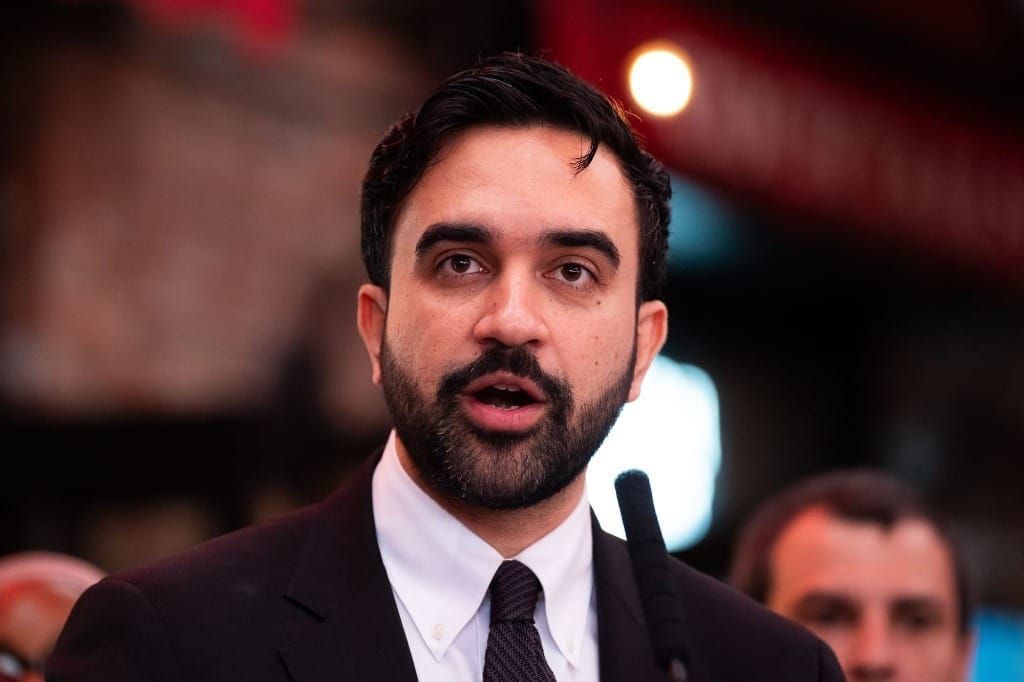
In releasing the plan, Williams argued it was designed to increase access, reduce costs and make fiber universally available in New York City by creating a non-profit public internet option.
The 15-year plan would begin with stronger oversight of existing broadband providers, before moving to the acquisition of broadband infrastructure and expanded fiber deployment. The final phase envisions a citywide municipal broadband network offering a nonprofit public option for high-speed internet service.
The ACLP explained that municipal broadband programs are exceedingly rare in the U.S., with only 400 localities out of 90,000 local governments pursuing such infrastructure. The authors argue this is due to financial and operational risks of municipal broadband projects.
Implementing the “Internet for All” plan entails high capital costs for building, operating and upgrading networks, so sufficient revenue must be generated to cover them, Santorelli and Karras argue. Many people already have their own ISP, so it involves convincing enough individuals to switch from their current provider to the public one.
Without enough customers to sustain the investment, the project may enter a downward spiral.
“At that point cities are often left with two bad options: subsidize the failing network with taxpayer dollars or sell it off after sinking substantial public resources into a failed experiment,” Santorelli and Karras write.
New York City is very different from other places where city-owned municipal fiber has been implemented in size and diversity of residents. The implementation of the “Internet for All Plan” would be more complex and expensive, along with taking longer to implement due to the size of the city.
ACLP also argued that broadband availability is not an issue in New York City, citing data that shows nearly every household in the city can access internet with 900+ Megabits per second (Mbps) speeds. Residents can choose from at least three fixed broadband options, with affordable prices, ACLP said.
The ACLP argues that broadband adoption rates are lower in certain communities not because the service is too expensive, but because of other factors like not seeing broadband as a useful service. Low-cost subscription plans are already offered by ISPs, but adoption rates for broadband have not changed. Spending money on a municipal fiber network would likely not solve lingering adoption issues in New York City, the authors argue.
Last April, Tech Policy Press advisors Suzi Ragheb and Katherine Jin argued that New York City should move towards building publicly owned broadband infrastructure because providers have a limited incentive to expand service to low-income communities. City-owned broadband infrastructure would allow multiple providers to compete over a shared network to lower prices and improve service quality.
As required by New York City law, Mayor Zohran Mamdani must draft a master internet plan for the city by November of this year and finalize the plan by May 1, 2027. In January of 2020, then-mayor Bill de Blasio proposed his Internet Master Plan that – like the Public Advocate’s “Internet for All” plan – called for building a citywide municipal fiber network.
Since Mamdani’s election, there have been calls for the mayor to implement a plan like the Public Advocate’s plan. So far, Mamdani has announced a $2 million expansion of New York City’s Neighborhood Internet program that provides free, high-speed broadband to low-income residents in Upper Manhattan and the Bronx.
ACLP is a research institute housed at New York Law School that focuses on telecommunications, broadband, internet policy, digital infrastructure, and related regulatory issues.