
Newsom Signs Executive Order to Strengthen AI Safeguards, Clashing with Federal Policy
Order aims to curb bias, rights violations, and misuse in state AI contracts.

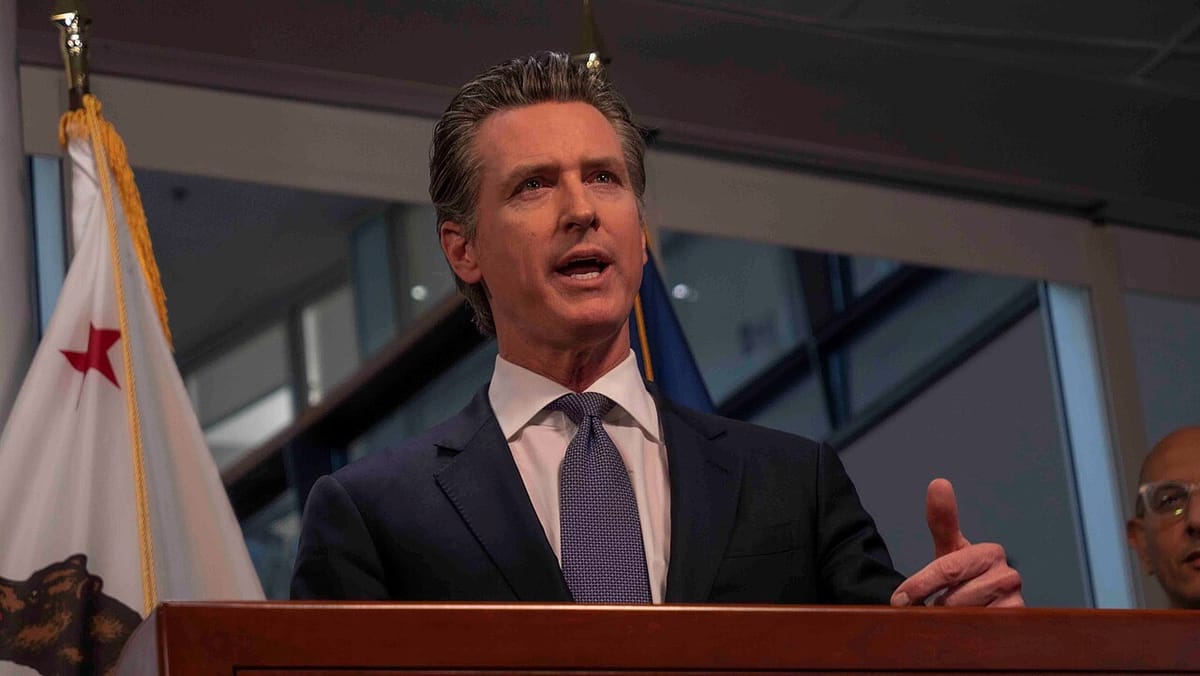
March 31, 2026 – California Governor Gavin Newsom signed an executive order Monday to tighten oversight of artificial intelligence companies contracting with the state, implementing stricter safeguards even as the federal government moves to preempt state oversight.
“California leads in AI, and we’re going to use every tool we have to ensure companies protect people’s rights, not exploit them or put them in harm’s way,” Newsom said in a statement Monday accompanying the order. “While others in Washington are designing policy and creating contracts in the shadow of misuse, we’re focused on doing this the right way.”
The order requires companies seeking state government contracts to demonstrate how their AI systems mitigate risks such as bias, the violation of civil rights and free speech, and the spread of illegal or exploitative content.

It directs the state’s Department of General Services and the Department of Technology to offer recommendations to the Governor’s office within 120 days, outlining how the state should best vet companies based specifically on public safety protections and preventing potential misuse.
The new order may put the state in conflict with the Trump administration's March 20 policy framework on AI regulation.
“This effort is in contrast to the Trump administration and congressional Republicans, who have proven themselves incapable of passing even the most basic protections when it comes to AI,” Newsom’s release states.
The White House in December issued a executive order requiring officials to evaluate existing state AI laws and identify ‘onerous’ regulations.
The “evaluation of State AI laws shall, at a minimum, identify laws that require AI models to alter their truthful outputs, or that may compel AI developers or deployers to disclose or report information in a manner that would violate the First Amendment or any other provision of the Constitution,” the White House order states.
The Trump administration has repeatedly floated a proposed 10-year moratorium on state AI regulation, and hinged states ability to receive full funding under a national broadband program on whether or not they comply.
In response, Newsom’s order creates a formal review process to push back against federal designations.
According to the new directive, the CDT State Chief Information Security Officer is now tasked with reviewing any new federal designations of companies. This mechanism allows California to veto the federal ‘supply chain risk’ blacklist, allowing state agencies to continue to contract with AI companies even if those companies are disused by the federal government.
The move follows a U.S. District Judge blocking the Trump administration from adding Anthropic to the federal ‘supply chain risk’ blacklist. This executive order would allow California to circumvent the blacklist and continue its work with Anthropic.
“To fully realize A.I.’s benefits, we need to find and fix the dangers before they find us,” Anthropic CEO Dario Amodei wrote in an op-ed last year, arguing against the federal government’s proposed 10-year moratorium on state AI regulation.
Newsom also announced plans to expand the state’s use of generative AI tools to improve public services, including systems designed to help residents navigate benefits and programs.




Member discussion