
NTIA Chief of Staff: 37 States Cleared to Build Under BEAD, Signals More
The shift followed a December executive order aligning broadband execution with federal artificial intelligence policy.

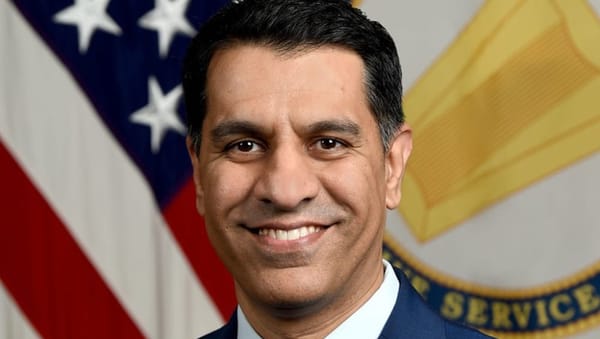
Akul Saxena

LAS VEGAS, Jan. 7, 2026 — Federal broadband officials said Tuesday that additional states were expected to receive approval soon to begin construction under the Broadband Equity, Access, and Deployment program, as agencies began implementing a December executive order that tethered federal infrastructure programs more directly to the Trump administration’s artificial intelligence framework.
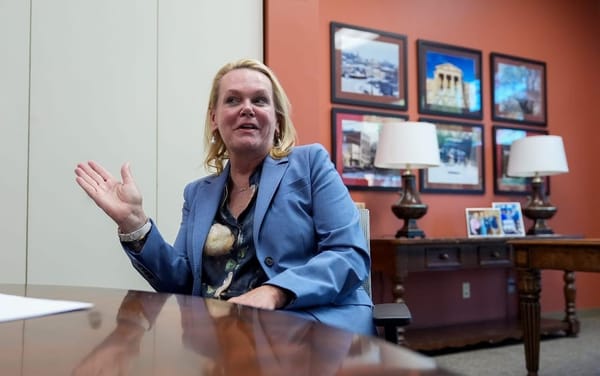
The update came as 37 states had already been approved to enter the construction phase, moving the program from plan review to implementation. Brooke Donilon, chief of staff at the National Telecommunications and Information Administration, said further state-level approvals were expected to be announced in the near term, perhaps even “soon enough for announcement at CES.”
Donilon said the December order placed the NTIA at the center of the administration’s AI implementation strategy just as states prepared to break ground on broadband projects. She said states were now managing deployment timelines while also planning for AI–related investments, increasing the need to align permitting, infrastructure planning, and compliance across programs.
NTIA’s near-term focus remained on an expeditious deployment, with Donilon stating that reaching “perfect should not obstruct the good.” Priority areas included environmental review timelines, rights-of-way access, and enforcement of safeguards intended to prevent delays once construction contracts were awarded.
Donilon said Congress’ decision to structure the BEAD program as a 56-state and territory program placed primary deployment decisions with state broadband offices. NTIA’s role, she said, was to resolve federal coordination issues that historically slowed deployment rather than to expand the size of deployment grants.
Donilon said the agency’s execution work increasingly intersected with spectrum and satellite policy, where federal coordination was already accelerating. She said preparations were underway for the 2027 World Radiocommunication Conference, noting that roughly 80 percent of agenda items under discussion were satellite-related, a shift with implications for capacity planning, cross-border coordination, and future broadband architectures.
Equitable access should be paired with strategic capabilities
Jonathan Uriarte, policy and strategic communications adviser to commissioner Anna Gomez at the Federal Communications Commission, emphasized an approach focused on equitable access alongside strategic capabilities. He said the expiration of the Affordable Connectivity Program, a pandemic-era subsidy, in 2024 remained a binding constraint on adoption.
Uriarte said the lapse demonstrated that network availability did not translate directly into sustained subscriptions, particularly for low-income households. He said the loss of the subsidy forced renewed trade-offs between broadband service and other household expenses.
He added that the FCC implemented interim non-deployment measures after the Affordable Connectivity Program ended, including broadband nutrition labels and limited hotspot funding for schools and libraries. Several emergency programs, however, had since expired without replacement.
Uriarte said the commission had shifted toward outcome-based analysis, focusing on adoption, affordability, and continuity of service rather than build metrics alone. Deployment, he said, remained a necessary but insufficient condition for access.
Those pressures sharpened scrutiny of the Universal Service Fund from lawmakers, regulators, and industry, as attention shifted toward modernizing contribution mechanisms and redefining the fund’s role amid declining legacy telecommunications revenues.
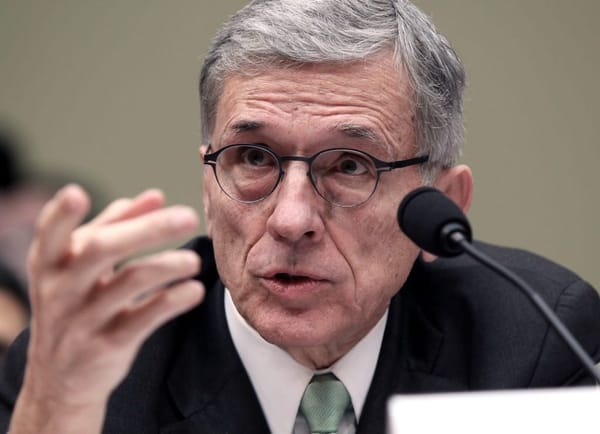
Bill Davenport, senior director for connectivity and technology policy at communications company Cisco Systems, said the transition into construction under the BEAD program intensified unresolved questions about the fund’s long-term purpose.
Davenport said policymakers needed to clarify what the USF should support once BEAD addressed many rural coverage gaps, and how contributions should be structured as revenues continued to migrate away from traditional voice services.
He tied those structural questions to changes in network utilization driven by AI, noting that automated workloads were increasing upstream traffic to cloud and edge computing environments and shifting demand toward symmetrical capacity, meaning comparable upload and download speeds.






Member discussion