Obernolte: Passing Bipartisan AI Regulation Would Send Strong Message to Public

The California Republican congressman hosts a monthly bipartisan dinner club on Capitol Hill to build relationships.

Obernolte: Passing Bipartisan AI Regulation Would Send Strong Message to Public
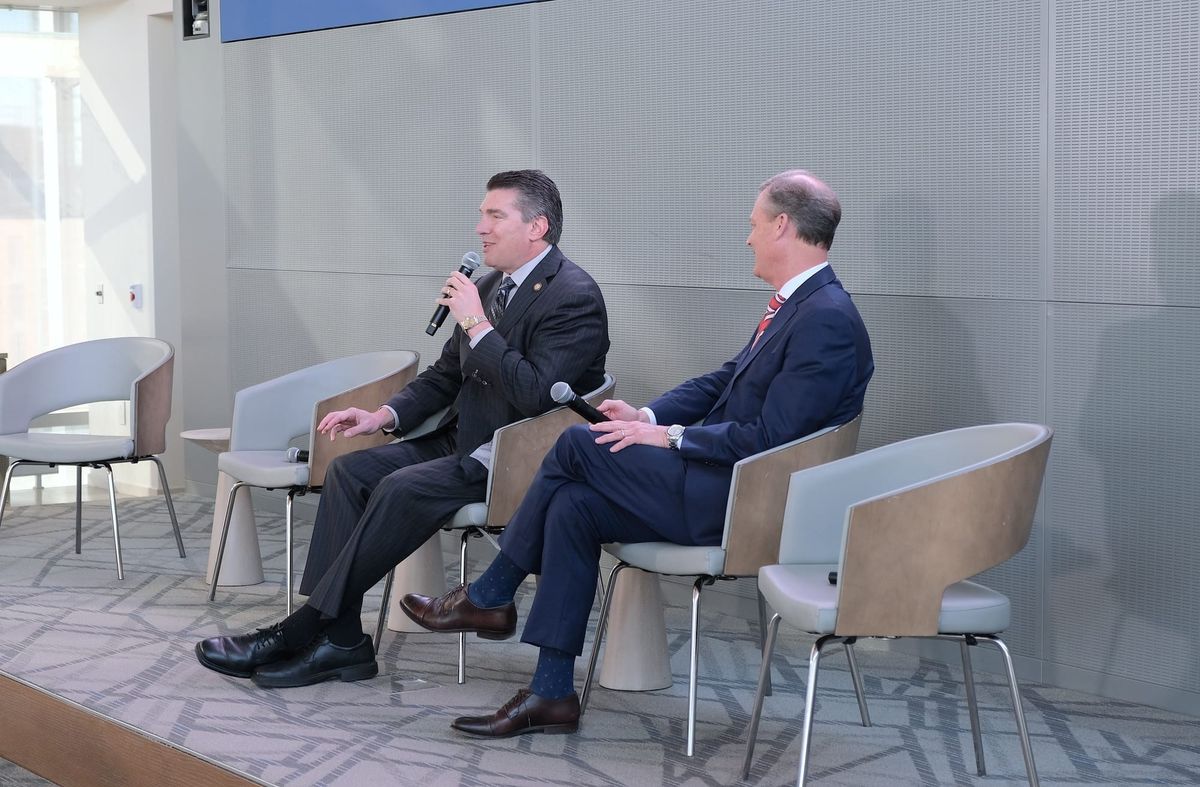
Photo of Rep. Jay Obernolte, R-Calif., left, speaking at the INCOMPAS Policy Summit on Thursday, Feb. 5, 2026

WASHINGTON, Feb 5, 2026 – Passage of standalone and bipartisan artificial intelligence legislation would send a powerful statement to the public that Congress is “on the job,” said Rep. Jay Obernolte, R-Calif., at the INCOMPAS Policy Summit Thursday.

Although a solidly Republican member of the House, Obernolte appeared to be caught off guard when moderator Chip Pickering, a former Mississippi Republican congressman who is CEO of INCOMPAS, asked him about his bipartisan dinner club.

Obernolte hosts the monthly event at his home on Capitol Hill to build relationships with members from both parties. He said that he modeled it after “life-altering” bipartisan dinner parties that he attended during his time in the California legislature. 

And Obernolte seeks bipartisanship in legislation, too. Broad bipartisan agreement does exist across many issues–despite the public perception that Congress doesn’t function in a time of intense partisan disagreement. 

He highlighted one recent example of bipartisan action: Reinstatement of funding for basic research. He and his colleagues helped push for it, despite objections from the Trump Administration. 

These restorations were signed into law in the most recent spending package, and Obernolte noted that such efforts of bipartisan agreement rarely, if ever, get press coverage. 

A dystopian AI future?

On the subject of AI, he said the average American believes it is largely unregulated and could lead to dystopian outcomes, such as those depicted in science fiction films like the Terminator.

Fears about the use of AI by malicious actors to spread misinformation and disinformation or to undermine society and democracy are, taken together, “probably just as consequential as an army of evil robots,” Obernolte said. 

Obernolte highlighted the proposed 10-year moratorium on state AI laws that was in the House version of the One Big Beautiful Bill Act. After Senate objection, the measure was stripped out of the budget act before final passage.

Obernolte said that his efforts to lead the moratorium in the Energy and Commerce Committee were largely misunderstood. 

States should play a role in AI, he said. But Congress must ultimately develop the digital “roads” through which individuals in states communicate in generation AI. In other words, Congress must regulate interstate commerce. 

“Were going to be continuing to monitor AI as it matures, and create a framework that is flexible enough to change and capture these new trends when come online,” Obernolte said.

Member discussion

Popular Tags