Officials Shift Data Center Strategy to Win Community Support
States are pushing developers to engage communities, improve facility design, and take on infrastructure costs.

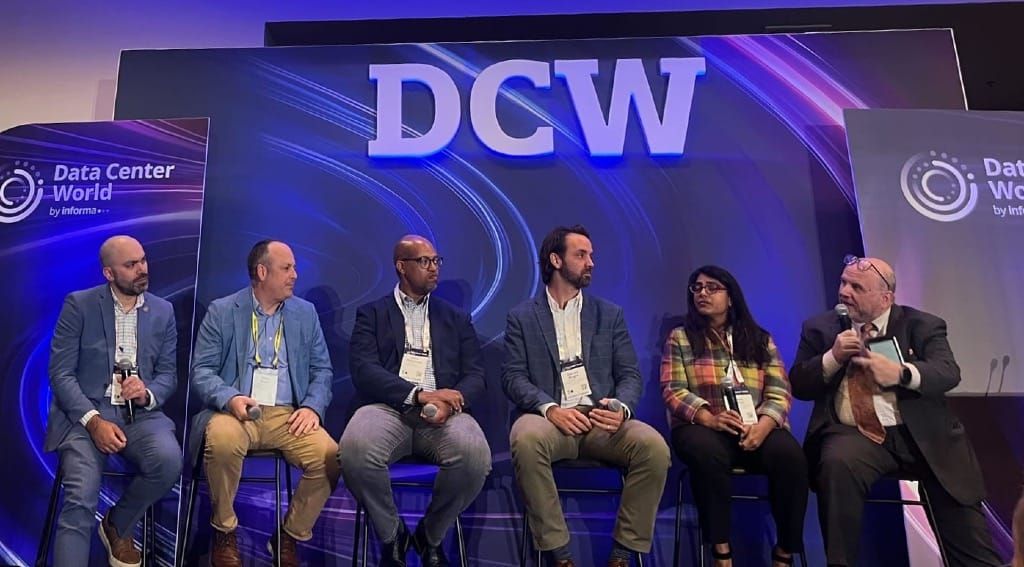
WASHINGTON, April 21, 2026 – States are changing how they manage data center growth, pushing developers to engage communities, improve facility design, and take on infrastructure costs, officials said Tuesday at Data Center World.
“It’s a great opportunity if communities can buy in,” said Buddy Rizer, executive director of Loudoun County economic development. Officials stressed early local engagement is critical.
Communities must involve elected officials and stakeholders from the start, Rizer said. “If you don’t have a coalition early on, you are doomed from the start,” he said.

Chris Morris, director of the data economy office for West Virginia, said policymakers have had to adjust quickly. “We underestimated power and overestimated fiber,” he said, coming from a broadband background.
Access to electricity is now the primary constraint, officials said. Projects that once got power within 18 months now face much longer delays, Brian Rothamel, economic development director for Culpeper County, Virginia, said.
“If we were to restart we’re probably like a decade to 15 years off,” he said.
Officials are steering development toward areas with existing infrastructure and working more closely with utilities. Some states are centralizing approvals while trying to maintain local trust.
West Virginia created a “one-stop shop” and removed local zoning for qualifying projects, but still works with local governments, Morris said. Developers voluntarily present plans for feedback, which he described as “an act of good faith” to build community trust.
States are also addressing who pays for infrastructure.
Garrett Wright, executive director of Rankin First in Mississippi, said state legislation requires data centers to cover grid costs. “That has given our elected officials a lot more comfort,” he said.
Georgia has taken a similar approach. “This is our standard, and not everybody can meet that standard,” Chris Pumphrey, managing director at Signal Ventures, said
Financial benefits alone no longer secure support, officials said.
Reena Brilliot, director of economic development and sustainability for Santa Clara, California, said data centers contribute 15 to 18 percent of the city’s general fund, funding services like firefighters and libraries.
But that value must be clearly communicated and paired with visible community engagement, she said. Operators are being pushed to support local initiatives and act as long-term partners.
“The money conversation isn’t enough anymore,” Rizer said.
Officials are also focusing on how data centers look and fit into communities. “We can fix the look,” Brilliot said, referring to the appearance of data centers.
Santa Clara has pushed developers to improve design, including clear entrances, varied materials, and windowed facades to make facilities resemble office buildings rather than “monolithic” boxes, she said.
Public resistance is increasingly tied to concerns about artificial intelligence, with Brilliot noting protesters outside the conference on Tuesday focused on AI rather than data centers.
Despite challenges, officials said data centers remain central to economic development. “We’re going with Plan A,” Morris said.