Optimum Raises $500 Million as Debt Wall Looms
Looking to push lenders to the negotiating table, the company also moved its eastern footprint to a new subsidiary.

WASHINGTON, June 1, 2026 – Optimum has moved its Optimum East footprint to a subsidiary outside the reach of its creditors, and reached deals to raise $500 million in financing at the same unit.
The company, formerly Altice USA, said in a press release Monday that the move increases the odds that its lenders will come to the table and negotiate a mutual restructuring deal before a debt wall of $6 billion comes due in 2027.

“With the creditors now having recourse to only the Optimum West footprint (Suddenlink), they are probably better off going back to the negotiating table,” New Street Research analyst Vikash Harlalka wrote in a Monday investor note. “This increases the odds of an agreement between Optimum management and creditors.”
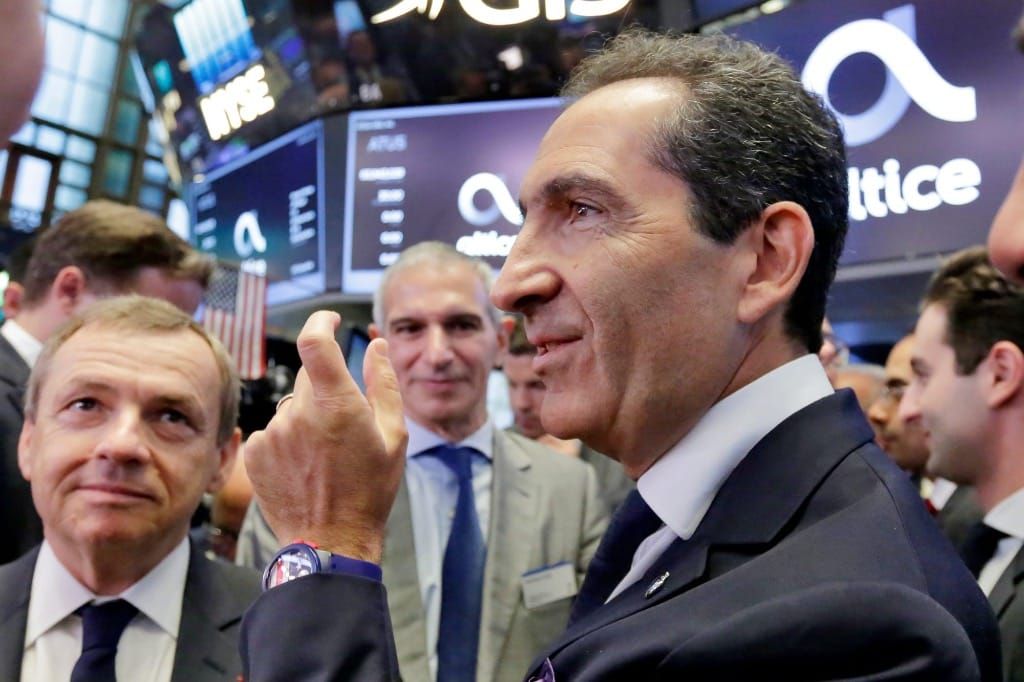
Of the new financing, $300 million came from outside investors, and $200 million came from Optimum shares swapped for new subsidiary equity by controlling shareholder Patrick Drahi.
The cable operator is also taking some of the new cash to buy back up to $300 million of optimum shares at $2.50 per share, the company said. That’s higher than the $0.68 shares were going for Friday, causing the stock to jump 86 percent Monday after the announcement.
Optimum’s subsidiary CSC Holdings holds nearly $22 billion in debt. The company said $6.2 billion is due in 2027, with $4.1 billion coming due in April of that year.
The company’s Optimum East footprint in New York, Connecticut, New Jersey, and Pennsylvania will be held under the new subsidiary, which the creditors won’t be able to go after if they don’t reach a deal and Optimum owes cash it can’t pay. Optimum’s 50.01 percent stake in Lightpath will also be housed in the new subsidiary.
The company said in a release it thought the best path forward was to try to reach a deal with its lenders, and that insulating some assets from them would increase the odds of them coming to the bargaining table and making that happen. It also said the arrangement had the effect of “reducing the possibility” that the new subsidiary would go bankrupt if Optimum itself did so.
“The Company believes that the measures announced today will increase the likelihood that the Company will be able to reach a consensual comprehensive deal with the [lenders] and will also mitigate the potential adverse impact that failing to achieve such a resolution could otherwise have on the Company’s assets and business operations and the value recoverable by its creditors and stockholders,” Optimum said in a press release.
The release said the ISP would be positioned for “anticipated discussions” with the lenders. If they fail to come to a deal and Optimum has to hand over assets to pay off the debt, the company said Optimum and CSC would be on the hook for $4 billion in total taxes.
“The likelihood that this potential tax liability will be crystallized in a restructuring transaction may be materially reduced,” if the parties avoid that, Optimum said.
The cable operator is losing broadband subscribers, much like its peers. It lost more than analysts expected in the first quarter of this year, but has been introducing super-low pricing plans and mobile bundles to entice customers back.
It counted more than 4 million broadband subscribers as of May 7, including 729,000 fiber subscribers. Optimum said in an investor presentation released Monday that it was planning to have 36 percent of its roughly 10 million passings upgraded to multi-gigabit speeds by the end of 2026.
The lawsuit
Optimum in November sued its lenders, which include major funds like Apollo, BlackRock, and Ares, accusing them of colluding to keep the price of the company’s debt high by running terms of potential new agreements with Optimum by each other before making decisions.
Then in January, a major law firm, Kirkland & Ellis, withdrew from offering financial counsel to Optimum, which Optimum further alleged was the result of pressure from a consortium of powerful hedge funds and asset managers.
In an amended complaint filed in February, Optimum alleged the lenders threatened to boycott Kirkland, whom they also worked with, and take hundreds of millions in business elsewhere. That threat, in Optimum’s telling, caused Kirkland to walk away from the ISP. A Kirkland partner who had been working with the Optimum and others resigned the next month.
“Threats from a single creditor could never have convinced Kirkland to neuter its prized restructuring practice like that,” the company wrote. “It took Defendants’ collective market power to bring Kirkland to heel.”
The lenders said in a May 6 filing that Optimum didn’t have evidence the companies all threatened a boycott of Kirkland, and that it wouldn’t violate antitrust law even if they did. The companies argued they were enforcing existing contractual terms in their previous dealings with Optimum.
“Antitrust laws do not require creditors to choose between preserving the value of their contractual rights and incurring antitrust exposure, and every court to consider similar allegations has rejected that theory,” they wrote. “Plaintiffs offer no basis for a different result.”