
Panel Warns Black and Latino Communities Risk Falling Behind in AI Era
Speakers said broadband access and digital literacy remain major barriers to benefiting from emerging technologies.

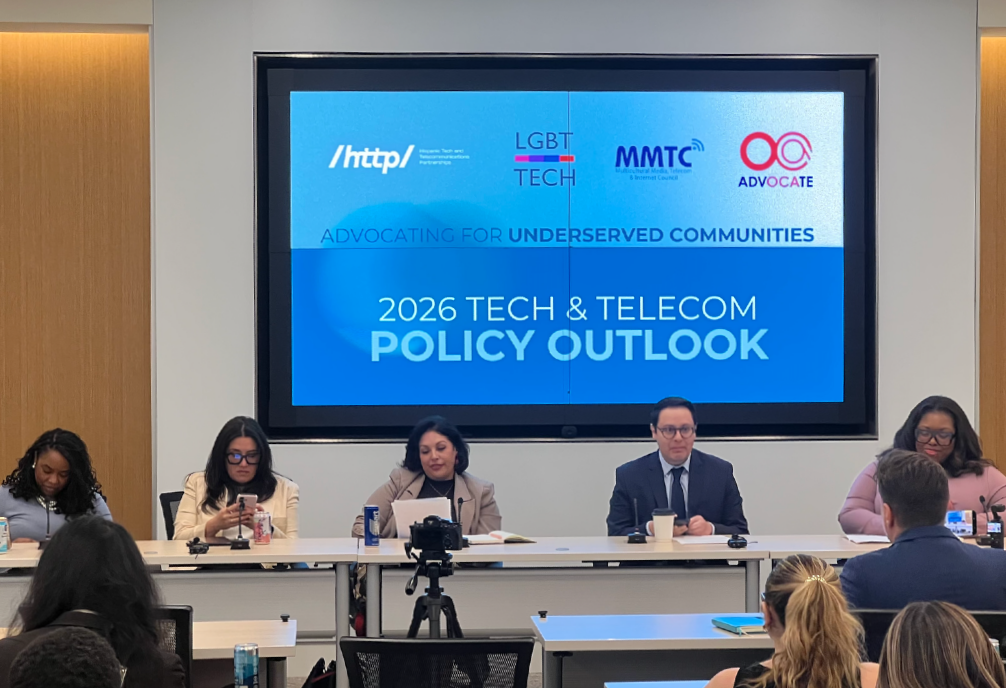
WASHINGTON, March 26, 2026 – Black and Latino communities risk falling further behind as artificial intelligence becomes more embedded in everyday life – a warning that persistent gaps in broadband access and digital literacy are limiting who can benefit from AI innovations.
The discussion took place Wednesday during the 2026 Tech & Telecom Policy Outlook, hosted at CTIA headquarters in Washington by HTTP (Hispanic Tech and Telecommunications Partnership), LGBT Tech, MMTC, and OCA-APA Advocates.
Advocates, policy experts, and industry representatives discussed the year’s key telecom issues, including AI and data center development, spectrum policy, broadband affordability, and media consolidation.

“AI is not the future. It’s now, it’s happening,” said Joi Chaney, founder of J.O.I. Strategies, emphasizing the urgency of ensuring communities are prepared to engage with rapidly advancing technologies. Panelists said the AI conversation cannot be separated from broadband access, particularly for underserved communities that still lack reliable or affordable internet service.
“Broadband access is an infrastructure building block to access AI,” said Daiquiri Ryan Mercado, founder and chief executive of Exito & Co., who argued that many low-income households still lack the connectivity needed to participate in an increasingly AI-driven economy.
Danielle Davis Canty, director of technology policy at the Joint Center for Political and Economic Studies, said the most pressing consumer concerns around AI are “trust, privacy, as well as cost,” pointing to skepticism over AI-generated content, the lack of a federal privacy framework, and the growing energy costs tied to AI systems.
Alejandro Roark, chief executive of the AI Policy Forum, said Congress’s restoration of FCC spectrum auction authority was a major step as wireless networks face growing capacity demands from AI applications.
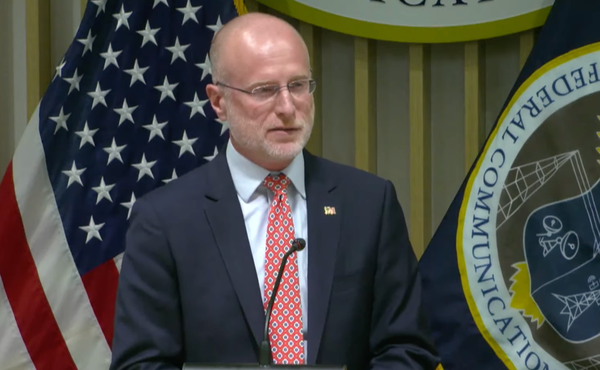
“We need more spectrum, more public airwaves to benefit the public,” CTIA President and CEO Ajit Pai said in opening remarks, arguing that licensed spectrum will be critical as AI-driven traffic grows faster than traditional network demand.
On media policy, speakers raised concerns about consolidation and government pressure on news organizations, warning that those trends could weaken press freedom and democratic accountability.
Speakers also addressed the expansion of data centers tied to AI growth, saying communities should have a stronger role in negotiating local benefits and addressing environmental impacts as infrastructure buildout accelerates.






Member discussion