
Panelists Share the Innovations That Have Helped Reduce Telecom and Texting Scams
Experts highlighted new policy and technological innovations to combat scams.

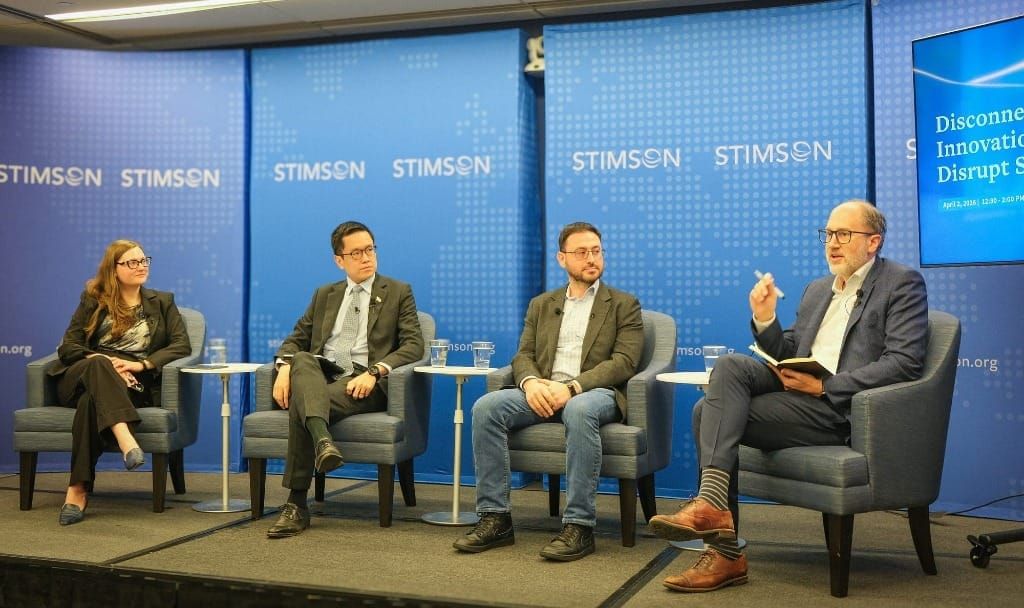
WASHINGTON, April 3, 2026 – Over 50% of people globally report receiving a scam attempt through a phone call, text, or email. Thirty-five percent believe it should be up to government or commercial entities to do something about it.
This research, presented by the Global Anti-Scam Alliance, highlighted the ubiquity of scams and set the foundation for a panel discussion on Thursday hosted by The Stimson Center, a policy think tank focused on international security.
Panelists representing government and industry highlighted the various ways innovative public private cooperation is adding friction to reduce scam attempts across various countries.

“Today, 99% of the public's transactions with the [Singaporean] government can be conducted digitally,” said Hubert Han, the digital counsellor at the Embassy of the Republic of Singapore. “What that means is that trust in institutions and processes is absolutely key and it's incumbent on various stakeholders to keep that trust high.”
Han noted that his government worked with Google on a pilot to develop malware detection tools for side loaded apps, or apps installed outside of the app store, that ask for broad access permissions and are often used by hackers to gain access to sensitive information.
As a result, scams of these kinds have dropped in Singapore and have encouraged Google to expand these prevention tools into 200 other countries. One billion users are now protected by these tools according to Eugene Liderman, director of product for Android security & privacy at Google
“This is a really great example of partnership between the Singapore government and Google,” Han said.
Singapore has also worked with telecom companies to implement auto blocking from foreign numbers and scam awareness campaigns to help reduce risk and raise awareness, all to a positive effect across a society with high digital adoption, according to Han.
Google’s other innovations
Liderman presented some of the new scam prevention tools Google has been developing to protect Android users from the ever changing techniques scammers use.
Most notably, Linderman showed how its proprietary AI generates notifications when it suspects a scam call, text, email or third party messaging app is occurring, and disabling features such as screen share to prevent suspected scammers from accessing personal information.
“We're heavily investing in this broad spectrum of [tools against] fraud, and we've done a lot,” Liderman said.
Most Android devices, Liderman noted, are also equipped with an “easy button” feature that will enable all of the protective options automatically, which are most helpful for young and elderly users who may be most vulnerable to scams.
Telecom’s role
Josh Bercu, executive director of Industry Traceback Group, the Federal Communication Commission's registered traceback consortium, said his group has used its call traceback tools to assist telecom providers in identifying the aging technology that is creating holes that scammers have exploited.
First requested by the TRACED Act, a law passed in 2019 to combat the rampant use of robocalls, FCC empowers ITG to initiate traceback requests with voice service providers, to track and trace origins of scams.
“[We’ve seen] legitimate calling platforms that have a vulnerability and then are taken over and used for illegal calling. That could be your hospital that has an antiquated telecom system,” Bercu said.
Bercu noted that due to the size and scale of telecommunications providers, as well as the various antiquated technologies still in use makes plugging all of the holes nearly impossible.
However, he believes that with recent innovations, broad cooperation between public and private entities, and international cooperation has led to the reduction of scam risk for consumers, and improved trust for customers.
“I think we have a lot of infrastructure, not to prevent every scam, but to identify problems and help solve them.” Bercu said.








Member discussion