Panelists Struggle to Find Solutions to Community Opposition on Data Centers
The panel called on the data center industry to work together to address community concerns

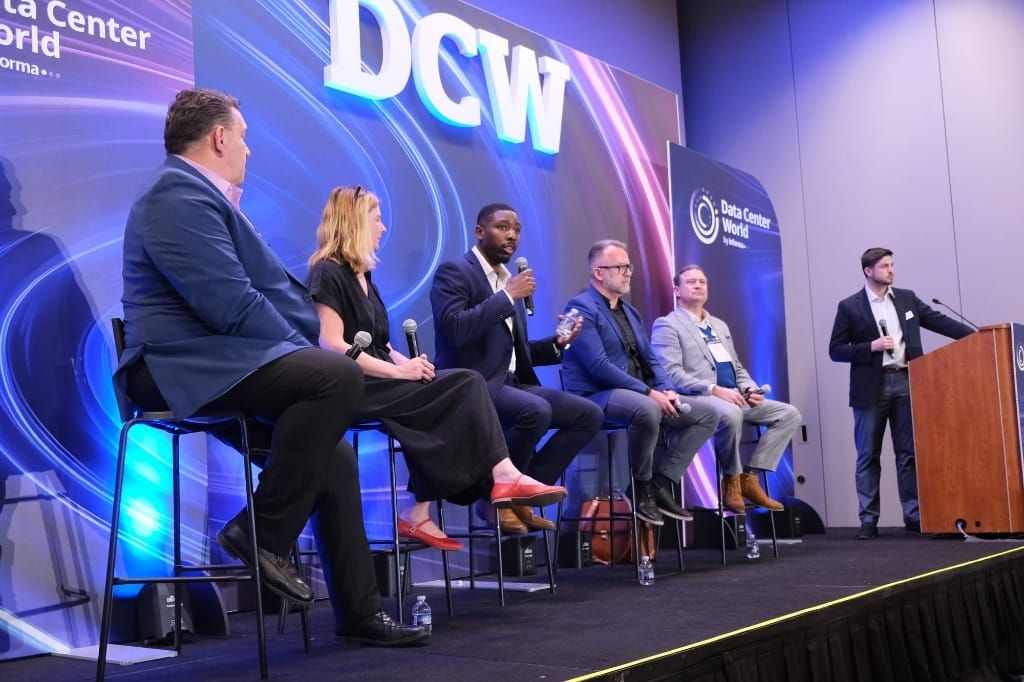
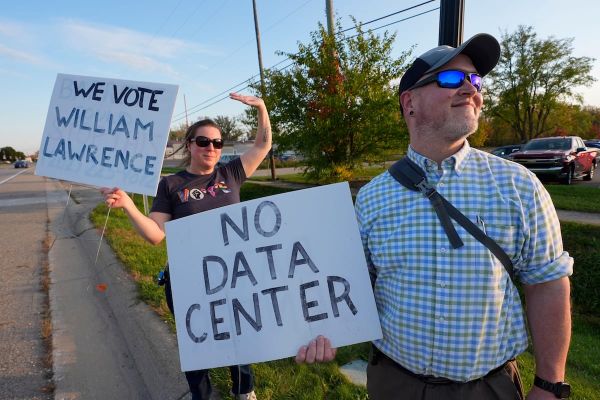
WASHINGTON, April 20, 2026 – Growing opposition to data centers around the country was viewed both as a nuisance and an opportunity during a panel discussion at the Data Center World conference on Monday.
The growing frustration with NIMBYism for Carl Braun, CEO of the Data Center Group, a commercial real estate group under Coldwell Banker Commercial, and the "misinformation" climate around data centers, led him to a stark conclusion.
“We're dealing with cave people,” Braun said. “They're citizens against virtually everything, and sometimes there is no logic behind them.”

Despite his efforts in educating the public around the economic benefits the data center industry was promising, Braun said that our current cultural and political moment is attracting people to a negativity that extends far beyond just the data center industry.
Braun noted that in our culture today, data centers are the “bad guys” and thinks that it may be helpful to find another for the industry to contrast it against.
“What we need is smelting plants or something that's really noxious to come in and buy all the industrial land in America and then we can say you can have that or you can have a data center,” Braun said. “If we had that, if we had that bad guy out there, I think it would be a lot easier.”
Meeting communities where they are
Many of the panelists said that the public does has a right to be concerned due to the speed and sheer scale of some of these centers and believed the industry has been falling short on clear communication with communities.
Ernest Popescu, founder and CEO of the data center company Metroblocks, said that since many of these projects happen under non-disclosure agreements, the public doesn’t have an up to date sense of how technology has advanced around water and energy usage.
Popescu noted that there needs to be a wholesale revamp of how data center companies communicate with the public especially on the economic benefits of data centers to the tax base of a county while providing concrete examples.
“The public's perception [is] that those funds are not going to be used for projects that aren't going to improve their quality of life,” Popescu said. “I don't know what the answer is, to be honest with you… but there's a disconnect between what we're saying and what is happening out there, and I think that's the issue we have to address.”
Garphil Julien policy lead at PowerLines, a nonprofit that advocates for utility regulatory reform, said that data centers companies have a generational opportunity to transform the nation’s energy grid while simultaneously addressing energy prices.
“The grid was just not designed for this, it wasn't necessarily designed for a single customer, demanding a 100 plus megawatts of power coming from a single point of delivery,” Julien said. “Data centers can actually be good in terms of affordability, rising electricity demand can result in lower electricity costs because those fixed costs are spread out over a larger customer base.”
Darcy Nothnagle, Founder of Steelhead Strategic, a regulatory lobbying firm noted that 10 years ago, hyperscalers were unable to share hard employment numbers, or the six figure salaries earned by skilled technicians that sustain data centers.
Braun added that local leaders should demonstrate how the tax benefits generated from data centers will go to help ease public concerns.
“It sounds great, you know, $20 million [from] property [and] personal tax revenue generated, but where's it going? How's it going to affect your day to day life?” Braun said. “What if [politicians] said every year $10 million comes off the taxes of all the homeowners? You'll win the day.”
Popescu agreed with the other panelists, but added that the industry as a whole needs to figure out a cohesive and consistent communications strategy in accordance with lawmakers that aligns communities with the positive outcomes data centers could create.
“I think we're going about it all wrong, to be honest, as an industry, and I think the solution is pretty obvious, but implementing it is going be much more difficult.” Popescu said