PR Push Seen as Key to Overcoming Data Center Opposition
Industry talk outlines strategy to address rising community backlash.

WASHINGTON, April 22, 2026 – As opposition to new data center projects intensifies, industry leaders say improved public relations and early community engagement may be critical to overcoming resistance.
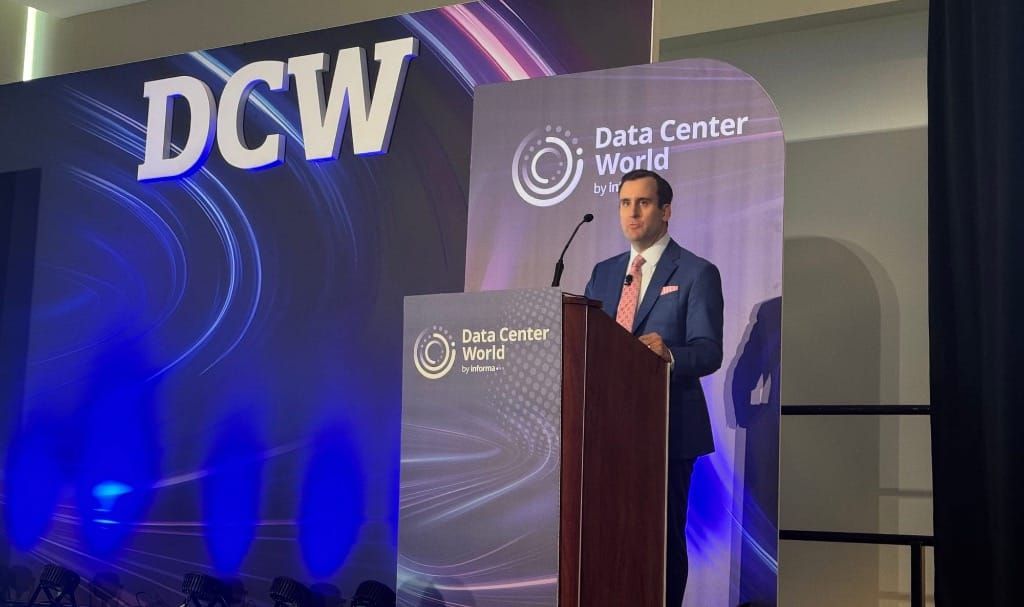
Speaking at Data Center World, Parker Slaybaugh, vice president of LINK Public Affairs, outlined a three-phase strategy aimed at building local support before, during, and after project development.
The discussion comes amid heightened tensions surrounding data center expansion, including a recent incident that Slaybaugh mentioned in Indianapolis where shots were fired at a local official’s home alongside a note opposing data centers.

Slaybaugh said the first phase, education and advocacy, should begin before a project is publicly announced. This includes polling residents to understand local concerns and tailoring messaging accordingly.
In Port Washington, developers conducted neighborhood-level outreach to identify priorities such as renewable energy use, job creation and tax impacts. Messaging was then crafted to address those concerns and build early support.
Once a project is announced, Slaybaugh emphasized in the second stage the importance of community benefits agreements, such as commitments to fund local infrastructure like schools or fire stations through data center construction.
Using the same example, he highlighted how Vantage, the data center construction firm in Port Washington, maintained positive community relations by providing free car washes to residents affected by construction dust.
Still, local skepticism can remain as earlier this month, Port Washington residents approved a referendum requiring voter approval for certain large development incentives, reflecting ongoing concerns about transparency and community impact of data centers in the area.
The final phase centers on long-term integration, with companies encouraged to embed themselves in the community beyond the permitting process.
“Enter each market not just with a permit, but with genuine goodwill,” Slaybaugh said, stressing that developers must follow through on commitments to maintain trust.
As data center demand grows nationwide, Slaybaugh said projects that prioritize communication and local engagement will be better positioned to navigate opposition and secure approvals.