
Railroad Association Can Challenge Virginia Crossing Law, Fourth Circuit Rules
The case will be sent back to U.S. District Court in Virginia.

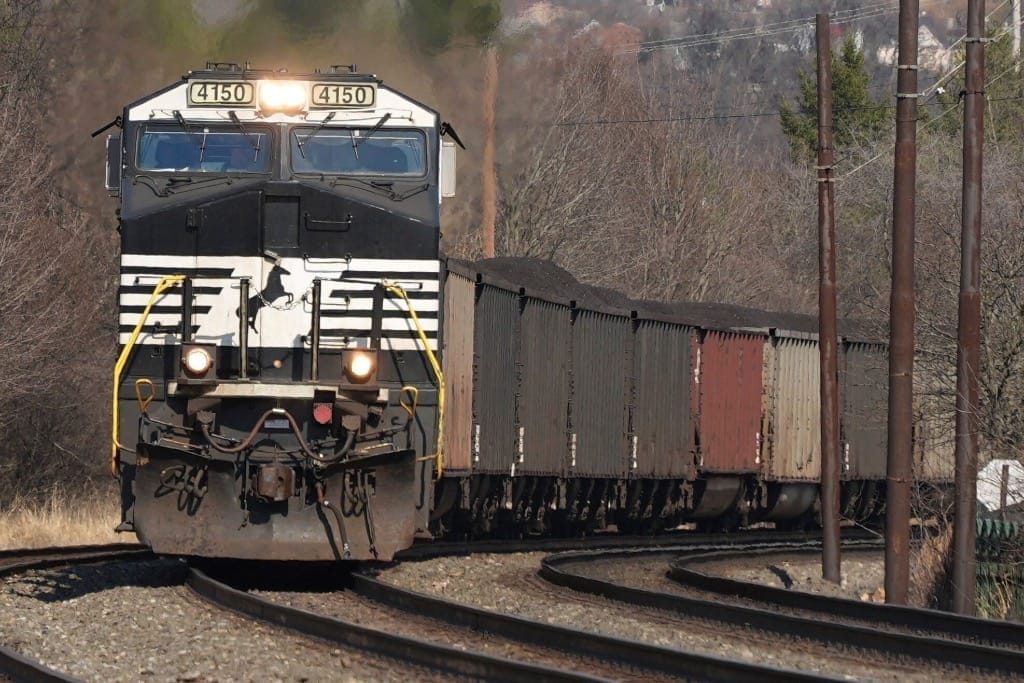
WASHINGTON, July 23, 2025 – Federal judges have decided that a railroad trade association can challenge a Virginia law aimed at making it easier for broadband providers to cross train tracks.
A district court had sided with Virginia’s utility regulator last year, ruling that the American Association of Railroads could not challenge the law because it was an association representing railroad companies, rather than an entity that was itself harmed by the law. AAR appealed the decision to the U.S. Court of Appeals for the Fourth Circuit.
The law puts timelines on railroad responses to crossing requests and caps the fees railroads can charge to ISPs looking to cross their tracks with fiber. ISPs have alleged railroad right-of-way negotiations can hold up deployment projects, while railroads have said the Virginia law's fees are too low and the expedited timelines could be a safety hazard.

Judge Pamela Harris wrote for the Fourth Circuit that the district court was correct that AAR could not bring its argument that the law violated the U.S. Constitution on behalf of its members, but that the group could advance its claim that a federal law regulating railroads preempts the Virginia law. The decision was unanimous, with Judges Harvie Wilkinson III and Allison Jones Rushing joining Harris’s opinion.
“To be clear, we do not reach the merits of either of AAR’s preemption claims,” Harris wrote in a Friday opinion. “But we conclude that both can proceed without the participation of AAR’s individual member railroads, and that AAR therefore has associational standing to pursue its preemption claims.”
The federal Interstate Commerce Commission Termination Act governs national railways, and a case alleging that the state law is preempted wouldn’t require AAR’s individual members to participate in the case, Harris wrote.
She said the group’s claim that the law violated the takings clause of the Fifth Amendment to the U.S. Constitution, which prevents the government from taking property without just compensation, would require an actual railroad to show a specific instance in which it was harmed.
The case will be sent back to the U.S. District Court in the Eastern District of Virginia for new proceedings.
The law was dealt a setback in Virginia’s highest state court in May. Judges held that the law could not be invoked by private, for-profit ISPs, limiting the broadband providers that could use the law as legislators intended.
Data compiled by the Institute for Local Self-Reliance shows dozens of communities in Virginia have access to government-owned broadband networks, a category of ISP the state court decision appeared to exempt.







Member discussion