
Reform to Universal Service Fund Still Urgently Needed, Say Experts
The Universal Service Fund remains unstable and in need of structural change, panelists said.


WASHINGTON, July 18, 2025 – The Supreme Court’s decision to uphold the constitutionality of the Universal Service Fund does little to solve the $9 billion program’s long-standing structural and financial flaws, experts said in a Broadband Breakfast Live Online event after the court's June 27 ruling.
The decision was a relief to telecommunications providers and communications advocates who feared catastrophe if the high court swung the other way.
"You've got recipients who made clear to us that if this were to happen, you're talking about immediate bankruptcy and firing of companies and cutting back on service to many parts of America," said former FCC Commissioner Michael O'Rielly. “That's not a good outcome.”
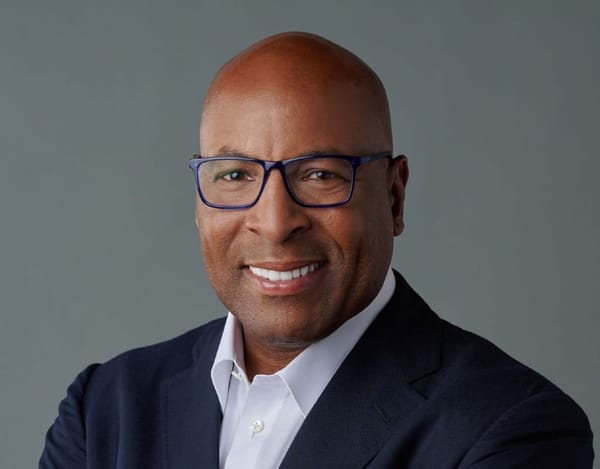
 Christopher Mitchell
Despite his long-standing criticism of USF, O'Rielly acknowledged the stakes involved. "As someone who's criticized USF for quite a long time, that doesn't mean I wanted the court to overturn the decision and leave the recipients cut off in some arbitrary timeline."
But the victory doesn’t address the program's fundamental sustainability crisis, with contribution factors approaching unprecedented, at the same time that traditional telecom revenue shrinks.
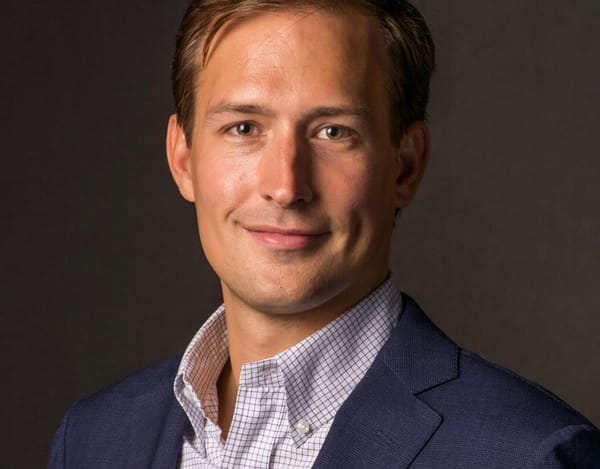
Evan Swarztrauber, of consultancy Core Point Strategies, argued for a shift in who bears the program's financial burden. "For decades we've been spending money as rate payers to get people online. And when they get online, they use services like Microsoft and Google and Meta and TikTok and YouTube," he said.
He said technology companies should pay into the fund.
“I'm looking for business to business transactions like cloud services, like digital advertising” to be assessed, “as opposed to raising consumers broadband prices," Swarztrauber explained.
While all panelists supported USF, differences remained
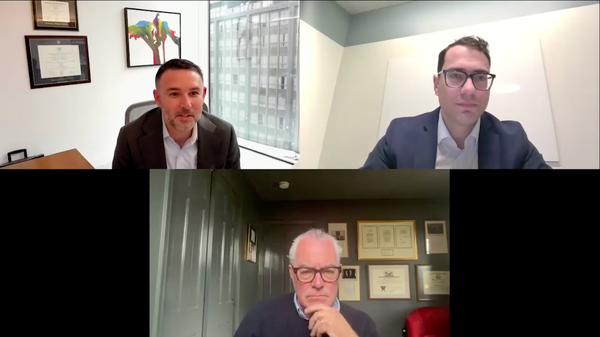
The debate over contribution mechanisms revealed philosophical divisions among the experts. Christopher Mitchell, director of the Community Broadband Network Initiative at the Institute for Local Self-Reliance, expressed openness to taxation. "We need to find a way to pay for it. I'm open to a reasonable tax on broadband services," Mitchell said.
However, both Swarztrauber and O'Rielly expressed concerns about directly assessing broadband services. "I think it's actually detrimental to tax broadband. I think that's really problematic," O'Rielly stated, while Swarztrauber noted that "if you're gonna bring them in, you have to broaden the base much larger by bringing in the tech players as well."
The conversation also highlighted the need for distribution reforms, particularly as fiber networks replace legacy copper infrastructure. "That's one of the biggest reasons why people argue for fiber, is that it's less costly to maintain than legacy networks," Swarztrauber observed, questioning whether operating expense support should remain constant as networks modernize.
"We have two paths ahead of us,” said Mitchell. "One path is that the Federal Communications Commission uses the authority it has and it reforms the program and hopefully addresses all of the issues, not just the contribution issue. The other is that Congress gives the Federal Communications Commission a little bit more power to look at other sources of revenue."
O'Rielly framed the broader policy question in stark terms: "So to me, this is a social program. This is social spending. That's what Congress is basically supposed to be doing. If it wants to spend this money, if it thinks that it should spend money for social goals, it should pay for them."
Despite the challenges, Mitchell expressed cautious optimism about reform prospects. "So what gives me hope is that things change when they absolutely have to change. And I think we might be getting to that point," he said, adding that "the only thing that gives me hope is I think we are gonna see more people more involved."
The discussion was moderated by Drew Clark, CEO and Publisher of Broadband Breakfast.


Member discussion