Renee Gregory: A Study That Defies Physics Should Not Define National Security Policy
NextNav defends its proposed GPS backup system against security industry interference claims, calling the underlying study deeply flawed

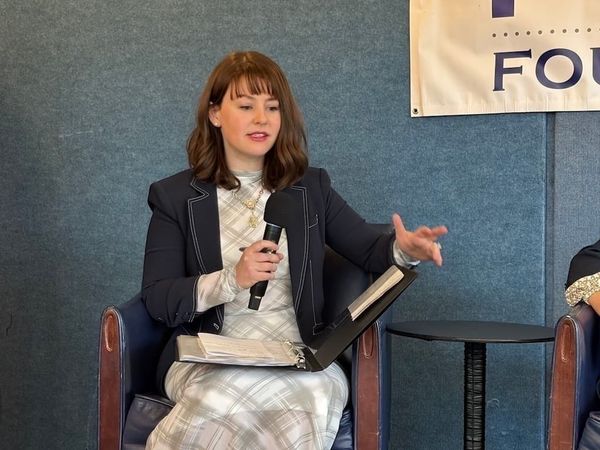
Renee Gregory
Avi Rosenthal wants the Federal Communications Commission to abandon its effort to enable a terrestrial complement and backup to GPS. In a recent op-ed, he argues that introducing NextNav’s 5G-powered 3D positioning, navigation, and timing (PNT) solution into the Lower 900 MegaHertz (MHz) band would severely impact unlicensed devices. To support his argument, he relies on a flawed study conducted by Pericle Communications Company and funded by commercial security alarm interests. But America’s national security interests are too important to be defined by claims based on flawed engineering.
At NextNav, we take both safety and solid engineering seriously to support the FCC's fact-based, engineering-driven decision-making. We have closely examined and publicly responded to the technical claims made in the Pericle study. Our analysis, validated by third-party engineering experts, shows that unlicensed Part 15 operations, including security devices that currently use unlicensed spectrum, will continue to operate as they do today under NextNav’s proposal.
Consider the headline finding peddled by Mr. Rosenthal: Outdoor security devices would need to boost signal strength by 500 times to compete with 5G traffic. Alarming, if it were true! But the sky-is-falling number flows from a deeply flawed analysis. NextNav’s engineers found many apparent errors in Pericle’s work, all of which should be obvious to practicing RF engineers, and some of which are obvious even to non-engineers.
For instance, the Pericle paper predicted that 5G signals would be stronger than signals traveling through an absolute vacuum like deep outer space. No buildings, no terrain, no atmosphere. Not only does that ignore real-world conditions, but it defies the laws of physics.
That is not the only obvious flaw. Pericle also assumed 5G base stations transmit half the time. But its simulation showed interference from 5G transmissions occurring more than half the time. How is that possible when a transmitter that is switched off cannot interfere with anything? These results alone should have been enough to cause Mr. Rosenthal and others in the security industry to question Pericle’s conclusions. But instead, the security industry irresponsibly amplifies them to the public.
The Pericle study also overstated the impact of 5G on unlicensed devices by a factor of at least 10,000. When NextNav built a simulation using Pericle's stated inputs and methods, we got dramatically different results.
And there’s more that should give Mr. Rosenthal himself pause if he were serious about responsibly debating important public safety and national security issues. Pericle did not analyze the Z-Wave standard used by home security devices. Instead, Pericle tested a generic technology and claimed that it reflected Z-Wave's performance. It does not. In addition, as the board chair of the Z-Wave Alliance, Mr. Rosenthal should know that the vast majority of Z-Wave's certified devices operate on fixed frequencies that fall outside of NextNav’s proposed operations.
Unfortunately, Mr. Rosenthal and others in the security industry ignore facts and instead double down on a flawed study to try to stop the FCC from advancing a process that would enable a much-needed ground-based complement and backup to GPS.
Just like you don’t have to be an engineer to identify clear flaws in the security industry’s claims, you don’t have to be an engineer to understand what happens—or doesn’t happen as the case may be—in the real world. Unlicensed devices in the Lower 900 MHz band today share spectrum with each other, with licensed tolling and railroad operators, and with NextNav’s existing authorized transmissions, and they were built to do so. Frequency hopping, opportunistic transmission, adaptive modulation, redundancy paths (meshing), and frequency agility are baked into the design of Part 15 devices to help them coexist with themselves and other operations.
For more than 10 years, NextNav’s previous generation licensed lower 900 MHz network in the San Francisco downtown area has been producing higher emissions than a comparable 5G system, a fact that is validated by field data from a leading mobile data intelligence firm. Yet, unlicensed devices in San Francisco have continued to operate as expected. The collapse that Mr. Rosenthal predicts simply hasn’t happened.
Lastly, if Mr. Rosenthal is truly concerned about coexistence, why would he ignore the fact that NextNav’s proposal makes the band more conducive to coexistence with unlicensed Part 15 operations than the current Part 90 M-LMS rules? For example, the proposed 5G uplink power is dramatically lower than what the current rules allow. In practice, typical smartphones will emit less power than many unlicensed devices. NextNav also proposes limiting high-power downlink transmissions to fixed stations only, while the current rules allow high-power mobile transmissions, creating a more predictable RF environment for everyone.
The problem President Trump and Chairman Carr are trying to solve will not wait. The cost of a single day without GPS would be roughly $1.6 billion to the U.S. economy. Around the world, GPS disruptions are no longer hypothetical, and we cannot afford to keep treating building layers of resilience into critical PNT infrastructure as a someday problem. America does not need more delay on an issue this important.
NextNav offers a near-term, commercially viable widescale 3D PNT solution that integrates with consumer devices and handsets, at no cost to taxpayers. Only NextNav brings this unique mix of capabilities to the table.
We remain committed to working with all interested stakeholders to address this growing national security threat. We urge others to do the same.
Renee Gregory is the vice president of regulatory affairs at NextNav. This Expert Opinion is exclusive to Broadband Breakfast.
Broadband Breakfast accepts commentary from informed observers of the broadband scene. Please send pieces to commentary@breakfast.media. The views reflected in Expert Opinion pieces do not necessarily reflect the views of Broadband Breakfast and Breakfast Media LLC.