Rep. McClellan Hopes to Modernize 1996 Telecom Act Despite Lack of Congressional Support

House Democrat emphasized need to create more AI regulation and the importance of federal investment in broadband.

Rep. McClellan Hopes to Modernize 1996 Telecom Act Despite Lack of Congressional Support
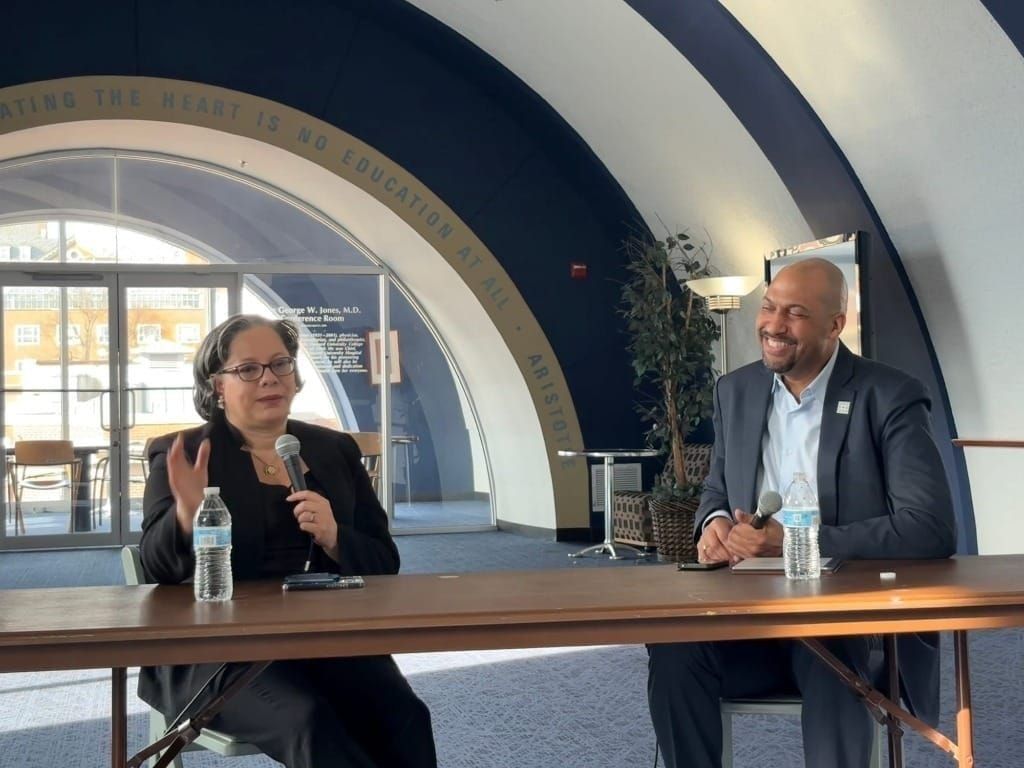
Photo of Rep. Jennifer McClellan, D-Va., and Public Knowledge President and CEO Chris Lewis at The Telecommunications Act of 1996 at 30 event on Feb. 24, 2026, by Kelcie Lee.

WASHINGTON, Feb. 26, 2026 – Rep. Jennifer McClellan, D-Va., said her biggest challenge as a policymaker is getting colleagues to care about modernizing the Telecommunications Act of 1996, a law she feels no longer applies due to rapid technological growth. 

At nonprofit Public Knowledge’s event celebrating the Telecommunications Act of 1996 at 30, McClellan said she was frustrated that the House Subcommittee on Communications and Technology is not prioritizing updating the law. As a member of the subcommittee, she said there has not been an ongoing conversation about modernizing the telecom act despite her push toward this goal. 

She said her colleagues have been narrowly focused on supporting the development and advancement of artificial intelligence, instead of the growing landscape that is outpacing laws on technology. 

“No, we need to modernize every single policy we have to reflect a world in which AI exists, and just getting [Congress] to understand that basic principle is the most frustrating part of my job,” McClellan said. 

She voiced the need for the government to “treat access to broadband as a utility.” According to McClellan, internet access is now as critical as electricity to economic growth, public safety and public health, yet Congress has failed to update policy to reflect that shift. 

A key need for this growth, McClellan explained, is federal investment, since the private sector is unwilling to continue funding “if they’re not going to recover their costs” as shareholders. Without federal investment, broadband will continue to be unaffordable and inaccessible for hard-to-reach communities, especially because it is oftentimes the most expensive areas to connect. 

“We’re not having that conversation in Congress,” McClellan said. 

She continued to emphasize the need for federal investment, especially amid the Trump administration’s changes to the Broadband Equity, Access and Deployment program, which she said have left “some communities [with] worse broadband service than others.” 

McClellan also expressed concern over the “weaponization of the FCC to roll back diversity, equity and inclusion” and how “this war on DEI” has made it more difficult to connect historically underrepresented communities to broadband and economic development.

She noted that this has led to the erosion and weakening of consumer-focused FCC programs, including Lifeline, the Affordable Connectivity Program and regulation changes for broadband nutrition labels. 

Member discussion

Popular Tags