
Reporter's Notebook: CES2026 Showed AI's Shift Toward Always-On Infrastructure
From industrial equipment to autonomous vehicles and wearables, companies showed how AI is being embedded into everyday systems.

Akul Saxena
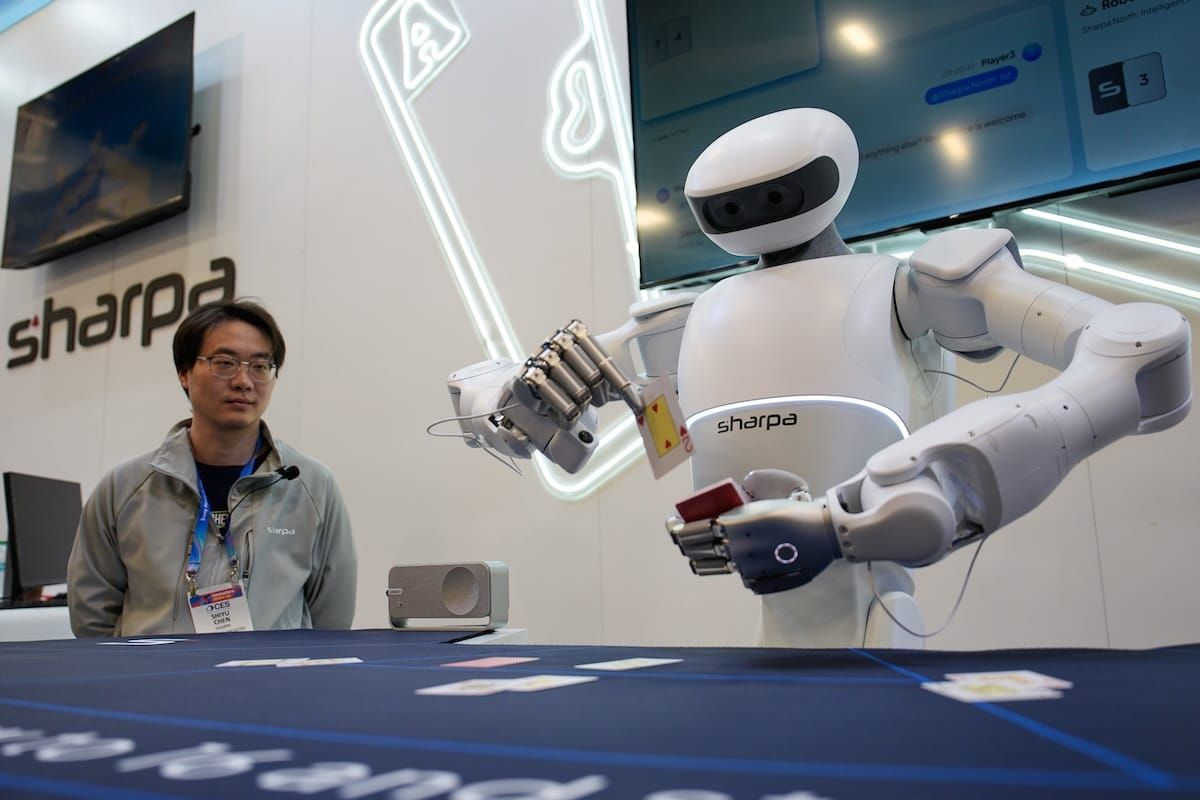
LAS VEGAS, Jan. 12, 2026 — At CES2026, artificial intelligence was infrastructure.
Across keynotes and show-floor exhibits, companies described AI as something designed to run continuously inside machines, vehicles, networks, and personal devices - placing new demands on how technology is built, powered, and connected.
Industry leaders emphasized that AI’s next phase depends on reliability and scale. The central question was not what AI systems can generate, but whether they can operate predictably over long periods inside physical environments.
From models to machines
NVIDIA Chief Executive Jensen Huang described the shift as an “industrial transformation,” saying AI is reshaping hardware and physical infrastructure. In light of the increasing infrastructural strains, he introduced the Vera Rubin computing platform, much more than a single graphics processor.
The system links multiple processors into one integrated unit with built-in networking and cooling, allowing AI systems to operate continuously. The design combines computing, data movement, and heat management to support long-running workloads.
That message carried across the show’s keynotes. Advanced Micro Devices Chief Executive Lisa Su highlighted the company’s new Helios platform, a large rack-scale system designed to support AI workloads that run continuously. She said global AI computing capacity has grown roughly a hundred-fold since 2022 but yet remains insufficient for the next generation of AI systems.
Keynote discussions focused on how efficiently systems can move data, coordinate large numbers of processors, and operate without interruption.
Industrial AI moves onto job sites
That emphasis was visible in West Hall, where industrial manufacturers showed AI embedded directly into heavy equipment, meant to operate 24/7.
Caterpillar, a global heavy equipment maker, focused its exhibit on the Cat AI Assistant, a system designed to help operators plan maintenance, monitor fleets, and coordinate work. The company positioned the tool as a way to improve safety and reduce downtime on large construction sites.
Nearby, South Korean automotive manufacturer Hyundai and Boston Dynamics, an American robotics company, jointly demonstrated the commercial version of the Atlas humanoid robot. The system handled materials, navigated changing environments, and replaced its own battery during demonstrations. Boston Dynamics Chief Executive Robert Playter said the robots are intended for industrial work that is repetitive or physically demanding, meant to complement human labor.
Meanwhile, South Korean electronics company LG, showcased CLOid, a home robot meant to perform household tasks such as laundry and dishwashing. The exhibit presented it as a “zero labor home,” and prided itself on the robot’s dexterity.
Autonomous vehicles focus on scale
Autonomous mobility at CES centered on fleet expansion and daily operations.
Exhibitors from Waymo, an Alphabet-owned robotaxi operator, displayed their newest Ojai model, an autonomous electric van being added to its fleet. The vehicle is designed to operate alongside existing robotaxis and support a wider range of operating conditions.
Scale was a notable theme for Waymo as well. The company plans to expand autonomous ride service to five additional U.S. cities later this year. It will extend operations beyond its current markets that include San Francisco, Los Angeles, Phoenix, Austin, and Atlanta.
Nearby, Zoox, an Amazon-owned autonomous vehicle firm, showcased its purpose-built autonomous shuttle designed without a driver’s seat or steering wheel. The vehicle already operates service routes in Las Vegas and is intended for short trips in controlled urban areas.
Networks prioritize consistency
As AI moves into vehicles, robots, and everyday devices, exhibitors said wireless networks are being judged on whether connections remain stable. Even with the speed gains of Wi-Fi 7, users continue to experience delays and dropouts in apartments, large buildings, and hard-to-reach areas.
Wi-Fi 8 was presented as an effort to improve consistency. Companies including ASUS, a Taiwan-based maker of routers and networking equipment, demonstrated early systems designed to maintain lower-latency connections in areas with congestion. Its WiFi 8 router display claimed to have 2x better internet-of-things coverage, and a sixfold improvement in P99 latency from WiFi 7. P99 is a system performance metric, measuring response times for the slowest one percent of requests.
AI moves closer to the body
Central Hall and The Venetian highlighted AI systems designed to operate close to the user.
Lenovo, the Hong-Kong based technology company, introduced wearable AI concepts designed to operate continuously across a user’s devices. The company showcased Qira, a cross-device intelligence, which can be synced across necklace wearables, laptops, cameras, PCs, and tablets, understanding context and patterns over time across devices.
Nearby, Peri, a women’s health technology startup, presented a wearable designed to monitor physiological markers associated with perimenopause. The device translates biometric data into health insights intended to support medical decision-making.
Dephy, a wearable robotics developer, demonstrated its Sidekick system, a lower-leg exoskeleton that provides powered assistance during walking. The device is designed to reduce physical strain and extend mobility endurance.
A shift toward deployment
Taken together, CES 2026 showed an industry focused on deployment. Across computing platforms, industrial equipment, autonomous vehicles, networking, and wearables, companies highlighted systems designed to operate continuously in real-world conditions.
The shared constraint was reliability. As AI becomes embedded across physical infrastructure and personal devices, the question is whether networks can remain stable, whether power infrastructure can keep pace, and whether AI platforms can operate safely and predictably over time.








Member discussion