Roth Provides BEAD and Spectrum Updates
The NTIA administrator discussed some of the challenges and updates facing the administration.

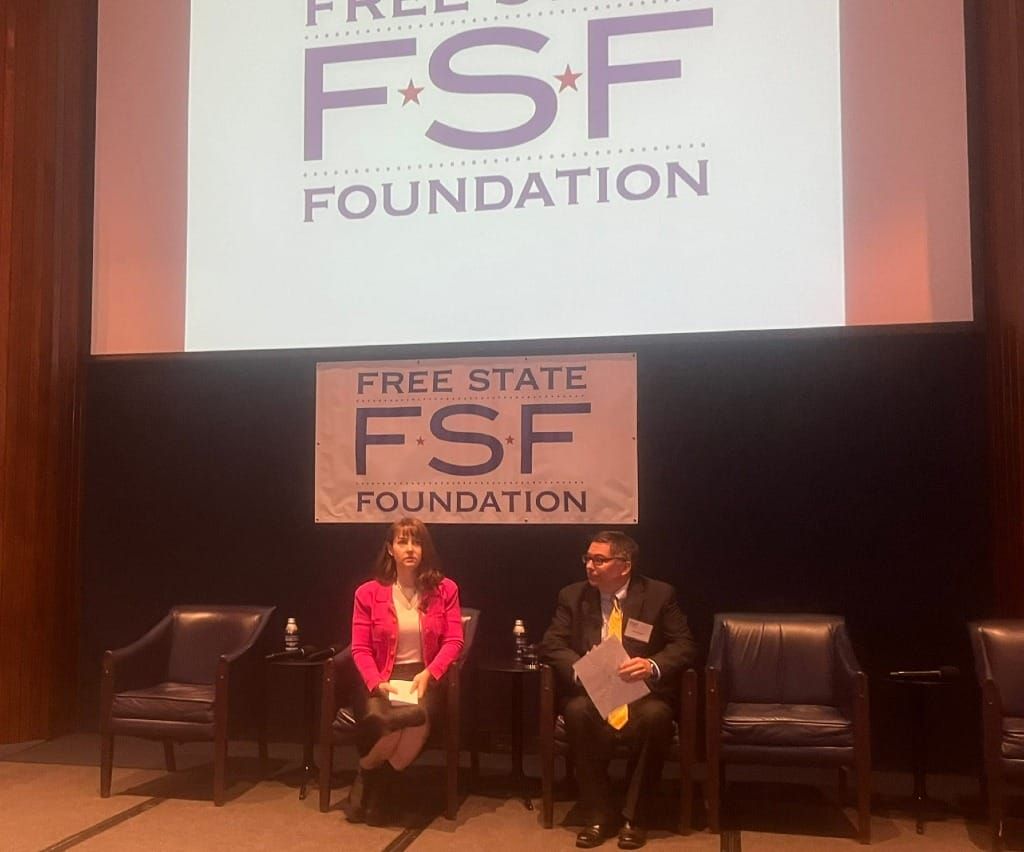
WASHINGTON, June 4, 2026 – Arielle Roth, Administrator of the National Telecommunications and Information Administration, provided updates on the Broadband Equity, Access and Deployment Program and Spectrum Deployment at a Free State Foundation event on Thursday.
Roth noted that the NTIA is at an important stage in the BEAD program, with deployments bringing quality, high-speed internet to rural communities. States are in the process of negotiating contracts and seeing results, but there is still more work to do. Challenges have emerged with labor, supply chain and permits, but the administration is working to stay on track.

“We would love to see projects deployed as quickly as possible,” said Roth. There is a four-year statutory agreement for deployment that the NTIA hopes to uphold. The administration is closely monitoring the program, with 54 plans approved, and states signing contracts with providers.
Roth explained that to qualify for funding, states must comply with permit obligations. She said, “We have rules that states and the companies can’t just contract out of. There’s no exceptions; they apply to everyone.” In areas where the NTIA’s rules are silent, the administration is working with states to negotiate agreements.
She then provided updates regarding Spectrum, explaining that an all-of-the-above approach is needed in the program. The administration wants to offer more spectrum for everyone, working to deploy 60 GigaHertz and identify more bands.
“There’s a number of bands we’re looking at to get to our statutory requirement of identifying 500 MegaHertz of federal spectrum to be reallocated for commercial license use,” Roth said. This has contributed to the biggest pipeline in history. She noted that she is hopeful that spectrum relocation funds will become available soon.
Roth also briefly addressed other issues facing the NTIA regarding technology use in schools, modernizing 911 systems, Lutnik’s FirstNet deal with AT&T and the WRC-27 conference in Shanghai, China.