Fifth Circuit Judges Probe USF Spending, Administrator
A Fifth Circuit panel heard oral arguments Wednesday in Consumers' Research's latest challenge to the program

WASHINGTON, Aug. 5, 2026 – Judges probed the role of the $8 billion-per-year Universal Service Fund and its administrator Wednesday.
Conservative nonprofit Consumers’ Research is challenging the Federal Communications Commission program again, after a defeat at the Supreme Court last year.

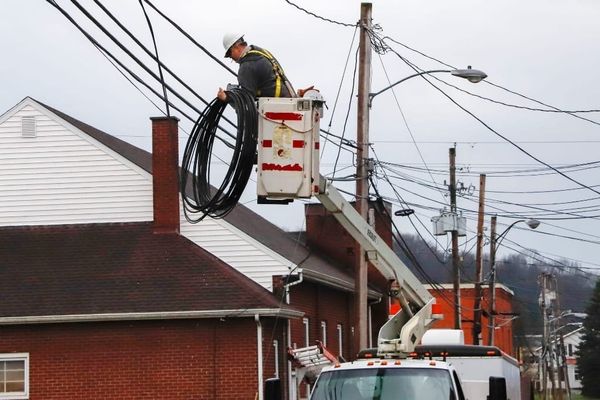
USF supports building and maintaining rural broadband networks, plus voice and internet discounts for low-income households, schools, and healthcare centers.
Taking up a dissent from Justice Neil Gorsuch, Consumers’ Research is arguing that two provisions of the law standing up the fund are invalid under the nondelegation doctrine, the idea that Congress can’t hand its powers to agencies without proper guardrails.
A panel of judges from the U.S. Court of Appeals for the Fifth Circuit heard oral arguments in New Orleans Wednesday
Last year's 6-3 Supreme Court opinion said the rest of the law passed muster under that standard, effectively shielding much of the fund from being declared unconstitutional on those grounds.
Chief Judge Jennifer Walker Elrod indicated Wednesday that she wasn’t eager to go down that road again with the provisions Consumers’ Research challenged.
The Fifth Circuit found the entire fund violated the nondelegation doctrine before the Supreme Court reversed its decision last year.
“The court was not taken with the nondelegation argument the last time,” she said. “Is it necessary for us to address that?”
Still, she did ask FCC attorney James Carr how the 1996 Telecom Act limited the agency’s ability to raise money under the two provisions. They relate to “additional” and “advanced” services.
Carr responded that the agency had to make sure any new service funded with USF money was “economically reasonable” and wouldn’t drive up the quarterly contribution factor. The program is funded by fees on interstate and international voice revenue — a shrinking pool that Congress is working to expand.
Elrod asked whether that was enough, and whether the contribution factor should go down. The figure does sometimes decrease sequentially, but is at a record 38.8 percent for the third quarter of 2026.
Carr said the fund spent money on maintaining networks and providing necessary gear for schools to outfit themselves with ubiquitous Wi-Fi, which kept expenditures roughly flat from year to year.
Joey Wender, executive director of the Schools, Health & Libraries Broadband Coalition, said the group was feeling confident after arguments. SHLB intervened on the FCC’s side.
“I think the FCC and SHLB made a strong and convincing case that the Universal Service Fund is constitutional and essential,” he said in an interview.
USAC
Judges also asked attorneys about the role of the Universal Service Administrative Company. That’s the nonprofit the FCC set up to administer the fund.
Consumers’ Research is arguing the FCC lacked the authority to create USAC and delegate power to its board.
Judge Andrew Oldham pressed Carr on whether the FCC had ever adjusted a contribution factor proposed by USAC.
Carr said that was only infrequent because USAC was simply doing math in line with the FCC’s policy, and the agency oversaw USAC’s process and cleared contribution factors before they were formally proposed.
Oldham also wasn’t convinced there was explicit legal authority in the Telecom Act for the agency to stand up USAC.
Carr said a 2021 law explicitly allowed USAC to administer two since-shuttered pandemic subsidies, and that Congress wouldn’t have done that if legislators had an issue with the nonprofit’s role.
“It’s just hard to imagine. If Congress really thought there was some doubt about the creation of USAC,” he said, “why in the world would Congress pass statutes in 2021 allowing the FCC to expand the use of USAC?”
The judge did not appear swayed.
“It’s not our job to guess what they were thinking,” Oldham responded. “It’s only our job to read what they did.”