Rural ISPs to FCC: Preserve Rural Broadband Subsidy
SpaceX wants the agency to shutter its High Cost fund

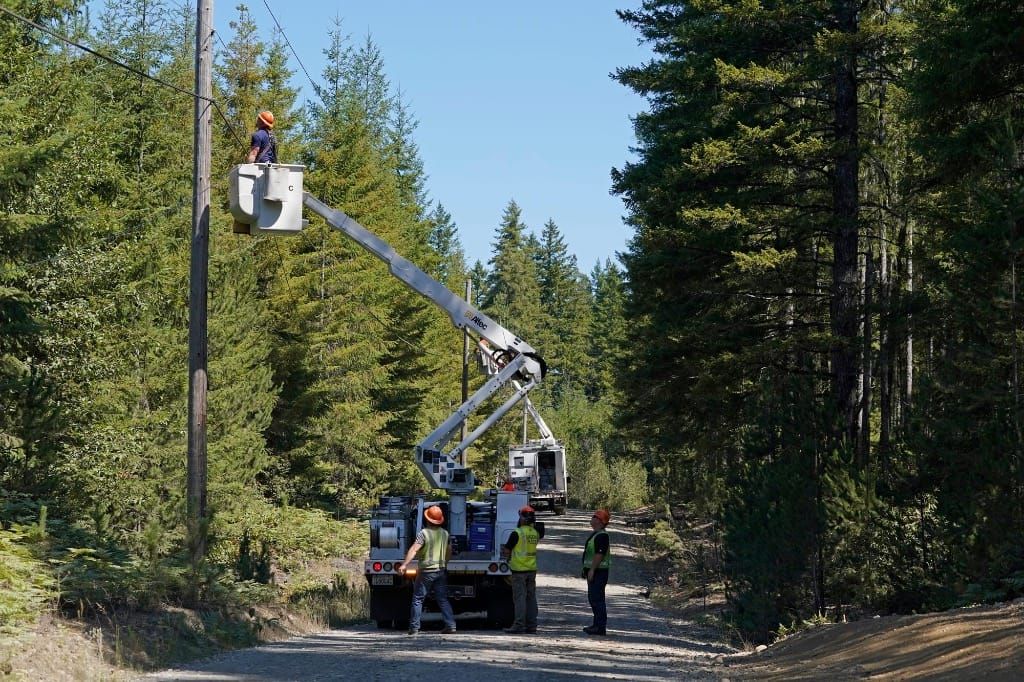
WASHINGTON, Sept. 4, 2026 – Rural ISPs want federal regulators to continue subsidizing rural broadband even if satellite service is present, arguing their terrestrial networks are superior
The Federal Communications Commission is taking comments on how to modernize its High Cost program, one of its universal service programs that spends about $4.5 billion annually supporting the deployment and maintenance of rural broadband networks.

The agency had asked how it should think about the fund in light of expanded satellite availability. SpaceX, the dominant LEO provider, offers satellite broadband nearly everywhere in the country
In reply comments posted Thursday and Friday, trade groups representing participants in the fund and rural providers said that the presence of low-Earth orbit satellite service shouldn’t make an area ineligible for High Cost support. They argued the service wasn’t reliable enough and didn’t have the capacity to serve everywhere it was advertised.
Meanwhile SpaceX has urged the FCC to shutter the program entirely, arguing its service can meet the needs of rural areas without a subsidy.
“No currently operating LEO service provider has demonstrated a real-world capacity to serve all locations simultaneously at substantial take rates, and current publicly available speed test data do not indicate a consistent level of performance at the escalating speeds subscribed to by Americans today,” NTCA general counsel Justin Faulb wrote.
The Wireless Telecommunications Association and a group of 21 state broadband trade groups made similar points.
So did WISPA. Louis Peraertz, the group’s vice president of policy, also wrote that for an insignificant number of locations where it would be truly infeasible to deploy any terrestrial infrastructure, LEO providers should be allowed to receive High Cost funding.
The 21 state telecom groups disagreed, arguing that voice service was essential for emergencies and should be “a bedrock requirement” for participation.
SpaceX
SpaceX wasn’t interested in participating, though. The company said calls to preserve the program, which every other telecom trade group supported, simply “illustrate the rent-seeking behavior inherent to corporate welfare programs.”
A recent speed test analysis by Ookla found Starlink users experienced speeds that met the FCC’s typical High Cost benchmark less than half the time, and the company has instituted congestion pricing in some areas.
But SpaceX said its Starlink constellation, now more than 9,000 satellites, was expanding rapidly, and was soon to be boosted by its V3 satellites that have much more capacity than current units.
The company said it planned to start deploying V3 satellites this month on its Starship rocket this month.
“SpaceX plans to launch approximately 1,000 V3 satellites by mid-2027, roughly doubling current Starlink network capacity in that short time,” wrote Joseph Bissonnette, SpaceX’s head of satellite policy. “Any concerns about the capability of satellite broadband to serve High-Cost areas are unequivocally ill-founded.”
SpaceX wanted High Cost money directed at an affordability subsidy, something the Information Technology & Innovation Foundation think tank supported.
Sunsetting programs
There are many programs under the High Cost umbrella, and some are set to sunset in 2026 and 2028 if the FCC doesn’t take action.
Those three programs disburse support based on cost models for maintaining and building networks and spend about $392 million annually according to the FCC.
NTCA, WISPA, and the state telecom groups said the agency should extend the program expiring in 2026 to 2028, to match the others for a more orderly transition.
The groups also wanted the agency to create another program to provide support for network construction and opex, which NTCA said should require speeds of 300 * 50 megabits per second (Mbps).
The agency’s Enhanced ACAM program is providing $18 billion for 100 * 20 Mbps networks through 2038.
NCTA, which represents the cable industry, opposed a new High Cost program, which it called “essentially a backdoor option to join the Enhanced A-CAM program after the fact.”
The group said another round of funding likely didn’t make sense given the Commerce Department’s Broadband Equity, Access, and Deployment program supporting builds to millions of rural locations. NCTA said any future funding should be targeted only at places not being supported by other funding programs.
Contribution reform?
INCOMPAS , which represents competitive ISPs and major tech companies, focused on how the program is being funded.
The High Cost program is one of three funded by the FCC’s Universal Service Fund, which spends about $8.5 billion annually.
USF is funded by a shrinking pool of cash — fees on interstate voice revenue — and lawmakers have been working for years to settle on a new contribution base. A bicameral working group staffer said earlier this year lawmakers were aiming to circulate draft legislation this summer.
Meanwhile, the FCC has been reviewing its other USF programs as well, partially an effort to look for potentially unnecessary spending that would bring the program’s expenses down.
INCOMPAS said that work should finish before Congress settles on a new contribution base. Broadband providers and big tech companies have quarreled over who should be included in that base, with each pointing a finger at the other (INCOMPAS argued against including tech companies).
FCC Chairman Brendan Carr has supported adding tech companies to the mix. Previous FCC Chairwoman Jessica Rosenworcel said that she feared tapping either industry could drive up prices for consumers and proposed digital advertising revenue.