Sen. Warner Warns U.S. Must Reassert Leadership on Cybersecurity
Warner is concerned the 6 GHz band remains unprotected.

Naomi Jindra
WASHINGTON, Sept. 30, 2025 — The U.S. risks losing its edge in technology and innovation if it doesn’t fix spectrum policy, speed up broadband deployment, and strengthen cybersecurity, according to a Virginia senator.
Sen. Mark Warner, D-Va., a former telecom executive, criticized the lack of protections for the 6 gigahertz band, which is heavily used by Wi-Fi, following recent congressional action to free up 800 megahertz of additional spectrum.
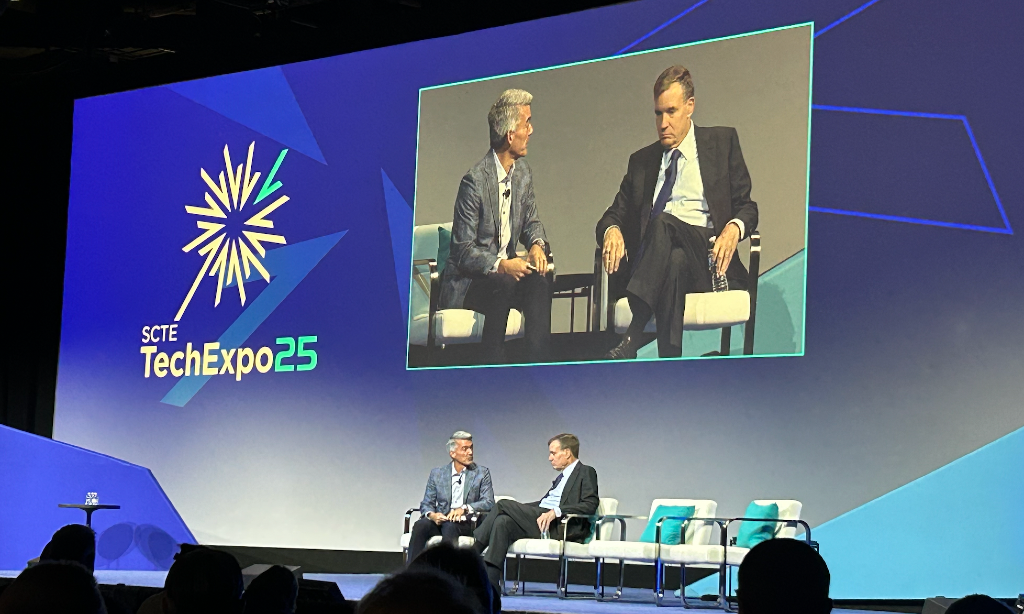
He addressed his concerns at the TechExpo25 on Tuesday, here in Washington.
“And the notion of what happened in the big bill of 800 megahertz of additional spectrum, leaving the 6 gigahertz spectrum without protection, as mentioned before — so much of Wi-Fi is there — I think is a huge mistake.” said Warner in a fireside chat with NCTA - The Internet & Television Association President and CEO Cory Gardner.
Warner said Beijing’s influence over global standards is a growing threat, following Huawei’s 5G dominance. “The wake-up call for me, not only was Huawei, but it was also the fact that suddenly China is starting to drive spectrum policy across the world,” he said.
“America needs to reassert itself at all the spectrum-setting authorities because, candidly, we are being more and more isolated.” He noted a bipartisan bill with Sen. Marsha Blackburn, R-Tenn., to boost U.S. representation in international bodies.
On broadband, Warner called the $42.45 billion Broadband Equity, Access and Deployment program a “tremendous opportunity,” but said red tape risks delaying projects. He urged faster distribution of funds across fiber, cable, wireless and satellite providers, and suggested affordability subsidies that could decline over time.
“Nothing makes much less sense than spending money on all of this infrastructure and then not having people take it over,” Warner said. He also cautioned that providers could face difficulties not only in building networks but also in sustaining operations.
Warner further raised alarms about cybersecurity. He criticized the diversion of FBI cyber agents to immigration enforcement and according to the Senator, Chinese actors remain “deeply embedded” in U.S. telecom infrastructure.
“The fact that our networks were cobbled together from a series of aging networks means we have really little secure equipment,” Warner said. “If we don’t at least have minimum security standards across our communication nodes, I think it is malpractice.”
He added that the U.S. should adopt a more proactive cyber posture. “We can’t just do defense alone. We need to be leaning forward more,” he said.
Member discussion