
Senate Commerce Moves to Boost Foreign Investment in High-Tech Sectors
Committee also advances bill to counter cybersecurity risks in oil and gas pipelines.

Jericho Casper
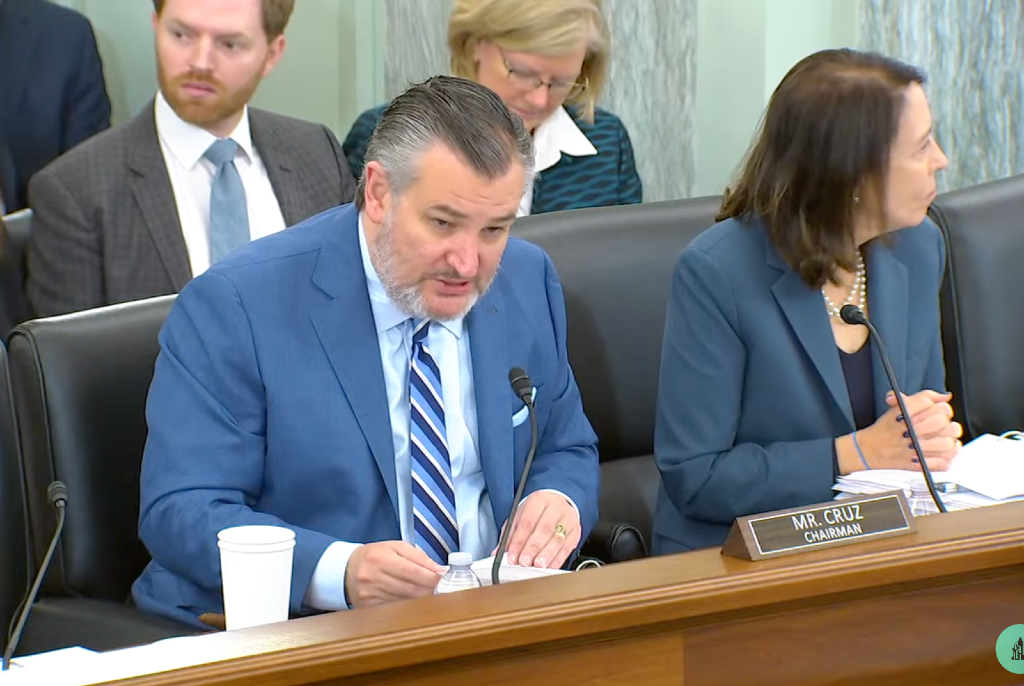
WASHINGTON, Oct. 21, 2025 – A bill directing the Commerce Department to examine barriers to foreign investment in high-tech sectors advanced Tuesday from the Senate Commerce Committee.
Titled the Global Investment in American Jobs Act, the measure drew five amendments from Sen. Ed Markey, D-Mass., who argued boosting foreign direct investment should account for broader political and economic risks created by Trump administration policies.
“We cannot ignore the elephant in the room, the Trump administration's chaotic economic policies and its ongoing attack on the rule of law, which undermine foreign investor confidence in our country,” Markey said during the committee’s executive session.
Markey said he filed nearly two dozen amendments to ensure that the legislation takes a comprehensive view of the U.S. investment climate. “I won't be calling up all of those amendments, but it's important that we vote on some of them,” he said.
One of Markey’s amendments would have required Commerce’s report to examine how government actions that undermine the First Amendment and freedom of the press affect foreign investor confidence.
“That risk has skyrocketed in the United States,” Markey said, pointing to “FCC Chairman Brendan Carr’s mafia-boss threats against the media” and “Trump’s firing of inspectors general.”
However, Senate Commerce Chairman Ted Cruz, R-Texas, shot back, calling many of Markey’s proposals “political show votes” unrelated to the bill’s goal of attracting investment from allied nations.
Other amendments Markey offered for votes would have broadened the Commerce Department’s review to consider the impacts of political favoritism, Federal Reserve independence, what he called “erratic” tariff policies, and the wages paid by foreign-owned firms. All five amendments failed on 15–13 party-line votes.
Measures to counter foreign robocalls, strengthen resiliency of oil and gas pipelines
The committee also advanced the Foreign Robocall Elimination Act, sponsored by Sen. Ted Budd, R-N.C., which directs the Federal Communications Commission to establish an interagency task force to identify and block foreign-initiated robocalls.
Lawmakers also approved the Pipeline Safety Act, a bipartisan measure led by Cruz and Maria Cantwell, D-Wash., that reauthorizes the Pipeline and Hazardous Materials Safety Administration for five years, a branch of the U.S. Department of Transportation that oversees the safe transport of energy and hazardous materials.
“The bill directs PHMSA to make its cybersecurity appointments permanent to prevent attacks like the 2021 Colonial Pipeline hack,” Cantwell said. “It also requires operators to address aging plastic components known to fail during land movement caused by landslides and earthquakes.”
In May 2021, Colonial Pipeline Co., which operates a 5,500-mile system supplying nearly half of the East Coast’s fuel, was hit by a ransomware attack carried out by the criminal hacking group DarkSide, believed to operate from Russia.
The company shut down its pipeline network for several days to contain the breach, leading to gas shortages, price spikes, and emergency declarations across multiple states.
During consideration of the bill, Sen. Ben Ray Luján, D-N.M., offered an amendment requiring PHMSA to study how extreme weather events, such as Winter Storm Uri in 2021 and Winter Storm Elliott in 2022, might affect pipeline integrity and public safety.
After brief debate, Cruz agreed to adopt the amendment by voice vote, although he noted his staff said the amendment was duplicative. “This would not be the first time Congress has done something duplicative, and I’m confident it won’t be the last,” he said.
The committee also advanced the National STEM Week Act, sponsored by Sen. Joni Ernst, R-Iowa, which would designate one week each year to promote education in science, technology, engineering, and mathematics.
Members also approved three Trump administration nominees for key Commerce and Transportation posts.


Member discussion