Senate Introduces Bills Targeting Kids’ AI Safety and Literacy
AI chatbots pose real risks for kids, senators agree.

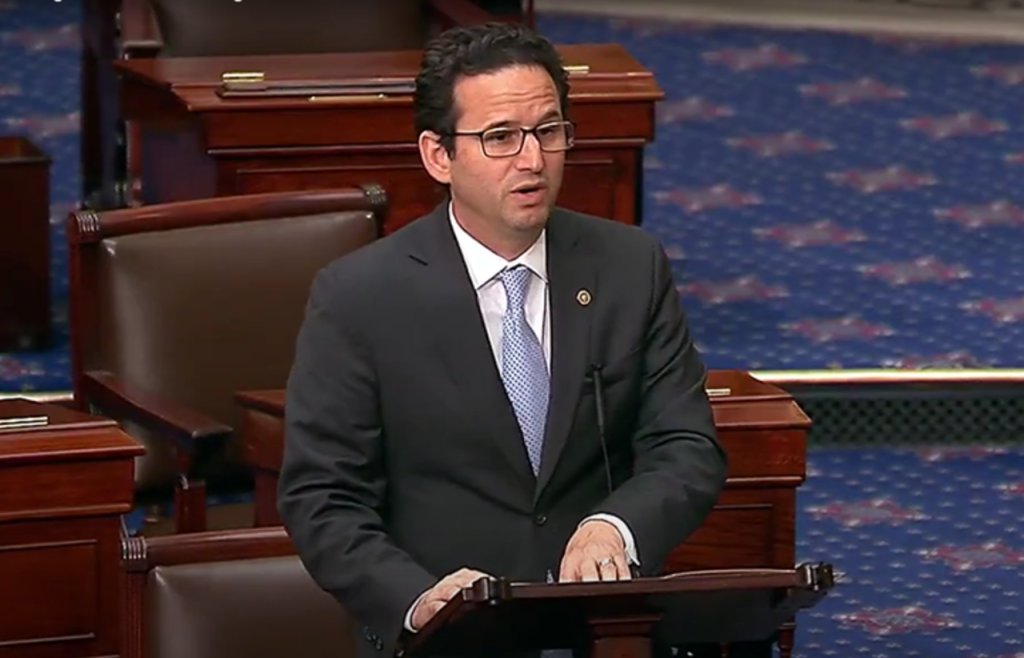
WASHINGTON, April 30, 2026 – Two bipartisan bills aimed at regulating how children use artificial intelligence were introduced Wednesday in the Senate.
Lawmakers said AI tools are reaching children with limited oversight, as their use expands in classrooms.
Sen. Ted Cruz, R-Texas, was joined by Sens. Brian Schatz, D-Hawaii, John Curtis, R-Utah, and Adam Schiff, D-Calif., in introducing the CHATBOT Act. The bill would require AI companies to create “family accounts,” allowing parents to manage how children access and use chatbot tools.

AI chatbots can expose children to harmful content, lawmakers said, especially as use features are designed to increase engagement. Some platforms deploy rewards, notifications, and targeted advertising aimed at younger users.
The bill would require parental consent, allow parents to monitor chatbot conversations, and prohibit targeted advertising to minors.
AI chatbots pose “real risks for kids,” Schatz said, pointing to harmful interactions and social isolation. Cruz said the bill would “put parents back in control” as AI systems become more integrated into children’s lives.
The measure would restrict manipulative design features and direct federal study into potential psychological and developmental harms tied to chatbot use.
Lawmakers cited reports of chatbots encouraging self-harm and replacing real-world relationships for some users. The bill aims to hold AI companies accountable while preserving potential educational benefits.
The legislation is backed by groups including the American Federation of Teachers and Americans for Responsible Innovation.
LIFT AI Act
Separately, Schiff and Sen. Mike Rounds, R-S.D., introduced the LIFT AI Act.
The bill would support artificial intelligence education in K-12 schools as AI adoption reshapes the workforce.
It would create a grant program at the National Science Foundation to fund development of AI literacy curriculum and evaluation tools.
The measure would also support training for educators and promote integration of AI tools into classroom instruction, including hands-on learning.
Companion legislation was introduced in the House by Reps. Tom Kean Jr., R-N.J., and Gabe Amo, D-R.I.