One Year After DOGE Cuts, Cybersecurity Agency Struggles Over Staffing
Lawmakers and experts question whether the federal government's cyber defense agency can recover from losing roughly one-third of its workforce.

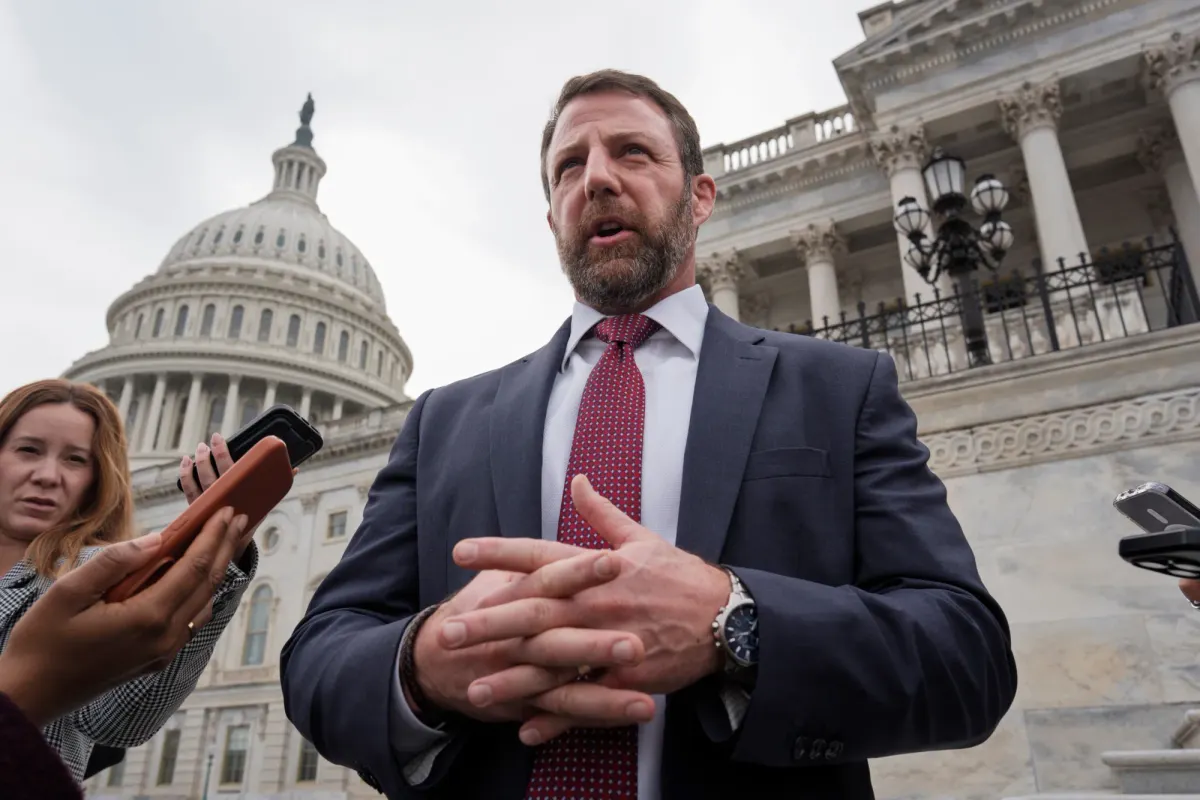
WASHINGTON, June 13, 2026 – The cyber threats facing the United States are growing more sophisticated – yet the agency tasked with defending against those threats is still rebuilding after losing roughly one-third of its workforce.
More than a year after the Department of Government Efficiency's sweeping workforce reductions at the Cybersecurity and Infrastructure Security Agency, lawmakers, cybersecurity experts and former officials are questioning whether the nation's primary cyber defense agency can fully carry out its mission amid rising threats from foreign hackers and growing concerns about election security.

Created by the 2018 Cybersecurity and Infrastructure Security Agency Act, CISA serves as the federal government’s lead civilian cybersecurity agency. The agency works to protect federal networks, coordinate responses to cyber incidents, secure critical infrastructure, and more recently build a classified system for evaluating which AI models are powerful enough to warrant government scrutiny.
But since the start of the Trump administration's government restructuring efforts, CISA has become one of the most scrutinized agencies affected by DOGE led workforce reductions.
According to lawmakers, the agency has lost roughly one-third of its workforce since early 2025. Among the cuts were probationary employees, including members of CISA's red teams, specialists responsible for simulating cyberattacks and identifying vulnerabilities before malicious actors can exploit them.
“CISA has lost one-third of its workforce since the start of the Trump administration, including many seasoned career federal employees with extensive experience protecting our cyberspace and critical infrastructure,” Sen. Mark Warner, D-Va., told Broadband Breakfast.
The challenge comes as cyber threats continue evolving. Experts increasingly warn that advances in artificial intelligence enable more sophisticated cyberattacks, while foreign adversaries continue targeting critical infrastructure ranging from telecommunications networks to energy systems.
Trump and CISA at odds since first term
The reductions followed years of tension between President Donald Trump and the agency.
In 2020, Trump dismissed CISA’s inaugural director, Christopher Krebs, after Krebs publicly rejected claims that the presidential election had been stolen. The episode transformed election security into one of the agency's most politically sensitive responsibilities.
Those concerns resurfaced in early June week when House Homeland Security Democrats requested information about CISA’s ongoing election security efforts and partnerships with state and local officials. Democrats cited reports that some election administrators have become hesitant to work with federal agencies amid political scrutiny surrounding election administration.
At the same time, cyber threats facing the agency have only intensified.
In August 2025, CISA joined the National Security Agency and the Federal Bureau of Investigation in issuing a major advisory warning that Chinese state-linked hackers associated with the Salt Typhoon campaign had infiltrated U.S. telecommunications networks. The intrusion exposed vulnerabilities in U.S. House committee and staff emails and certain telecommunications companies to access presidential candidate communications.
“Starving CISA of personnel, resources and leadership in this high-stakes environment puts our homeland security and national defense at risk,” said Sen. Gary Peters, the ranking Democrat on the Senate Homeland Security and Governmental Affairs Committee.
Supporters of DOGE argue the workforce reductions were part of a broader effort to eliminate inefficiencies across the federal government. The initiative has claimed more than $215 billion in taxpayer savings through layoffs, contract cancellations, and agency restructuring.
How much did DOGE save?
However, independent analysts have questioned those figures.
Dominik Lett, a budget analyst at the Cato Institute, has argued that errors and inconsistencies in DOGE’s public accounting make it difficult to verify the claimed savings. Other researchers have similarly cautioned that measuring the long-term financial impact of the cuts remains challenging.
Meanwhile, the DOGE effort itself has faded from public view.
Greg Barbaccia, the federal chief information officer at the Office of Management and Budget, recently said the initiative's centralized structure has largely dissolved.
“In the early days, when DOGE was more of a central entity, I had more liaising,” Barbaccia said in a recent interview. “But now the central command and control has been dispersed.”
CISA mission post-DOGE
The agency now appears to be shifting toward rebuilding.
In March, acting director Nick Andersen signaled that CISA was looking to hire around 300 “mission-critical hires.” On June 3, Homeland Security Security Markwayne Mullin went beyond this and said in a congressional hearing that the agency “probably needs around 2,800 [personnel].”
The move comes as the White House increasingly relies on CISA for emerging cybersecurity priorities, including implementation of President Trump's latest cybersecurity executive order, which directs federal agencies to develop systems for evaluating advanced artificial intelligence models that could pose national security risks.
Still, some experts question whether recruiting experienced cybersecurity professionals back into government service will be easy.
“My concern is that the way current federal leadership, through OPM and DOGE, has treated federal employees over the past year makes it very unlikely that the federal government will be an attractive destination for prospective cyber professionals,” Richard Forno, associate director of the University of Maryland, Baltimore County Cybersecurity Institute told Broadband Breakfast.
Forno highlighted that this issue is not isolated, with impacts in agencies ranging from NIST layoffs and massive downsizing at the FCC. As of March 2025, CHIPS offices were forced to lay off more than 50% of its workforce.
For CISA, the coming year may determine whether the agency can rebuild enough capacity to meet those challenges.