Senators Introduce Bill Requiring Transparency on AI Job Losses
The legislation would create new reporting rules to track automation’s impact.

Akul Saxena
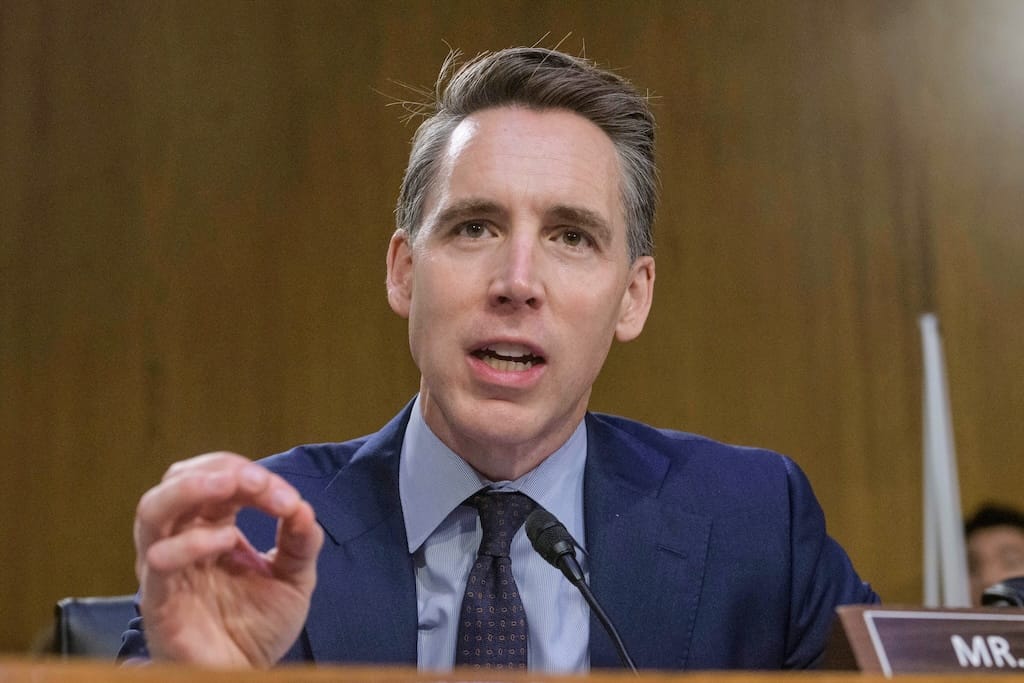
WASHINGTON, Nov. 6, 2025 — Sens. Mark Warner, , D-Va.,, and Josh Hawley, R-Mo., on Wednesday introduced a bill requiring major companies and federal agencies to report how artificial intelligence is affecting their workforce, marking an early effort to document AI-related job losses.
The AI-Related Job Impacts Clarity Act would direct the Department of Labor to collect and publish quarterly data on layoffs, retraining, and hiring tied to AI automation. The bill would apply to both publicly traded firms and large non-public companies, as well as federal agencies.
Under the measure, companies would have 30 days after each quarter to report to the Labor Department how many workers were laid off or replaced due to automation, how many were hired for AI-related roles, and how many positions went unfilled because of AI deployment. They would also have to disclose how many employees were retrained or reskilled for AI integration.
The Labor Department, through the Bureau of Labor Statistics, would compile the data into quarterly and annual reports for Congress and the public, including an analysis every other quarter comparing AI-driven job losses and gains across sectors.
Transparency about automation
Hawley described the measure as a first step toward transparency in automation, warning that AI is already displacing American workers and could push unemployment as high as 20 percent within five years. “The American people need to have an accurate understanding of how AI is affecting our workforce,” he said, “so we can ensure that AI works for the people, not the other way around.”
The legislation authorizes the Labor Department to integrate its data collection into existing Bureau of Labor Statistics or Census surveys and to determine within six months how far the rules should extend to large private firms not publicly traded. The department would also coordinate with the Securities and Exchange Commission and the Treasury Department to define thresholds based on company size and revenue.
If enacted, the bill would give policymakers the first consistent national dataset tracking where AI is displacing or creating jobs, a move Warner and Hawley said is critical as automation transforms sectors from manufacturing to finance.
Member discussion