
SpaceX Buying EchoStar Satellite Spectrum for $17 Billion
EchoStar said the deal should end FCC inquiries into the company's spectrum licenses.

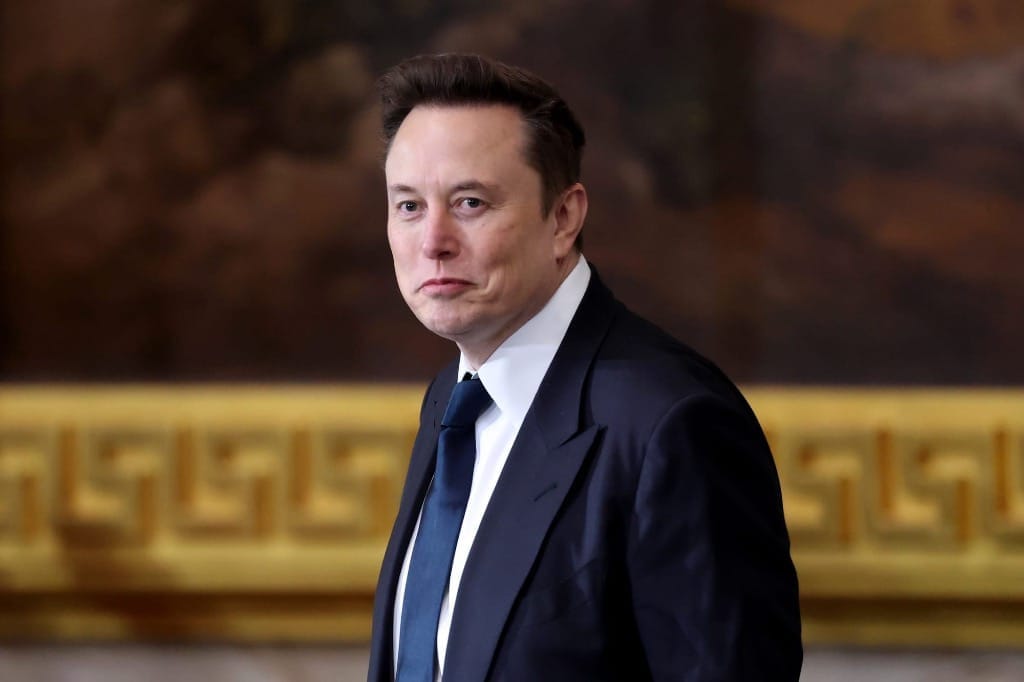
WASHINGTON, Sept. 8, 2025 – EchoStar announced Monday it had reached a deal to sell more of its spectrum licenses, this time to Elon Musk’s SpaceX for about $17 billion. EchoStar said it expected the deal to resolve Federal Communications Commission inquiries into its spectrum holdings.
The company is planning to sell its AWS-4 and PCS H-block licenses, about 50 megahertz in total, for $8.5 billion in cash and $8.5 billion in SpaceX stock (which is not publicly traded). SpaceX will also pay $2 billion toward existing EchoStar interest payments through November 2027.
SpaceX will also gain access to EchoStar’s mobile-satellite service licenses, allowing it to use the same AWS-4 airwaves to boost its direct-to-device capabilities. EchoStar’s mobile subscribers will be able to access the service as part of the deal.

The deal comes just under two weeks after EchoStar announced a $23 billion deal to sell other spectrum licenses, in the 3.45 GHz and 600 MHz bands, to AT&T. That deal will see EchoStar shutter its 5G network and provide service on AT&T’s infrastructure.
FCC Chairman Brendan Carr has said he didn’t think EchoStar was adequately putting its airwaves to use, and had opened two inquiries into EchoStar’s licenses that were seen as a means of pushing the company to sell some of its spectrum to another entity.
And 122 days after Carr's May 9 letter notifying EchoStar Chairman Charlie Ergen of the probes, the company has made plans to liquidate much of its spectrum holdings.
“EchoStar anticipates this transaction with SpaceX along with the previously announced spectrum sale will resolve the FCC inquiries,” the company said in a release.
EchoStar had announced last month plans for a low-earth orbit constellation to support a direct-to-device service of its own, and said it would operate on the AWS-4 band. The company did not mention those plans in its release Monday and did not immediately respond to a request for comment.
New Street Research analyst Philip Burnett said in a Monday research note the only possibility was that Echostar’s “ambitions of launching its own LEO network for D2D services have concluded. This removes the downside scenario where the company burned $5 billion on the project.”
Investors were apparently pleased, as EchoStar stock jumped more than 22 percent Monday morning. After the AT&T deal was announced, analysts said they expect EchoStar to liquidate all its spectrum. The company still has AWS-3, 700 MHz, and CBRS licenses, but MoffettNathanson Senior Managing Director Craig Moffett noted that AWS-4 was its largest remaining block.
“The deals that EchoStar reached with AT&T and Starlink hold the potential to supercharge competition, extend innovative new services to millions of Americans, and boost U.S. leadership in next-gen connectivity,” an FCC spokesperson said in an email. “The FCC will review the applications and continue our focus on promoting the beneficial use of scarce spectrum resources.”
SpaceX said in a blog post that the airwaves would boost its direct-to-device ambitions. The company offers the service in the U.S. through a partnership with T-Mobile. Musk, who controls SpaceX, is a major Republican donor and a former advisor to President Donald Trump.
“In this next chapter, with exclusive spectrum, SpaceX will develop next generation Starlink Direct to Cell satellites, which will have a step change in performance and enable us to enhance coverage for customers wherever they are in the world,” SpaceX COO Gwynne Shotwell said in a statement.
“In most environments,” the company said in the blog post, the new satellites “will enable full 5G cellular connectivity with a comparable experience to current terrestrial LTE service, which will be used in partnership with Mobile Network Operators to augment high capacity terrestrial 5G networks.”
Burnett pointed out that the terrestrial AWS-4 licenses have terrestrial buildout obligations – the center of one of the FCC inquiries – meaning the owner had to operate a mobile network on the ground.
“We assume that the AWS-4 wireless buildout obligations will either be waived by the FCC, or SpaceX will lease the wireless licenses to the big three carriers while retaining the satellite licenses,” he wrote.
New Street’s Blair Levin added that the deal is unlikely to face any regulatory hurdles. The FCC actively wanted EchoStar to divest its spectrum, and the Department of Justice has only voiced concerns so far about spectrum consolidation among the big three wireless carriers.
Member discussion