
SpaceX: NTIA Should Reject Virginia's BEAD Plan
The company said it should have won more locations in the state.

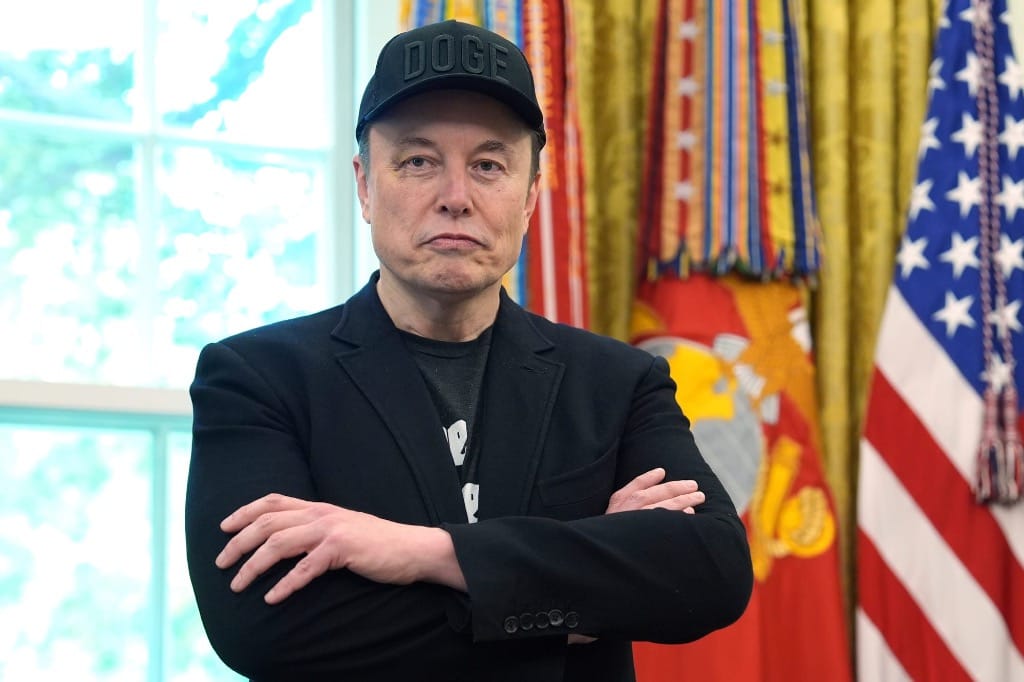
WASHINGTON, August 14, 2025 – Elon Musk just picked a new fight – with a Republican. Earlier, it was President Trump over the big budget bill. Now, it is Virginia Gov. Glenn Youngkin over a massive broadband subsidy program.
Comments from SpaceX, Education Super Highway, and Vernonburg Group to Virginia:
Available to Breakfast Club Members
Access SpaceX's comment to Virginia - Become a Breakfast Club Member!
Can't see the premium document? Join the Breakfast Club to see
Under the Trump administration’s new rules for the $42.45 billion Broadband Equity, Access, and Deployment program, states are funding less fiber and more satellite. But Musk’s SpaceX still wants a bigger share.
The company submitted a comment Wednesday on Virginia’s final spending plan under the Broadband Equity, Access, and Deployment program, arguing that the federal government should block the plan unless the state awards more money to satellite bidders like itself.

“Simply put, Virginia has put its heavy thumb on the scale in favor of expensive, slow-to-build fiber bias over speedy, low cost, and technology neutral competition,” the company wrote. “Virginia must immediately revise its final proposal to appropriately consider applications received in line with program rules. Alternatively, NTIA must deny Virginia’s final proposal.”
Virginia’s broadband office declined to comment. The state is looking to get fiber to about 80 percent of its BEAD-eligible locations, with SpaceX and Amazon’s Kuiper Systems slated to serve about 10 percent with low-earth orbit satellites.
That’s after a rule change in June from the Trump administration that was aimed at making it easier for other technologies to compete on the basis of cost with fiber, which is more expensive to deploy but was favored by the Biden administration for its superior speeds. The 80 percent fiber split is less than neighboring West Virginia had planned under the previous rules, but isn’t as low as fiber proponents had feared.
It’s also not low enough for SpaceX. The company said that it submitted bids to serve nearly every eligible location in the state, and claimed that its applications were unfairly disregarded.
The argument hinges on the definition of “priority broadband projects,” which get first pick of eligible locations under BEAD rules. The Trump administration axed the explicit fiber preference, asking states to make the determination on an application-by-application basis.
The law standing up BEAD requires that a priority project be able to “easily scale speeds over time” to meet future connectivity needs and support 5G deployments.
SpaceX claimed it submitted sufficient evidence to meet that benchmark across the state, and took issue with only being treated with priority in about 5 percent of the locations it applied for.
In its final proposal, Virginia’s broadband office said it factored tree coverage into its review of LEO and fixed wireless applications, arguing that “broadband technologies with obstructed line-of-sight, specifically wireless and LEO technologies, can have signal degradation, increased latency, and reduced reliability.”
The state also said depending on future regulatory approvals and shorter operational lifespans could cut against an applicant. SpaceX and Kuiper are currently looking for Federal Communications Commission approval to access more spectrum and increase power levels in some bands, and SpaceX satellites last about 5 years.
“None of these factors serve as a barrier to SpaceX’s ability to serve BEAD households in Virginia,” the company argued. “SpaceX submitted information to Virginia demonstrating its status as Priority Broadband and provided a roadmap for capacity deployments and evolving capabilities during the BEAD period of performance.”
Of SpaceX and Kuiper, Virginia’s broadband office said it determined each company “meets the statutory definition of a priority broadband project for specific project areas, but does not in others,” and that awarded locations include “both areas where this applicant was deemed as priority, as well as not deemed priority.”
SpaceX’s letter was shared with other media outlets and separately obtained via a records request by Broadband Breakfast.
Louisiana, the only other state to have released its final bead plan, is also looking to get fiber to about 80 percent of its eligible locations and satellite to about 10 percent.
SpaceX was also an applicant in Louisiana. Comments on the state’s plan are due Friday morning.
Despite the public sparring over Republicans’ budget bill, Musk donated $15 million to super PACs supporting Trump and congressional Republicans in June.
Other comments
Virginia also received two comments from residents in southwest Virginia who said they weren’t happy their areas would receive satellite service.
“As the rest of Virginia gets future proof options, we in [the town of] Pound once again get left behind and the digital divide will only grow more pronounced in the coming years,” one resident, Joshua Stanely, wrote. “You might as well give us a phone line and dial up because in a few years that's what satellite will be like compared to fiber.”
Nonprofit EducationSuperHighway and consulting firm Verninberg group urged the state to specify it intended to use its leftover cash. Virginia’s plan would spend about $613 million on deployment out of its $1.48 billion BEAD allocation, and, like Louisiana's, does not mention any plans for its remaining money.
States were originally planning to use remaining BEAD money to promote broadband adoption or provide discounts to low-income households, among other things. The Trump administration rescinded approval of any of those activities in June and said new guidance would come down at some point in the future. Despite following Trump administration directives to lower their spending, and the law specifying that at least efforts to promote adoption are an acceptable use, some states aren’t optimistic they’ll get to use the money they save.
EducationSuperHighway said funding a plan to retrofit apartment buildings, where old wiring is a frequent bottleneck, would likely be palatable to the administration as it still involved deploying infrastructure. Vernonberg said the state should cite the statute and assert it would move ahead with previous plans for workforce development and precision agriculture efforts.





Member discussion