SpaceX Unlikely to Buy Carrier, Build Macro Network: Analyst
The satellite company’s executives have said they expected to eat into mobile carriers’ market share

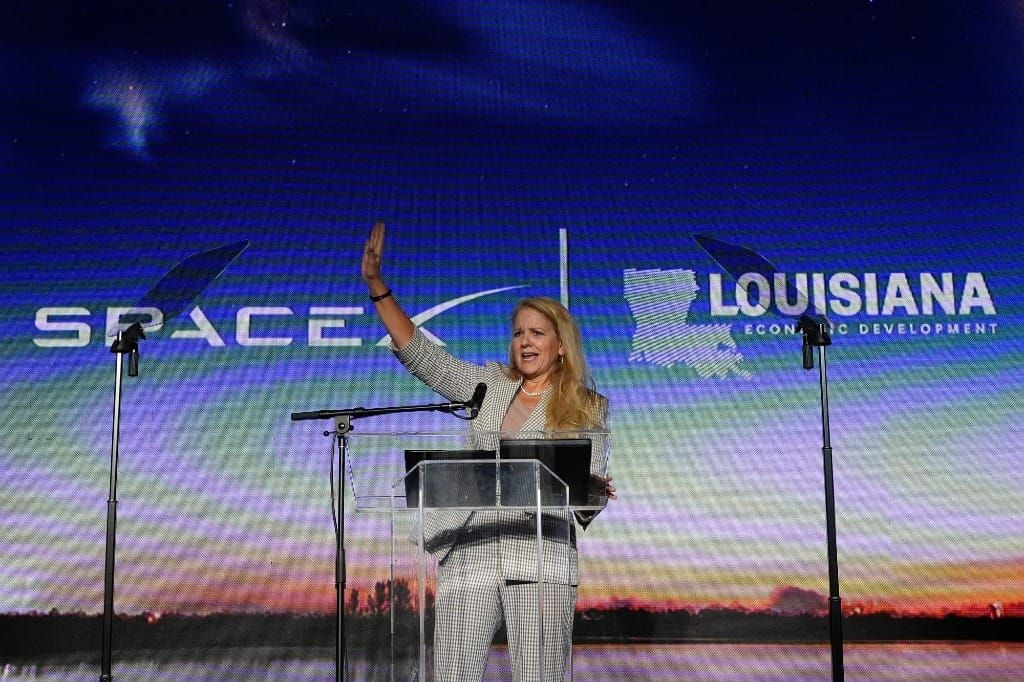
WASHINGTON, Sept. 1, 2026 – SpaceX is unlikely to buy a carrier or build a macro cell mobile network, an industry analyst said Tuesday.
On the company’s first-ever earnings call last month, COO Gwynne Shotwell and CEO Elon Musk said SpaceX had plans to deploy tiny femtocells to augment its direct-to-device satellite mobile service.
Despite telecom analysts’ skepticism of the plan, Shotwell said she anticipated being able to acquire “quite a few” of the big three carriers’ customers.
For Tim Farrar, founder of research firm TMF Associates, that was less a concrete plan than an indicator of what SpaceX would not do to compete with the carriers. He spoke on a webinar hosted by the Wireless Infrastructure Association.
“We had a lot of analysts on Wall Street predicting that SpaceX would be buying a mobile operator, or that they would be investing tens of billions of dollars in a terrestrial network deployment,” Farrar said. “I think it’s more of a signal that they’re saying to people, ‘Don’t put that in your models.’”
He said the rhetoric was part of an ongoing negotiation between SpaceX and the big three over how direct-to-device will ultimately fit into the mobile market. The aggression might be aimed at securing a mobile virtual network operator (MVNO) deal and offering service on one of the carriers’ networks, or simply more favorable partnership terms.
MoffettNathanson founder Craig Moffett has also written that buying a carrier wouldn’t make sense for SpaceX, given how heavily regulated and slow-moving they are. He also thinks SpaceX’s main goal will be securing an MVNO, something all three carriers have said they’re not interested in.
On the carriers’ side, Farrar noted that T-Mobile has been vocal about not seeing very much traffic on the direct-to-device service it offers through a SpaceX partnership. He said that’s an indication the carrier is trying to push down the price of any future agreement that comes after its current exclusive U.S. deal expires (that won’t happen this year, according to the carrier).
Business prospects
Farrar and Mobile Experts founder Joe Madden, who also spoke on the webinar, prepared reports for WIA this year arguing direct-to-device wasn’t a replacement for terrestrial mobile service. WIA represents tower companies and other wireless infrastructure providers.
The analysts were bearish on that front again Tuesday. They noted that it’s difficult for satellite signals to penetrate walls and other obstacles because of the vast distances they’re traveling, and difficult for satellites to serve dense areas.
Farrar also noted that SpaceX is planning to roughly double its 650 direct-to-device satellites by the end of next year, which would improve capacity enough to allow some broadband services in addition to texting.
He said it was uncertain whether that would be a boon to subscribership, given how little time people spend outside the reach of terrestrial networks.
Madden said SpaceX was likely aiming beyond consumer subscribers and looking to provide direct-to-device connectivity to drones and robots for enterprise and government customers.
“Remember that most of the valuation in their IPO is based on the expectation of their AI network and their AI data centers in space, not based on the communication side,” he said. “So I think they’re planning to support these AI applications, especially physical AI applications, and the smartphone business is a nice-to-have.”