SpaceX’s $3.3 Trillion Revenue Forecast Depends on Creating New Markets in Connectivity, AI
Morgan Stanley analysts caution that reaching projections will depend on successful execution across multiple not yet proven technologies.

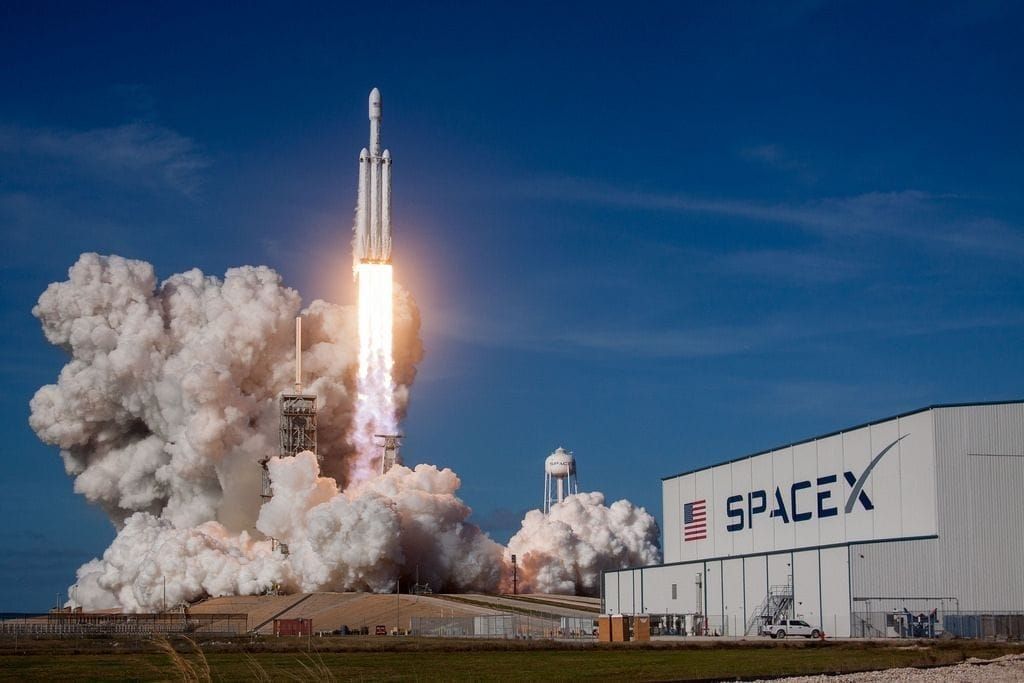
WASHINGTON, July 8, 2026 – SpaceX could become a multitrillion-dollar company in revenue if it succeeds in expanding artificial intelligence infrastructure “off Earth,” and creating new markets for connectivity and physical AI services, according to new research from Morgan Stanley.
The investment bank forecasts SpaceX revenue could reach $319 billion by 2030 and $3.3 trillion by 2040 – but warns that achieving that vision will require unprecedented capital investment, regulatory approvals and execution across multiple unproven technologies.

“SpaceX’s outlook depends on several technologies not yet proven at commercial scale, including fully reusable Starship capable of hitting thousands of launches per year, orbital AI compute, direct-to-cell, and large-scale AI infrastructure. Space is hard and future Starship and in-space anomalies should be expected,” analysts wrote.
Analysts see Starlink as the foundation of SpaceX’s future growth. Morgan Stanley expects the satellite network to move beyond consumer broadband and become a connectivity layer for billions of devices that require reliable coverage where terrestrial networks cannot reach, including vehicles, sensors, aircraft and industrial equipment.
The firm said funding needs present a material risk. Analysts expect SpaceX to remain cash flow negative until 2035 and estimate SpaceX will need roughly $84 billion a year in outside financing between 2027 and 2034 to fund its expansion.
Additional risks identified include dependence on Elon Musk, Tesla-related conflicts, and regulatory or geopolitical conflicts affecting its business across launch, spectrum, orbital debris, export controls, cyber risk, counter-space threats, and AI regulation.
SpaceX generated about $19 billion in revenue in 2025. The company’s first public financial disclosure shows that its satellite broadband business Starlink has become the company’s primary source of revenue, while it loses billions on rocket launches, AI, and social media.
Morgan Stanley estimates SpaceX could be worth far more in the future as it expands Starlink and orbital AI pursuits. The firm’s main forecast implies a hypothetical share value of $300, but it gives a wide range of outcomes from $75 if major challenges emerge to $600 if SpaceX captures more of the future space and AI markets than expected.