SpaceX’s Aborts Starship Launch, Planning Another Next Week
AST SpaceMobile also said its satellite launch schedule is being pushed into 2027

Jake Neenan
WASHINGTON, July 17, 2026 – Companies looking to provide satellite broadband and direct-to-device service hit some snags this week.
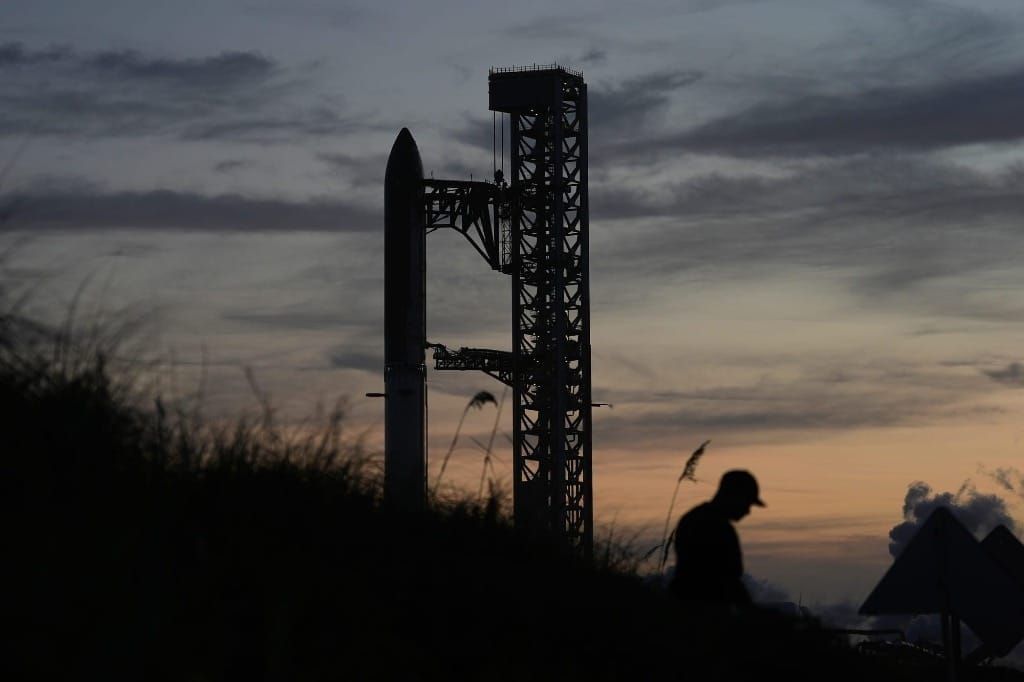
On Thursday, SpaceX’s 13th test flight of its mega rocket Starship was aborted after some engines failed to start. The day prior, AST SpaceMobile told federal regulators that it won’t meet its goal of 45 satellites in orbit by the end of the year, pushing the milestone to early 2027.

SpaceX CEO Elon Musk, who still controls the company after it went public last month, posted Thursday on his X platform that now its Starship test’s “most probable launch timing is early next week.”
Two engines will be removed and replaced, he said.
The rocket was supposed to carry 20 of SpaceX's Starlink V3 satellites for a test deployment. The units, which are expected to be a big capacity increase for the company’s satellite broadband service, would have been sent to burn up in the atmosphere after the test.
SpaceX’s stock fell more than 4 percent Friday. Its Starship rocket can carry heavier loads than its current Falcon 9, and the company is aiming to dramatically reduce launch costs by making it fully reusable.
The company is planning to begin commercial Starship launches in earnest in the second half of 2026. MoffettNathanson analysts have estimated mid-2027.
AST SpaceMobile launch schedule delayed
AST SpaceMobile also acknowledged it wasn’t going to hit its satellite launch targets for 2026.
In a Wednesday filing with the Securities and Exchange Commission, the company said it’s now aiming to have 45 satellites in orbit in early 2027, rather than by the end of this year.
The company said that was due to its “current expectations regarding launch availability.”
In May, one of Blue Origin’s New Glenn rockets exploded on the launch pad, leaving the rocket grounded pending a Federal Aviation Administration investigation. New Glenn was one of the launch vehicles AST was relying on to get its huge BlueBird satellites in orbit.
That was after another unsuccessful New Glenn launch that didn’t get an AST satellite to the correct orbit, forcing the company to burn the unit up in the atmosphere.
AST currently has 10 satellites in orbit, after a successful SpaceX launch in June. It has deals with AT&T and Verizon to provide direct-to-device service on the carriers’ spectrum, which will require 45 satellites and will thus also be pushed into 2027.
“The timing of launch of the BB [BlueBird] satellites is contingent on a number of factors including satisfactory and timely completion of the assembly and testing of the BB satellites, readiness of the launch vehicle, logistics and other factors, many of which are beyond its control,” the company wrote in the SEC filing.
As a potential means of addressing its difficulties in securing launch services, the company is trying to raise an additional $1 billion from share sales. The company told the SEC the extra cash would allow it to consider “partnerships and/or acquisitions to further vertically integrate its business and mitigate risks associated with third-party launch providers.”
Launch provider Rocket Lab was motivated by a similar idea when it struck a deal to buy Iridium for $8 billion. Iridium already had satellites and valuable direct-to-device spectrum, which would have been difficult for the rocket company to build and acquire itself.
SpaceX dominates the low-Earth orbit satellite space, with about 10,000 satellites in orbit. That’s largely thanks to its dominance in rocket launches.
MoffettNathanson noted in a recent report that SpaceX launched more rockets and more mass into space last year than any other entity — including entire countries’ space programs — in the world combined.