SpaceX’s Starshield Satellites Detected Transmitting on Unauthorized Bands

The discovery raised concerns about potential interference with scientific and commercial satellites

SpaceX’s Starshield Satellites Detected Transmitting on Unauthorized Bands
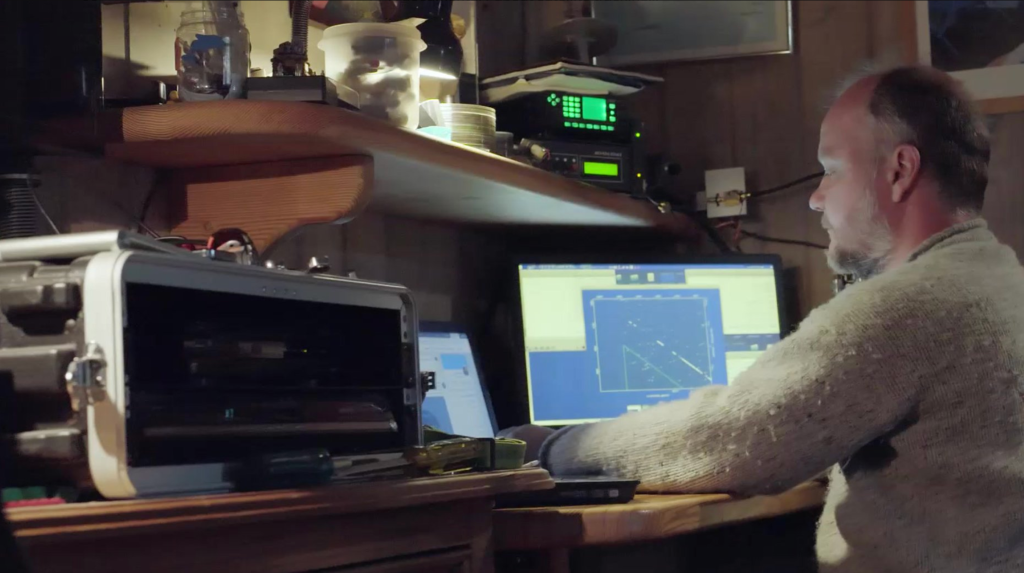
Photo of amateur satellite tracker Scott Tilley

WASHINGTON, Oct. 20, 2025 – A sharp-eyed satellite enthusiast in Canada says he uncovered SpaceX beaming signals on radio frequencies reserved for the opposite direction — a potential breach of international spectrum rules.

According to an NPR report, Canadian amateur satellite tracker Scott Tilley accidentally detected space-to-Earth emissions on a radio frequency band normally used for sending commands from Earth to satellites. The signals were traced to SpaceX’s Starshield network, an encrypted version of the company’s Starlink satellites designed for national security purposes.

SpaceX describes Starshield as a “secured satellite network for government entities,” adding that it “uses additional high-assurance cryptographic capability to host classified payloads and process data securely, meeting the most demanding government requirements.” The U.S. government has reportedly paid more than $1.8 billion for the network.

Satellites associated with Starshield appear to be transmitting down to Earth on frequencies typically used for uplinks, which runs counter to standards set by the International Telecommunication Union, a United Nations agency.

The frequency band in question, between 2025 and 2110 MHz, is reserved for uplinking data to orbiting satellites. 

Tilley said he has detected transmissions from about 170 Starshield satellites so far, all within that same frequency range, though the precise frequencies fluctuate.

It remains unclear why SpaceX is using these frequencies. Starlink, the company’s consumer satellite network, operates at much higher frequencies suitable for broadband data. Starshield appeared to use lower frequencies that Tilley estimates could only support data rates similar to 3G cellular speeds.

Tilley suggested that using an uplink band for downlink transmissions could be a way to obscure Starshield’s operations, since the frequency shifts could make the signals harder to locate.

Kevin Gifford, a computer science professor at the University of Colorado Boulder who specialized in spacecraft radio interference, said it’s also possible SpaceX is exploiting a relatively quiet portion of the spectrum. “SpaceX is smart and savvy,” Gifford said. “It’s possible they decided to just do it and ask forgiveness later.”

Both Tilley and Gifford said the unusual transmissions could cause interference with scientific and commercial satellites, though the extent of potential disruption remains unclear.

Member discussion

Popular Tags