Supreme Court Justices Want to Add Staff to Combat Cyber Threats
Justices Kagan and Barrett testified before Congress about threats posed by AI and its impact on court processes.

Abby Larkin
WASHINGTON, July 15, 2026 – To combat threats posed by AI, the Supreme Court is looking to hire 12 cybersecurity officials to keep up with the increased threats.
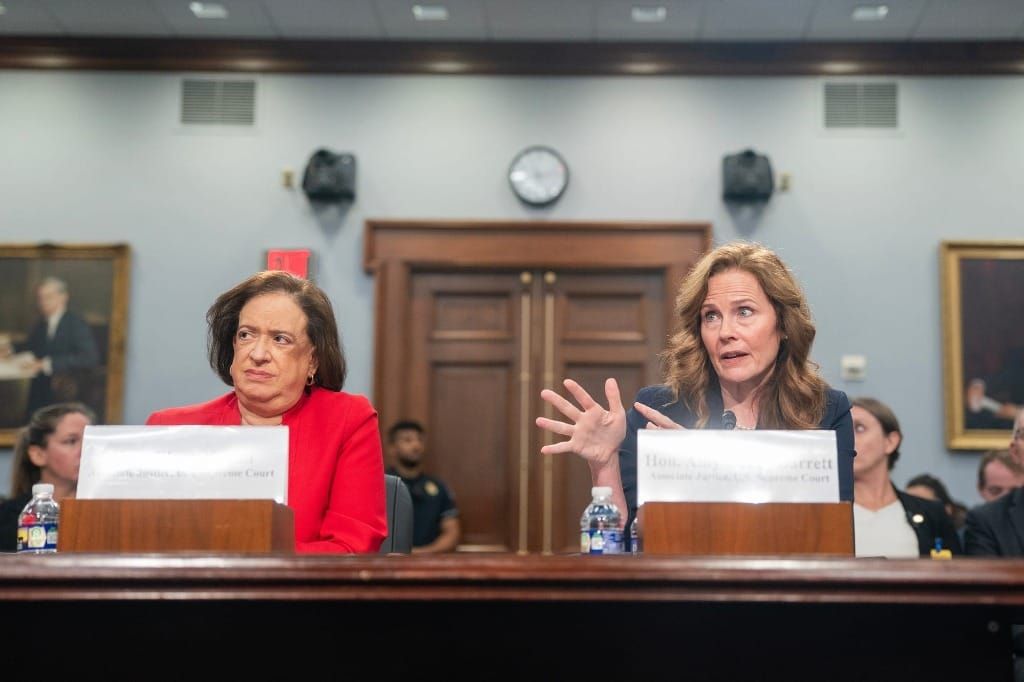
Two Supreme Court Justices discussed the impact artificial intelligence has had on the court in Tuesday's hearings before separate House and Senate subcommittees.

Justices Amy Coney Barrett and Elena Kagan testified before a House appropriations subcommittee Tuesday morning, and a Senate appropriation subcommittee Tuesday afternoon. The hearings discussed the Supreme Court’s increased budget as security threats to the court rise, especially cybersecurity threats caused by AI.
Testifying before the Senate Appropriations Subcommittee on Financial Services and General Government, Barrett explained, “AI is making it easier for people to find vulnerabilities in all systems and exploit that.” She noted that the court received more than 200 million attempts to breach the system last year, and with AI, that number is on track to double the attempts.
Lower courts have faced cybersecurity breaches in the past year, and breaches at the highest court in the land could pose serious problems with national security, Barrett said. To keep up with growing threats, the Supreme Court is hiring more cybersecurity officials
In the House Subcommittee on Financial Services and General Government, Rep. Chuck Edwards, R-N.C., questioned the justices regarding the role AI plays in legal proceedings and other aspects of the court.
Kagan explained that the Supreme Court budget does not have allocated funds for AI because the court does not really use AI in research or writing yet. The justice noted that the Supreme Court wants to ensure AI is being used appropriately and prevent any dangers that could come from the new technology.
Kagan said, “This is a question we’re looking at very closely in terms of what our rules should be going forward, what the best practices in this area are in terms of how justices, how their clerks and how their assistants use AI.”
Barrett noted that currently, other aspects of the court are run by a “pretty lean” staff that does not use AI because of the security risks. She did say that the court is studying AI and that she thinks there will be a future time when AI could be implemented in court tasks.