Supreme Court Sides 9-0 With Cox in Copyright Case
‘Mere knowledge that a service will be used to infringe is insufficient to establish the required intent to infringe,’ Justice Clarence Thomas wrote.

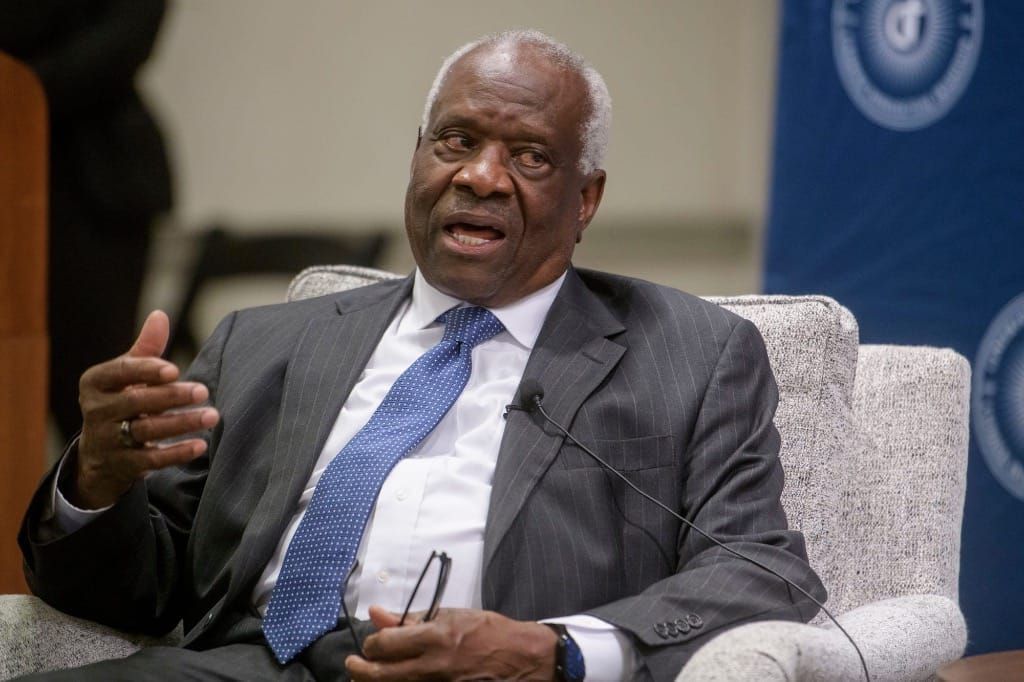
WASHINGTON, March 25, 2026 – The Supreme Court unanimously ruled in favor of Cox Communications in a major copyright dispute, finding the ISP was not liable for providing broadband to repeated infringers.
“Under our precedents, a company is not liable as a copyright infringer for merely providing a service to the general public with knowledge that it will be used by some to infringe copyrights,” Justice Clarence Thomas wrote for the court.
More than 50 record labels, led by Sony, had sued Cox for copyright infringement, arguing the company didn’t take its subscribers offline quickly enough after repeated music piracy.

A Virginia jury took Cox’s side and decided Cox was on the hook for $1 billion in damages. The Fourth Circuit nixed that award, but said Cox could still have some level of culpability by continuing to provide the connections.
The Supreme Court reversed the Fourth Circuit Wednesday, agreeing with Cox that it was not liable for subscribers’ infringement as long as the company didn’t promote piracy or provide a service that was only usable for piracy. Simply providing broadband didn’t meet that bar, the court found.
“This Court has repeatedly made clear that mere knowledge that a service will be used to infringe is insufficient to establish the required intent to infringe,” Thomas wrote.
Cox was predictably pleased.
“After years of battling in trial and appellate courts, this opinion affirms that Internet service providers are not copyright police and should not be held liable for the actions of their customers – and we have definitively shut down the music industry’s aspirations of mass evictions from the internet,” a Cox spokesperson said in an email.
Both the Trump administration and consumer advocates had taken Cox’s side, arguing Sony’ position that Cox should have to take subscribers offline after repeated infringement notices would lead to people and businesses being preemptively cut off from the internet.
“Today’s decision laid to rest the idea that private actors – and not just any private actors, but record labels – can determine when customers deserve to be excluded from applying to jobs, paying bills, and getting an education,” Meredith Rose, senior policy counsel at Public Knowledge, which had supported Cox, said in a statement. “That view of the world is not only nonsensical and dated, but also fundamentally anti-democratic.”
Sony did not immediately respond to a request for comment.
“We are disappointed in the Court's decision vacating a jury's determination that Cox Communications contributed to mass scale copyright infringement, based on overwhelming evidence that the company knowingly facilitated theft,” Mitch Glazier, CEO of the music industry trade group Recording Industry Association of America, said in a statement. “To be effective, copyright law must protect creators and markets from harmful infringement and policymakers should look closely at the impact of this ruling.”
Optimum, formerly Altice USA, and Verizon are also fighting similar copyright infringement cases in which large sums of money are at stake. Both have been put on hold as courts awaited justices’ holding in the Cox case.
DCMA safe harbor obsolete?
Two liberal justices, Justices Sonia Sotomayor and Ketanji Brown Jackson, agreed that Cox should not be liable in this case, but disagreed with the other justices’ reasoning.
They said the majority artificially limited the avenues for copyright liability for ISPs. Sotomayor wrote that the decision rendered the safe harbor provision in the 1998 Digital Millennium Copyright Act obsolete.
The law said that broadband providers could avoid copyright liability by having reasonable anti-piracy policies in place. But, Sotomayor argued, the Supreme Court ruling that ISPs would have to actively encourage infringement or provide infringement-specific tools to be liable effectively means no ISP could ever be liable for its subscribers’ copyright infringement, since no ISP would do either of those things in the normal course of business.
“The majority’s decision thus permits ISPs to sell an internet connection to every single infringer who wants one without fear of liability and without lifting a finger to prevent infringement,” she wrote. “It also means that Cox is free to abandon its current policy of responding to copyright infringement.”
Update: This story was updated to include RIAA's statement.