
Supreme Court to Test Trump’s Power Over the ‘Fourth Branch’
Case could upend 90 years of agency independence.

Akul Saxena
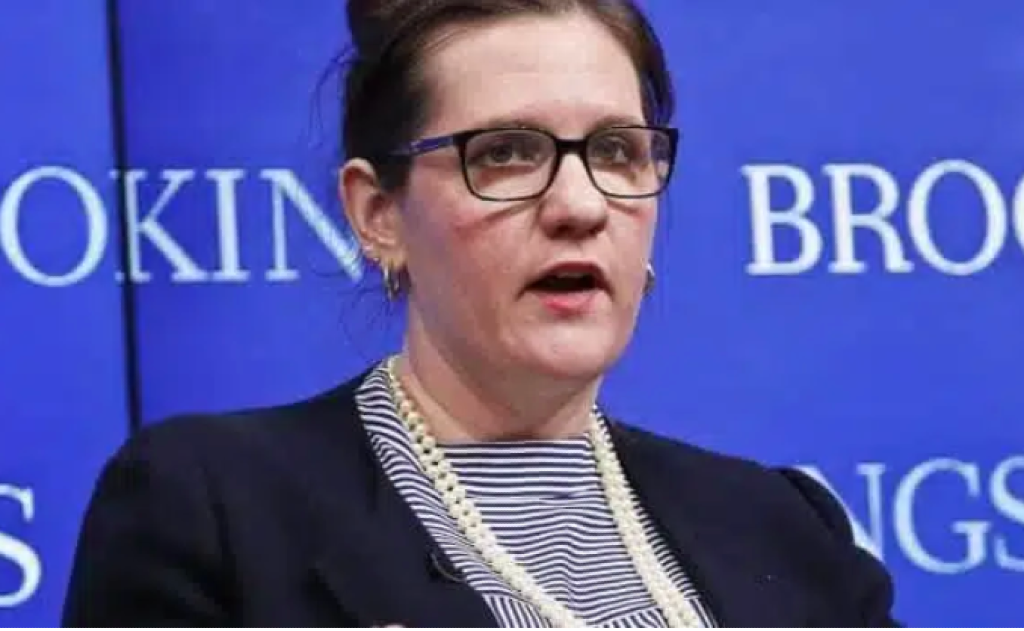
WASHINGTON, Oct. 20, 2025 —The Supreme Court moved to revisit a bedrock of presidential power as a 1935 precedent faced its sharpest test in nearly a century.
The Court scheduled Dec. 8, 2025 arguments in Trump v. Slaughter, a case that could redefine how much control presidents hold over independent regulators. The outcome could determine whether presidents can fire Federal Trade Commission commissioners at will or only under the limits Congress set in the 1914 Federal Trade Commission Act.
President Donald Trump removed Democratic Commissioner Rebecca Kelly Slaughter in March. In court filings, his administration argued that FTC commissioners exercised executive power and were therefore removable at the president’s discretion.
Slaughter sued, and cited Humphrey’s Executor v. United States (1935), which upheld a statutory limit allowing removal of FTC commissioners only “for inefficiency, neglect of duty, or malfeasance in office” - not policy disagreements.
Lower courts ruled for Slaughter, finding Trump’s firing exceeded the law’s limits. The Supreme Court had instead let the removal stand, which positioned the case as a direct test of the precedent that has shaped agency independence since the New Deal.
That independence, rooted in the Federal Trade Commission Act of 1914and affirmed in Humphrey’s Executor v. United States (1935), shielded multi-member commissions from direct presidential control through bipartisan membership and for-cause removal limits. Supporters said the structure promotes an apolitical and even-handed enforcement of antitrust, consumer-protection, and market-fairness rules.
In a new amicus brief, or “friend of the court” filing that allowed third parties to present arguments, Sen. Eric Schmitt, R-Mo., urged the justices to strike Humphrey’s Executor entirely. Schmitt, chairman of the Senate Judiciary Subcommittee on the Constitution, said the Court should “overrule whatever is left of Humphrey’s Executor — which reaffirmed the President’s authority to remove Executive Branch officials who wield power in his name and restoring a constitutional head to the infamous ‘headless Fourth branch.’”
Schmitt’s filing advanced a sweeping view of presidential control, declaring, “Under our Constitution, the executive power, all of it, is vested in a President,” the brief said. His argument reflected the unitary executive theory, a conservative legal doctrine that gained prominence in the 1980s and held that all officials performing executive functions must ultimately answer to the president.
The brief drew on a series of Supreme Court decisions that expanded presidential removal power which argued that Humphrey’s Executor is “anti-constitutional” and “unworkable.”
A ruling for Trump could expand presidential firing power across independent boards; a ruling for Slaughter would reaffirm limits first drawn nine decades ago.



Member discussion