T-Mobile CEO: No Comment on Deutsche Telekom Merger Rumors
Also, the carrier’s direct-to-cell service with SpaceX has been seeing less usage than expected.

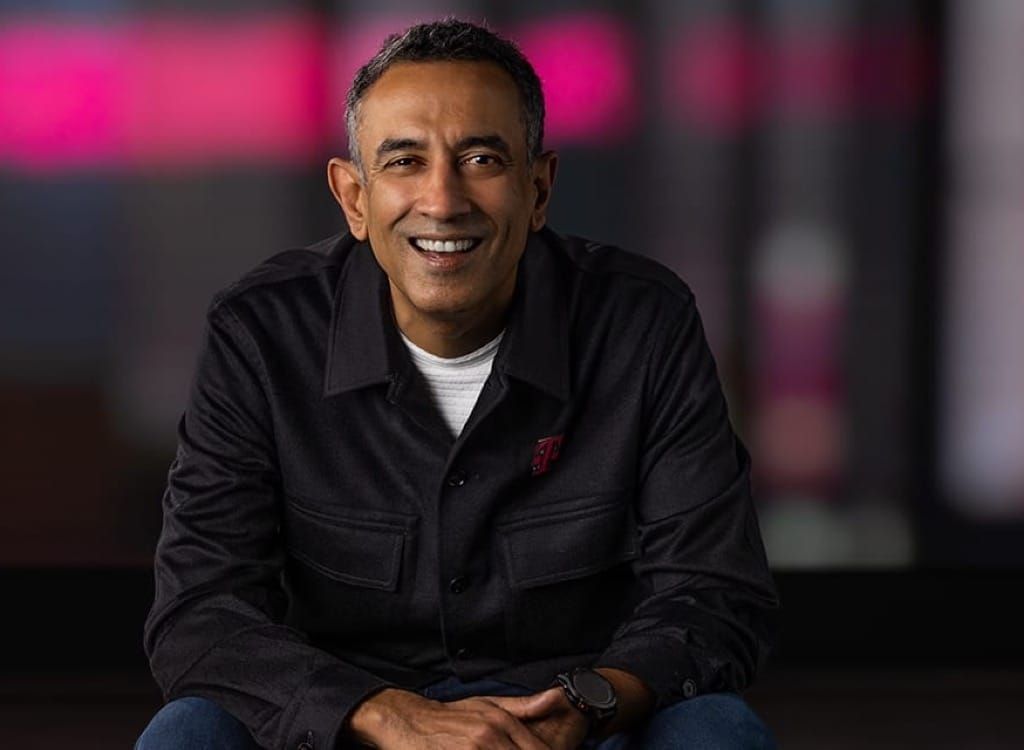
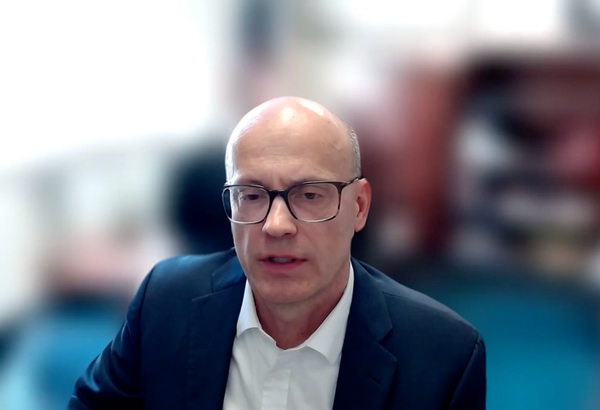
WASHINGTON, April 29, 2026 – T-Mobile CEO Srini Gopalan didn’t comment Tuesday on reports that the carrier and its majority shareholder, German firm Deutsche Telekom, were considering a merger.
He said on the carrier’s earnings call that the company didn’t comment on rumors, and that there wasn’t anything to comment on anyway. He added, though, that such a mega-deal would require approval from a majority of the rest of the company’s shareholders.
“We’ve looked into the governance, and what I’ve been told is, hypothetically, if someone were to ever consider such a transaction reported in the article, that would specifically require a separate approval process by disinterested shareholders,” he said. “What many of you refer to as the majority of the minority.”
The deal would create a multinational telecom giant and be the largest public M&A deal ever, according to Bloomberg, which reported the talks last week.
Being a single company would give the combined entity more flexibility to buy up bigger and bigger companies as the U.S. telecom industry continues to consolidate, according to New Street Research analyst James Ratzer.
“For that alone, we think this is a highly worthwhile deal for DT to consider as it would give DT more future options in a consolidating market place where convergence could take any form over the next 5-10 years,” he wrote in an investor note.
Convergence?
But T-Mobile is not bought into convergence like the other national wireless carriers and cable giants. Other major ISPs have been pushing bundled fixed and mobile broadband as a means of making subscribers less likely to switch to another provider.
The company has been buying up regional fiber providers through joint ventures, but Gopalan said Tuesday that was aimed at creating shareholder value rather than a convergence play.
“The reason we’re doing fiber is much more because we see an equity value creation opportunity, rather than the myth of convergence,” he said.
The company announced two new joint ventures Tuesday that are expected to add 1.8 million fiber locations to its footprint. T-Mobile doesn’t report the passings of its two existing joint ventures, but was aiming for 12-15 million fiber passings by the end of 2030 before the new deals.
That’s compared to AT&T’s goal of 60 million passings and Verizon’s target of 40-50 million, fueled both by internal buildouts and acquisitions of larger regional providers like Frontier.
Gopalan said he wasn’t looking for a national fiber footprint, which he said brought little benefit since local zoning and permitting was so different from place to place, but instead wanted to be a major player in the local areas their joint ventures were operating.
He also said the company was not interested in buying cable assets, something he’s said before.
“Cable is not something we’re interested in,” he said. “We see a huge opportunity to attack incumbents across fiber and FWA. That will be our key play.”
T-Satellite usage lower than expected
Gopalan also reiterated he was not interested in a mobile virtual network operator (MVNO) deal with SpaceX. That would allow SpaceX to sell its Starlink Mobile service on T-Mobile infrastructure.
“MVNOs make sense for use then there’s a [total addressable market] expansion,” Gopalan said. “An example of this is what we did with cable focused on SMB. It’s not obvious to me how an MVNO with SpaceX or any other LEO operator fulfills those conditions.”
He said T-Mobile’s direct-to-cell satellite mobile service, offered through a partnership with SpaceX, was “seeing a lot less usage than we were originally thinking,” with most activity around national parks.
Executives from the major mobile carriers have said the nascent direct-to-cell space would ultimately be complimentary to established terrestrial networks, something Gopalan repeated Tuesday.
André Almeida, T-Mobile’s head of broadband and emerging businesses, also said he doesn’t see T-Mobile’s SuperBroadband product, a fixed broadband service for businesses with SpaceX’s satellite service as a backup, expanding into a consumer product. He said it was targeted at redundancy problems businesses faced.