
The Court Did Its Job, Now It’s Time for Congress to Get Millions of Americans Online
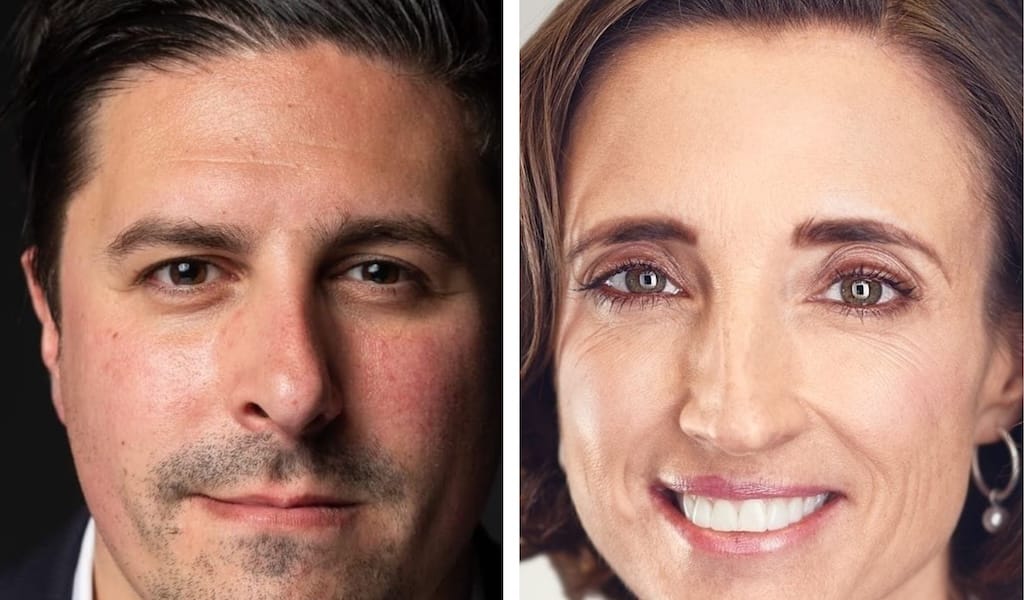
Joel Thayer and Roslyn Layton argue that Universal Service Fund reform will be the next major fight on Capitol Hill.


The Supreme Court recently provided the Federal Communications Commission a sizable legal win by upholding its Universal Service Fund as constitutional. Established in 1996, the $8 billion fund is the primary coffer for its universal service programs that are aimed to expand telecommunications and broadband services to low-income families, rural areas, schools, libraries, and hospitals.
Both sides of the aisle have long supported these programs. Representatives Brett Guthrie and Richard Hudson described the programs as “critical for expanding reliable internet access to rural and low-income Americans.” Senator Ben Ray Luján called USF a “lifeline for rural, Tribal, and underserved communities in New Mexico and across the country.”
Given USF’s mission, it makes sense that these programs enjoy widespread support. To start, without access to broadband to engage in today’s economy, a person’s chances of getting out of poverty dramatically decrease. Think about it. Without reliable broadband, low-income Americans and veterans cannot access remote education, learn of and apply for jobs, or conduct telehealth visits with their physician.

Even with the Fund’s legal troubles solved, USF has simply avoided the frying pan only to jump into the fire. Why? A recent paper from the Digital Progress Institute indicates that “the current trajectory for funding universal service is unsustainable.” The report credits the fund’s current contribution base as the primary culprit, which is tied to “telecommunication services.” Worse, although originally intended to be a business-to-business exchange, USF instead acts as a pass-through tax that we consumers bear as seen as a “USF” line-item on our phone bill.
So, what’s the rub?
Well, USF’s contribution base is shrinking, which has increased the contribution rate to fund universal service from 11.5% in 2009 to 36% this year. That’s a problem for everyday Americans as this fee is now almost totally borne by the consumer. If driving up the costs for hardworking citizens wasn’t bad enough, it will be harder for the FCC to reach those on the wrong side of the digital divide as those select services that fund USF dry up.
Without question, USF’s contribution mechanism needs reform. However, as DPI’s report articulates, there’s an effective way USF can avoid the looming financial cliff—augment the contribution base to include the largest users of broadband: Big Tech!
Even though only 8 companies take up 65% of all fixed broadband traffic and 68% of all mobile traffic, these trillion-dollar companies don’t pay a dime into USF. That’s right. The companies that profit most from broadband enjoy a free ride on USF-funded networks—reaping billions while shifting the financial burden of infrastructure to consumers. Big Tech profits without paying in. This is outrageous given that the amount of revenue they get from online ads alone—Google, Meta, and Amazon generated about $482 billion in advertising revenue just last year. Worse, some enjoy exemptions to prevent their revenue from qualifying services from entering into the fund’s contribution base.
In sum, Big Tech enjoys a massive windfall off the backs of hard-saving Americans. While everyday consumers foot the bill, tech companies free ride on subsidized networks—only to harvest vast amounts of user data for free and sell it to advertisers with near reckless abandon.
To stop the abuse, we need Congress to step in.
There’s some good news. Both parties agree USF needs reform. Indeed, Congress has already reinstated a bicameral, bipartisan working group to address this precise issue. Co-Chair Senator Deb Fischer rightly declared it’s high time “to evaluate broadband programs and the USF to help support the mission of connecting unserved and underserved communities across the country.”
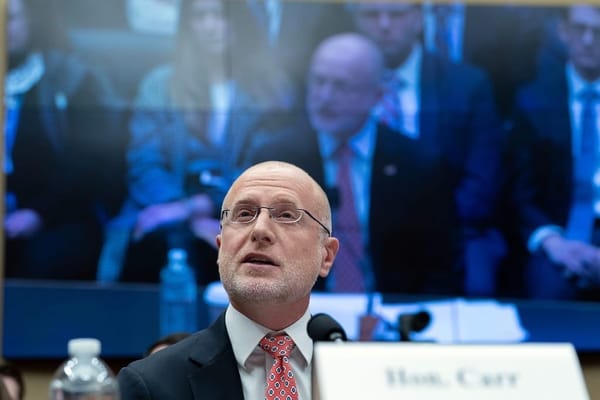
At a minimum, Congress should include online advertising revenue, which consumes significant bandwidth. The FCC Chair Brendan Carr agrees as he noted in, “Ending Big Tech’s Free Ride on USF,” calling to end this sweetheart deal and return to a model in which the biggest beneficiaries of broadband infrastructure pay the proportional cost. According to DPI, including ad revenue alone would reduce the USF contribution rate from 33.9% to just 3.2%. Moreover, this contribution rate would decline over time as online advertising revenue grows with double digits year or year. If the relevant cloud and software platforms also contributed, the rate would fall further to 1% or less.
Reforming USF isn’t just overdue—it’s good business. Every home connected through USF generates an estimated $2,600 in annual revenue for Big Tech platforms through advertising, subscriptions, and data-driven services. That means tech companies stand to profit even more as coverage expands. It’s only right that they help build and sustain the very networks on which they depend.
This Expert Opinion is exclusive to Broadband Breakfast. The Digital Progress Institute just put out a white paper outlining how Big Tech can pay into the FCC’s universal service programs to subsidize broadband.
Joel Thayer is president of the Digital Progress Institute and an attorney based in Washington. Digital Progress Institute is a nonprofit seeking to bridge the policy divide between telecom and tech.
Roslyn Layton, PhD, Senior Vice President of Strand Consult and Visiting Researcher at Aalborg University Copenhagen, is an international technology expert focused on the economics, security, and geopolitics of broadband internet technology. She has testified before the U.S. Congress on competition in wireless technologies, spectrum reform, the security advantages of 5G versus Wi-Fi, and the empirical and ethical case for fair cost recovery for broadband networks. She is also a senior contributor to Forbes, a Fellow of the National Security Institute at George Mason University, and a Senior Advisor to the Lincoln Policy Network.
Broadband Breakfast accepts commentary from informed observers of the broadband scene. Please send pieces to commentary@breakfast.media. The views expressed in Expert Opinion pieces do not necessarily reflect the views of Broadband Breakfast and Breakfast Media LLC.
 Broadband Breakfast
Watch the video of Roslyn Layton at 'Broadband in the Trump Administration'


Member discussion