
There’s an Opportunity to Connect America's 44 Million Apartment Residents
Experts at Broadband Breakfast spotlight managed Wi-Fi, legacy building solutions and bulk Internet as keys.


WASHINGTON, April 2, 2026 — Managed Wi-Fi may be the amenity that apartment residents demand, but panelists at a Broadband Breakfast Live Online event Wednesday agreed that upgrading or accessing the physical wiring inside multifamily buildings remains the essential first step, and that federal policy has yet to catch up with the scale of the problem.
The discussion examined infrastructure hurdles, federal funding gaps and policy debates shaping broadband access for the roughly one-third of American households that live in multiple dwelling units.
Wiring first, then Wi-Fi
Panelists returned repeatedly to a central tension in the MDU broadband market: residents want seamless wireless connectivity, but delivering it requires investment in the physical infrastructure that most older apartment buildings lack.
 Adlane Fellah
Tom Roper, senior account manager for MDU at Ruckus Networks, was blunt about the prerequisite. "You've gotta have a good wiring infrastructure in place to make any managed Wi-Fi system work," he said. Roper said Ruckus holds about 80 percent of the deployed managed Wi-Fi market in MDUs, but noted that fewer than 10 percent of all MDUs have managed Wi-Fi.
Pierre Trudeau, president and chief technology officer of Positron Access Solutions, described three layers of connectivity required to fully serve an MDU: A broadband Ethernet foundation to every unit, property-wide managed Wi-Fi for the resident experience, and smart building capabilities such as access control and sensor-based leak detection. He said residents now treat reliable gigabit service as a deciding factor in where they live. "To tell people that you no longer have access to your network even for a single day is, like, torture pretty much," Trudeau said.
Bryan Rader, president of MDU services at Pavlov Media, divided the market into new construction and brownfield legacy properties with aging wiring dating as far back as the 1970s, along with outliers such as senior housing, affordable housing and rural MDUs that remain underserved.
A bigger market, and a BEAD blind spot
Adlane Fellah, chief analyst at Maravedis Research, challenged the common characterization of MDU broadband as a niche market. "I will argue that it's a pretty big niche, given that 44 million residents live in multifamily units in the US," Fellah said, noting that those residents span about 25 million units in buildings with five or more dwellings. He estimated that only about 17 percent of the total MDU stock currently has some form of bulk Internet arrangement.
The federal government's flagship broadband funding program may not be closing the gap. Alex Karras, a senior fellow at the Advanced Communications Law and Policy Institute at New York Law School, presented findings from a new analysis examining how MDUs factor into the Broadband Equity, Access, and Deployment program. "About 370,000 MDU units are what we predict remain unserved, unfunded, after BEAD," Karras said.
One of the most striking findings came from a proximity analysis: about 81 percent of medium-sized MDUs and 74 percent of large MDUs that remain unserved after BEAD are located in areas that are otherwise well served, suggesting that the problem is not rural remoteness but the economics and logistics of wiring dense buildings that broadband networks have passed by.
David Young, a vice president at Cartesian, highlighted data challenges that compound the problem. He noted that FCC data does not clearly distinguish MDU coverage from single-family coverage, and that large MDU buildings with multiple addresses can map inconsistently across the national broadband map. "Without good data, it's very hard to get your arms around the problem," Young said. "It's very hard to fix a problem."
The policy fight over bulk billing
The sharpest policy debate of the session centered on bulk Internet arrangements, contracts under which a building owner purchases broadband service for the entire property and bundles it into rent, typically at steep discounts to retail prices.
"Connectivity is the number one amenity in multifamily," Rader said. "Every survey, it always comes out the number one amenity. People will move out for it. They will move in for it." He argued that bulk arrangements have delivered real competition and affordability, bringing service at 30 to 40 percent of retail prices without add-on fees, credit checks or equipment rental charges.
But Rader warned that state-level regulations targeting bulk arrangements could backfire. He said restrictions risk discouraging ISPs from competing in the MDU market, ultimately leaving residents with fewer choices, the opposite of the regulators' stated goal.
Fellah described managed Wi-Fi enabled by bulk arrangements as a benefit for society that helps bridge the digital divide and enables building-wide efficiencies. The question for policymakers, panelists suggested, is whether regulatory intervention will expand or constrict a model that has driven down prices in a market where tens of millions of Americans still lack reliable service.
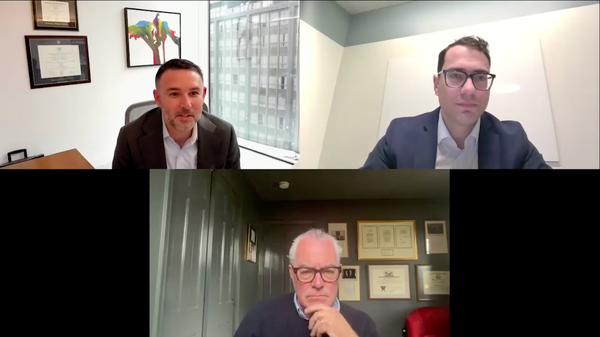
The panel was moderated by Broadband Breakfast CEO Drew Clark.








Member discussion