
Trusty: Integrated Sensing and Communications A National Security Priority
FCC commissioner calls for a unified approach for developing the technology.

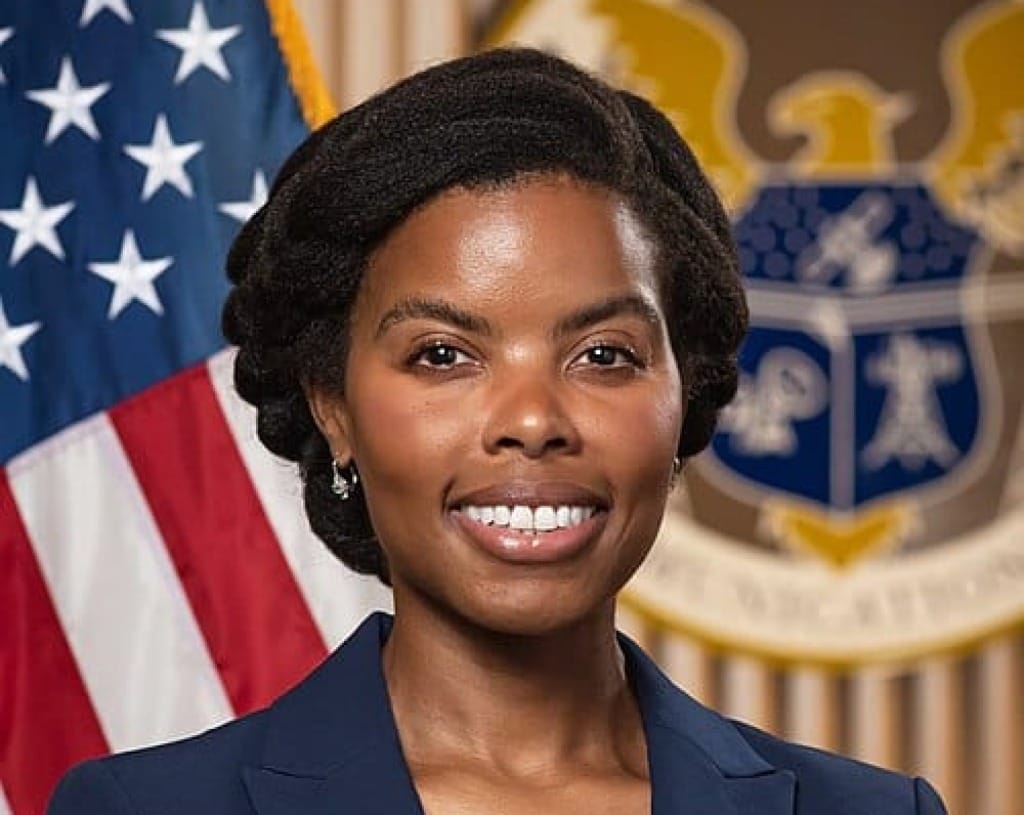
WASHINGTON, August 14, 2025 – Federal Communications Commission commissioner Olivia Trusty was frank when she described Thursday what impact Integrated Sensing and Communications could have on the U.S.
“Let me emphasize: ISAC is not just a technical evolution, it is a strategic leap,” she told attendees of the ISAC Strategy Summit at George Mason University. “If the U.S. fails to lead on ISAC, we risk more than just technological obsolescence. We risk losing the ability to define global standards, the agility to respond to emerging threats, and the credibility to defend our digital sovereignty.”
ISAC is a technology that integrates communications technologies with sensing capabilities. It allows for systems typically dedicated to communications to also detect phenomena in the physical world. Though mostly theoretical thus far, the advent of 6G and other technologies has made ISAC an increasingly real possibility.

According to Trusty, ISAC has the potential to unlock new military capabilities and accelerate the development of smart cities.
“It unlocks military applications, like persistent surveillance and threat detection in contested domains,” she said. ”It advances the sophistication of smart infrastructure, like bridges that monitor their own structural health or highways that can detect accidents in real time.”
Other nations are attempting to develop and integrate ISAC systems into 6G. Trusty noted that China, the European Union, and “our adversaries” are investing in ISAC projects. She also noted that the FCC was trying to promote ISAC development in the U.S. by creating a predictable spectrum auction pipeline, modernizing networks, accelerating infrastructure builds, and enhancing public safety and national security.
Despite these steps, Trusty emphasized that developing ISAC capabilities would require a team effort.
“It’s going to take everyone – government, industry, academia, the military, and civil society,” she explained. “…We’re actively engaging with the private sector, because innovation doesn’t happen by reducing regulation alone. It requires experimentation, risk-taking, and investment from companies that understand how to bring a vision into life.”




Member discussion