Trusty Touts Deregulation, Says Spectrum Auctions Will Drive Innovation
Auctions are important, but Trusty pointed to unlicensed spectrum as essential for Wi-Fi 7 and 'Internet of Things' applications.


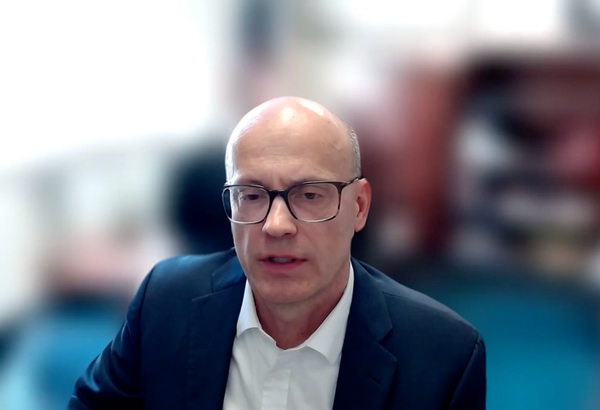
WASHINGTON, Sept. 29, 2025 — Efforts to deregulate telecom policy will pay dividends for broadband deployment and innovation, Federal Communications Commissioner Olivia Trusty said Monday at SCTE’s TechExpo25 here.
“We’ve already begun adopting rule changes identified by commenters and staff, and I expect us to continue building on that momentum,” Trusty said of FCC Chairman Brendan Carr and his “Delete, Delete, Delete” proceeding and “Build America” agenda.
On spectrum policy, Trusty underscored an “all-of-the-above” approach that includes licensed, unlicensed and satellite uses.
“Our immediate priority is implementing the spectrum provisions in the One Big Beautiful Bill,” she said, noting that the law requires auctioning at least 100 megahertz of upper C-band spectrum within two years.
She also pointed to unlicensed spectrum as essential for Wi-Fi 7 and IoT (Internet of Things) applications, and highlighted a satellite proceeding that could open up 20,000 megahertz of spectrum.
“The North Star for spectrum policy is putting spectrum to its highest and best use for the public interest,” Trusty said.
She also backed changes to video regulations originally set in place in the 1992 Cable Act, sh said, and said cybersecurity was an area for international coordination and public-private partnerships.
On artificial intelligence, the FCC’s role is to ensure resilient networks that can handle AI’s growing demands.
“Broadband is transformative for education, safety, healthcare and defense,” Trusty said.
All 10 bills passed out of the markup, but measures addressing permitting reform only passed on party-line votes.
Industry experts discuss how to overcome permitting bottlenecks that are stalling critical broadband infrastructure projects and keeping communities offline.
Both groups are suing the FCC to prevent FirstNet, operated by AT&T, from accessing more spectrum.
Approvals by the National Institute of Standards and Technology are delaying deployment, officers said, although most don’t expect long permitting delays
Member discussion