
USF Challengers to Judges: FCC Not Limited by Telecom Act
Lawmakers are working to update the fund’s contribution base.

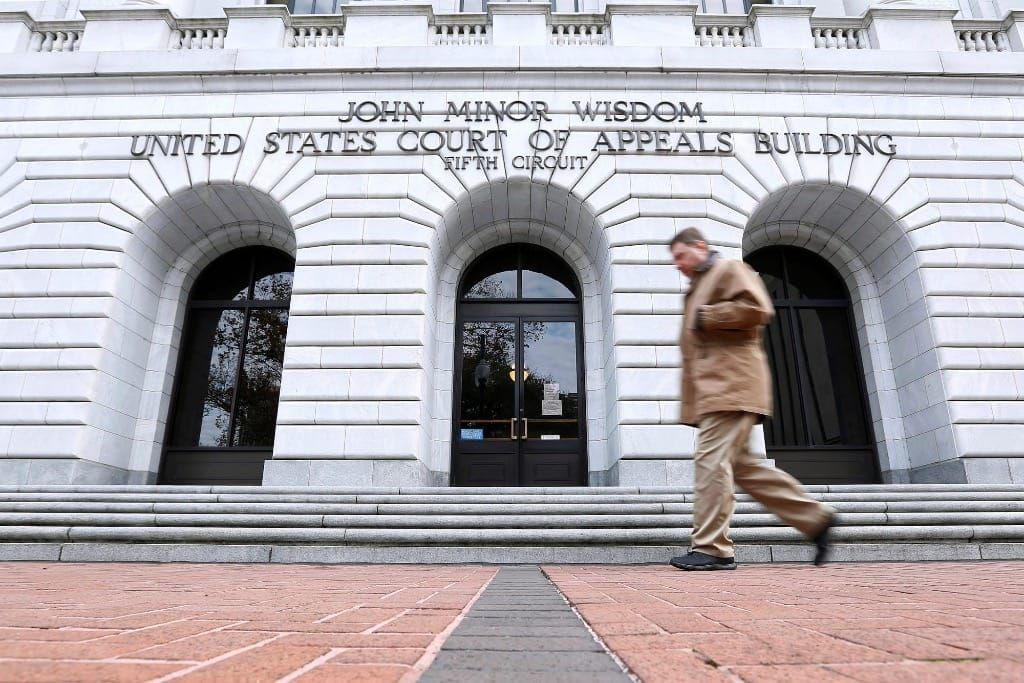
WASHINGTON, April 6, 2026 – Opponents of the Universal Service Fund are continuing to ask federal judges to find parts of the $8.5 billion-per-year telecom subsidy unconstitutional.
The conservative nonprofit challenging the program told the U.S. Court of Appeals for the Fifth Circuit the Federal Communications Commission was free to raise and spend as much as it wanted under the program, despite the agency maintaining it was restricted by the Telecom Act of 1996.
“Many of these ‘restrictions’ apply to only a portion of the program, and FCC’s account shows that even where they do apply, their pliable terms impose no meaningful limits,” Consumers’ Research wrote in a Friday filing. “If the Court disagrees, we respectfully urge it to clarify with specificity the constraints imposed.”

After losing at the Supreme Court last year, the group is suing again in the Fifth Circuit, which sided against USF in 2024, this time arguing the law’s provisions allowing the FCC to fund “additional” or “advanced” services illegally took taxing power from the legislature.
The FCC and Justice Department argued last month that services under those provisions necessary for rural health care or educational uses – altogether less than half of USF’s annual spending – and the money raised had to be sufficient to support them.
Congress “imposed ascertainable and meaningful guideposts for the FCC to follow when carrying out its delegated function of collecting and spending [universal service] contributions from carriers,” the agency told the Fifth Circuit, quoting the Supreme Court. “The nondelegation doctrine requires nothing more.”
For Consumers’ Research, the Telecom Act should have to outline a “general policy” for determining what exactly qualifies as necessary or sufficient. The group said the FCC under the law as written could raise USF funding to purchase an iPad for every student nationwide or broadband subscription for every teacher, among other things.
“It would be incredible to suggest that Congress could delegate to an agency the power to decide to spend billions on student loans or health insurance whenever the agency deems spending ‘necessary for the provision of’ education or health care,” the group wrote.
The USF has been funded since 1996 by fees on voice revenue. Projections for how high the fees will be each quarter are done by the Universal Service Administrative Company, a nonprofit the FCC set up for the purpose and whose authority Consumers’ Research is also challenging in the suit.
That quarterly contributing factor is 37 percent for the second quarter of 2026, down slightly from the previous quarter. Consumers’ Research wanted the agency to reduce it by the amount being collected under the two provisions it is now challenging, or zero it out because of the USAC issue.
In 2025 USF spent nearly $8.5 billion, with $4.5 billion going to building and maintaining rural broadband networks. The program also supports telecom and internet discounts for schools, libraries, rural health care centers, and low-income households.
It was set up to ensure universal access to communications services in rural areas, at comparable rates to urban customers. The FCC and supporters of the fund have argued that plus the ‘necessary and sufficient’ language are enough Congressional guidance for the program to pass muster under the nondelegation doctrine, the idea Congress can’t hand its powers to other entities without guardrails.
That was convincing to six of the nine Supreme Court justices last June, when they ruled the fund was valid under the U.S. Constitution. Three dissenting justices – Neil Gorsuch, Clarence Thomas, and Samuel Alito – said they would have struck down the fund because of the provisions Consumers’ Research is now targeting in its most recent lawsuit.
When the Supreme Court was considering the case, Consumers’ Research and other groups asked justices to take it as a chance to make the nondelegation doctrine more restrictive and further prevent Congress from granting sweeping power to agencies.
Justice Brett Kavanaugh, who like the dissenters is a conservative, wrote other Supreme Court decisions curtailing agency power had “substantially mitigated” the broader concerns on that front, and he didn’t feel the need to go further by revamping nondelegation.
Contribution reform
Lawmakers from both chambers of Congress and both parties are working on modernizing the fund, something experts broadly agree is needed. Adjusted for inflation, expenditures under USF are remaining flat while the pool of cash continues to shrink.
Figuring out which industry revenues to tap for future funds was a difficult problem for lawmakers even before the previous lawsuits and the turnover at the end of last Congress. ISPs tend to support big tech in the mix, something FCC Chairman Brendan Carr has supported, while those companies counter broadband providers alone would be sufficient.
Aides from the offices of Sens. Dan Sullivan, R-Alaska, and Ben Ray Luján, D-N.M., said in October they were planning on unveiling a new framework early this year, but so far none has been released.




Member discussion