Vanderbilt Report Argues for 'Dig Once' Policies to Reduce Fiber Instillation Costs
Requiring states to lay conduit during road construction would save 70-90% of fiber installation costs, says report

Eric Urbach
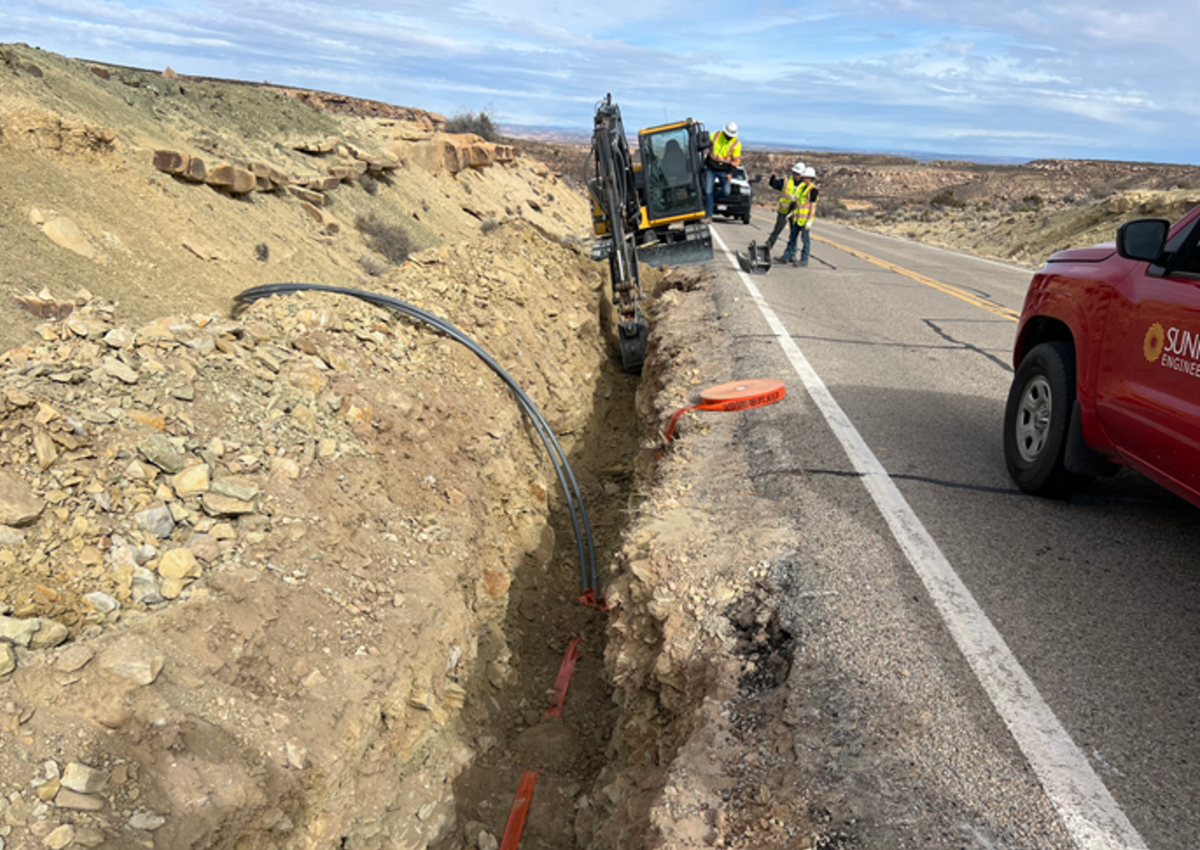
Jan, 26, 2026 –Because 75 percent to 90 percent of fiber installation costs are associated with digging up and then repairing roadways, strong “dig once” laws could reduce costs significantly, according to a Vanderbilt Policy Accelerator report.
The report, by a policy research center at the university, says that most fiber lines are installed underground in plastic conduits along roadsides. Strong dig once laws, it argues, would shift responsibility for installing these conduits away from providers to states, reducing costs for providers and time for fiber deployment.
“Whenever a government digs up a road for any reason (e.g., construction, maintenance), without existing fiber nearby, it should also install infrastructure capable of housing fiber-optic cables (conduit) for broadband,” reads the report, released in December.
The data used in the report cites a Fiber Broadband Association’s 2024 “Fiber Deployment Cost Annual Report” that says three quarters of undergrowning lines comes from digging up and repairing roads, with labor being the primary driver of these costs. Deployment 2025’s deployment cost report was released last Tuesday.
Also cited was a Department of Transportation study from 2012 puts the range of cost of undergrowning as high as 90 percent, suggesting “that it is 10 times more expensive to add broadband after a road is already built.” This report says that dig once policies could lead to lower costs for undergrowning lines.
The Vanderbilt report indicates that attempts to pass “strong dig once” laws on the federal level were changed to notification requirements to simply state that when road construction occurs, states should notify ISP providers to install conduit.
State projects often don’t line up with project time tables for ISPs, requiring ISPs to re-dig roads up when they are ready to install fiber lines, and can add costs and time to fiber installation projects, according to the report.
“Instead, they can just pull fiber through existing conduit, which is significantly cheaper,” the report said. “The policy also provides other benefits, like reduced disruption from incremental road excavation and repair.”
State’s success with “strong dig once” Laws
The report highlights that some states have strong dig once laws already on the books and noticed a correlation between these laws and higher rates of fiber coverage.
Utah, the first state to pass such a law, requires that projects install conduits “whenever they build a new roadway or expand an existing one.” As a result, the state has one of the highest fiber coverage areas in the country at 62.5% above the national average of 49%.
Other states like California, Washington, Illinois, Indiana and Iowa have similar laws on their books and all have seen success in varying degrees depending on how strong the installation requirements are. However, these states have seen higher rates of installation compared to states with weak or no requirements.
Changes in BEAD funding
Since the June 2026 revisions to BEAD by the Trump Administration, reducing fiber deployment costs has become a priority, according to the report.
With congress set to consider surface transportation funding reauthorization in 2026, the report argues for strong “dig once” policies to be required for all federally funded road construction projects, while states, local governments take up initiatives on their own.
“it is essential that policymakers not pour tens of billions of dollars into another broadband subsidy program and still fail to provide universal affordable broadband,” said the report. “Smart policies now can reduce the legwork later down the road.”
Member discussion