Verizon CEO Still Sees Satellite as Compliment to Terrestrial
Dan Schulman said Verizon still had capacity to grow its fixed wireless service.

Jake Neenan
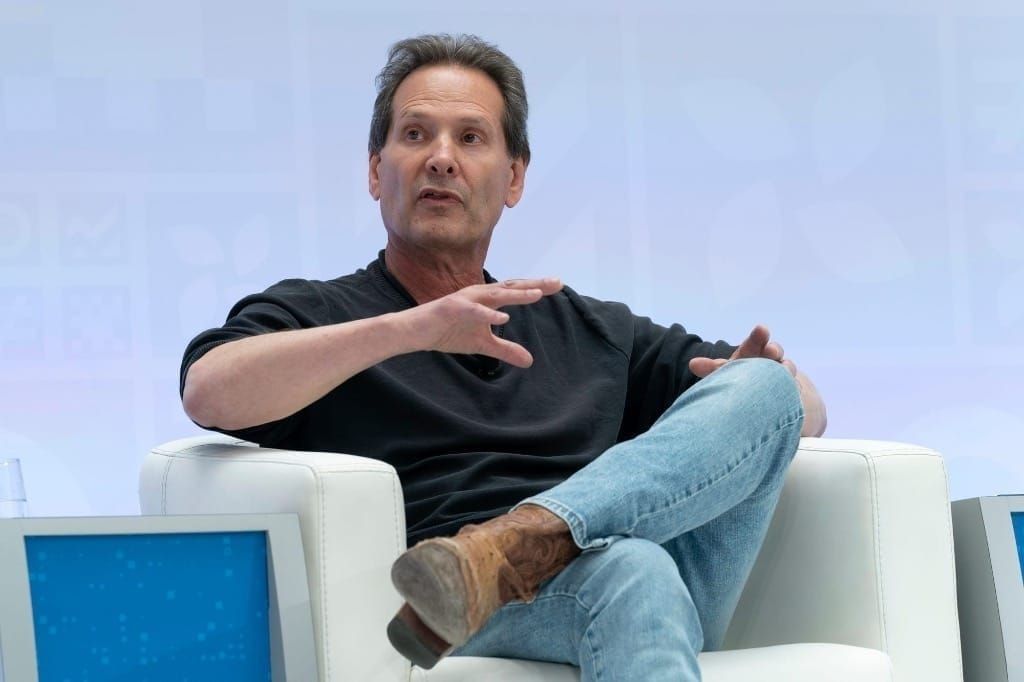
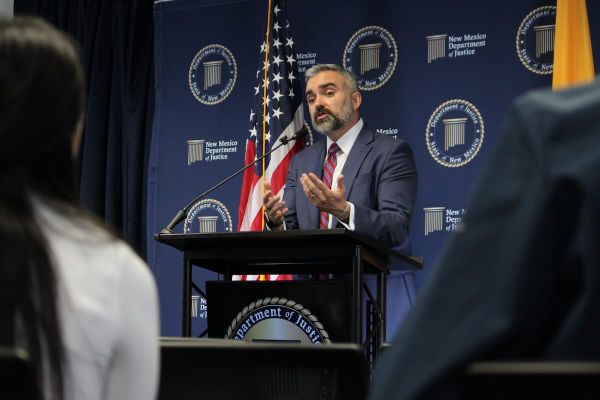
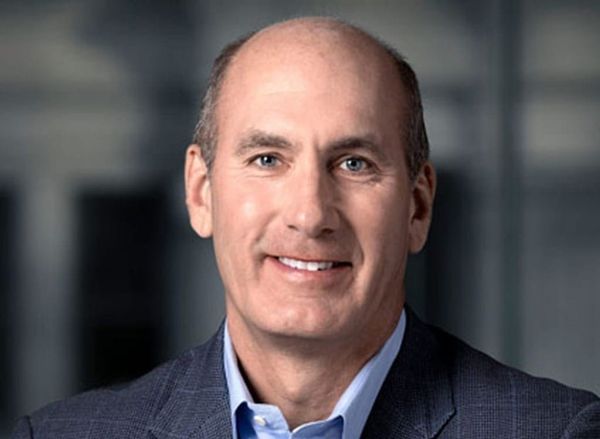
WASHINGTON, May 13, 2026 – Verizon CEO Dan Schulman said Wednesday he’s still not worried about direct competition from satellite operators.
“I think satellite service is a really good complementary service for our product. But they cannot compete in urban and suburban [areas] against a terrestrial network,” he said. “And by the way, that’s where like 95 percent plus of the revenues are.”
Speaking at a MoffettNathanson conference in New York, he said it was much easier to put up a cell site to increase local capacity when networks are congested. But low-Earth orbit satellites circle the planet many times per day, and it makes less sense to launch many new satellites that will cover everywhere but only be needed in small areas.
SpaceX does have big plans for its direct-to-device Starlink Mobile service. It’s asked the FCC for approval to launch another 15,000 satellites and is buying spectrum from EchoStar for $19.6 billion to support much faster speeds. The company currently offers more limited direct-to-device service on T-Mobile spectrum
Amazon is also in the process of acquiring Globalstar, which provides direct-to-cell for Apple phones, for $11.6 billion. And AST SpaceMobile, which is partnering with Verizon and AT&T, is seeking authorization to go beyond carrier spectrum by hosting payloads using Ligado’s L-band licenses.
Schulman also reiterated that the company was not interested in a mobile virtual network operator (MVNO) deal with SpaceX, in which the satellite provider would offer mobile service using Verizon’s infrastructure.
When asked by MoffettNathanson founder Craig Moffett, he simply said, “No.”
A Verizon spokesperson had said last week that an MVNO deal with the satellite operator wouldn't make sense in that it wouldn’t open up a new customer base, which is what the CEOs of T-Mobile and AT&T said on their earnings calls.
The Federal Communications Commission approved EchoStar’s spectrum sale to SpaceX and a separate sale to AT&T Tuesday. Investors had feared the agency might include wholesale and roaming conditions on AT&T that would “effectively force them to provide SpaceX with an MVNO,” BNP Paribas analyst Sam McHugh said in a note.
But the agency didn’t go that route. It said in its order the deal didn’t implicate some commenters’ wider concerns about the agency’s roaming policies.
Verizon has MVNO deals with Charter and Comcast, and Shulman reiterated the companies had a positive relationship.
Fixed wireless and convergence
Schulman also reiterated that fixed wireless was a part of Verizon’s convergence plan. Verizon and other major ISPs are looking to increase their share of customers bundling fixed and mobile broadband, called converged customers.
He said convergence was "important" and added to a customer's lifetime value for the company.
The carrier saw a 30 percent churn reduction “mixed across” converged subscribers on fiber and fixed wireless, according to Schulman. The company has about 6 million fixed wireless subscribers now, and he said that despite a declining pace of new additions the service was still on track to hit 8-9 million by 2028.
“We have plenty of capacity in the network to continue to push that,” he said. “We have a lot of millimeter wave, we’re thinking about ways to use that in a broadband fashion.”
Verizon recently acquired Starry, which had proprietary technology for offering fixed wireless to apartment buildings using millimeter wave spectrum.
Moffett said in a report last year that he estimated fixed wireless accounted for more than half of Verizon’s network traffic despite only being four percent of revenue. Schulman said that in fact fixed wireless was “a minority” of network traffic, but didn't disclose the exact number.
Schulman also said he was still confident in Verizon's 40-50 million long-term fiber passing target. He said the number took into account the deminishing retunrs of building further into less dense rural areas, and that the risk of a smaller fiber provider building to one of Verizon's target areas first was "quite small."