Verizon to Offer Faster Fixed Wireless in Urban Areas
The company also signed a $2 billion fiber deal with AWS, and again downplayed the threat of competition from SpaceX


WASHINGTON, Oct. 26, 2026 – Verizon added 155,000 fiber subscribers in the third quarter of 2026, missing Wall Street estimates of 233,000.
The carrier added 159,000 fixed wireless subscribers in line with expectations, and handily beat estimates on postpaid phone subscribers. The company added 406,000 lines, more than double analyst estimates and more than 9 times its additions one year ago.
This is the 2nd of the Big 3 to report solid results and raise performance expectations for the year,” New Street Research analyst David Barden wrote in an investor note. “With the sentiment cloud of SpaceX’s terrestrial mobile ambitions lingering over the sector, good results and discount valuations may not resurrect stock performance short term.”
Verizon stock was down 2.5 percent after its earnings call Monday. Barden noted the company’s service revenue was slightly lower than expected.
The wireless carrier counted a total of 11 million fiber subscribers, about 6.4 million fixed wireless subscribers, and 94.5 million postpaid phone lines at the end of the quarter.
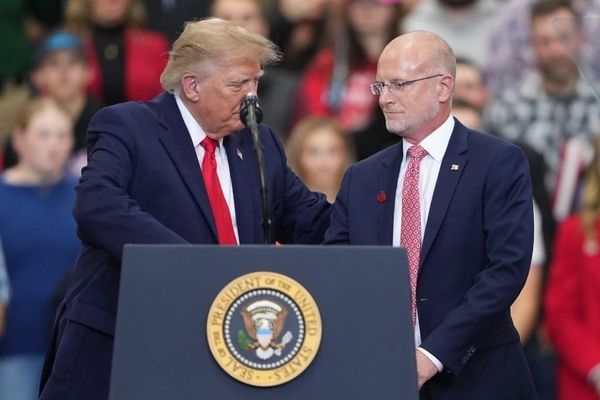
CEO Dan Schulman said Verizon did not extend any free lines in its efforts to notch impressive postpaid phone additions. Already a Verizon board member, he came on abruptly in late 2025 to compete more fiercely for wireless subscribers.
The company’s new plans have been aimed at improving performance with one- and two-line accounts. The company had this year been losing accounts while adding lines, implying much worse performance with accounts that had fewer lines.
Given that Verizon reported post-paid account growth in the third quarter, adding 137,000 accounts, MoffettNathanson founder Craig Moffett said in an investor note that the new strategy appeared to be working.
New fixed wireless offering
Schulman said earlier this quarter, Verizon stopped pushing fixed wireless in markets where customers were likely to want higher speeds than the service could provide.
In an effort to bump those speeds in urban areas, Schulman said Verizon was planning on offering a fixed wireless service capable of gigabit speeds.
The company is set to start deploying that in the fourth quarter of 2026 and continue through the next year, he said.
Schulman didn’t mention the deal, but Verizon closed its acquisition of Starry earlier this year. Analysts thought the purchase was primarily motivated by Starry’s technology for providing fixed wireless to apartment buildings.
Starry used millimeter wave spectrum, which Verizon’s new urban fixed wireless service will also use. Schulman said that would free up capacity on the company’s network by offloading a traffic-hungry service to spectrum that’s largely unused at the moment.
“It significantly alters our spectrum position,” he said.
Verizon has been aiming for up to 9 million fixed wireless subscribers in 2028, but Schulman said the company would “go well beyond that now, because we have a lot more capabilities.”
SpaceX competition
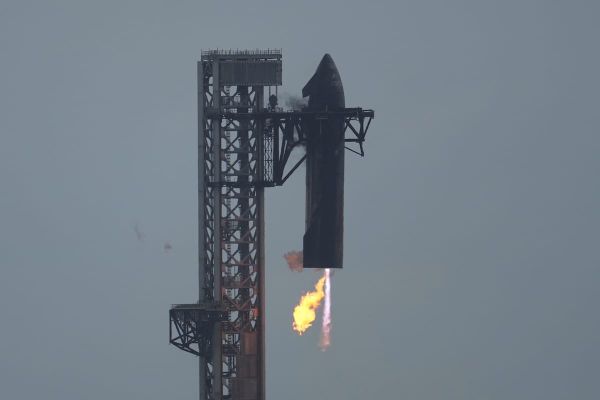
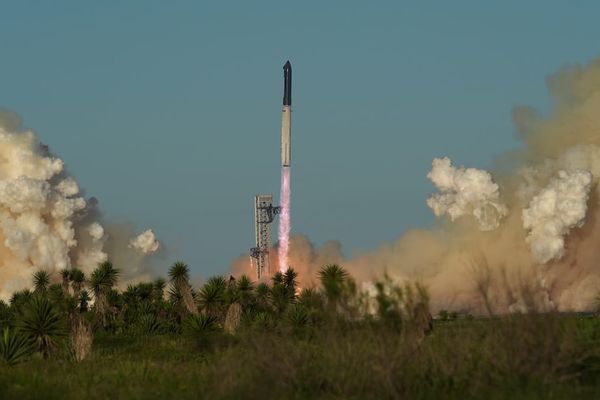
Telecom stocks took a hit Thursday when Bloomberg reported that SpaceX was looking to secure leases for 80,000 cell sites to support a wireless network.
Schulman downplayed the idea that SpaceX’s service, which would also reach remote areas with low-Earth orbit satellites, would be a significant competitive threat to the industry.
“There are no secrets in the industry,” he said. “We know exactly what they’re thinking about doing. And if they build a terrestrial network, it will basically look and feel like every other network.”
He said it would take at least years and hundreds of billions of dollars to build a network, but it was likely that SpaceX would follow through given comments from Elon Musk and executives last week.
Moffett agreed any SpaceX threat was far off. But that might leave a cloud over the telecom sector, he said in an investor note.
“What makes the current situation so interesting, and yet perhaps so perilous, is that SpaceX realistically doesn’t pose any threat to Verizon for years and years to come (save for perhaps driving up the cost of future spectrum purchases),” he said. “Instead, the threat is a narrative one. Good luck forecasting when a narrative threat lifts.”
Some industry analysts have speculated that SpaceX might want to purchase Dish Wireless’s now-abandoned radio network as part of the company’s bankruptcy proceedings. The satellite company has federal approval to launch 15,000 satellites to support a direct-to-device service and has been scooping up spectrum for the purpose.
Schulman also refuted rumors that Verizon was potentially open to granting Verizon a mobile virtual network operator (MVNO) deal to offer service on its network. He also reiterated that there were “no backdoors” to the MVNO deals Verizon has already extended to the national cable companies.
“I see absolutely no benefit whatsoever to extending an MVNO deal to any satellite provider,” he said. “I don’t buy into this idea of a prisoner’s dilemma. It’s ridiculous.”
AI Infrastructure deals
Verizon also announced a $2 billion deal to provide dark fiber to Amazon Web Services.
That’s in addition to a $1 billion deal with Google the company announced earlier this year.
Verizon is also signing deals for tech companies to use its old copper wire centers as mini data centers, Schulman said. He said the company had signed $4 billion in total fiber and edge computing deals.
Schulman said the deals had “attractive margins” and would start making an impact next year.